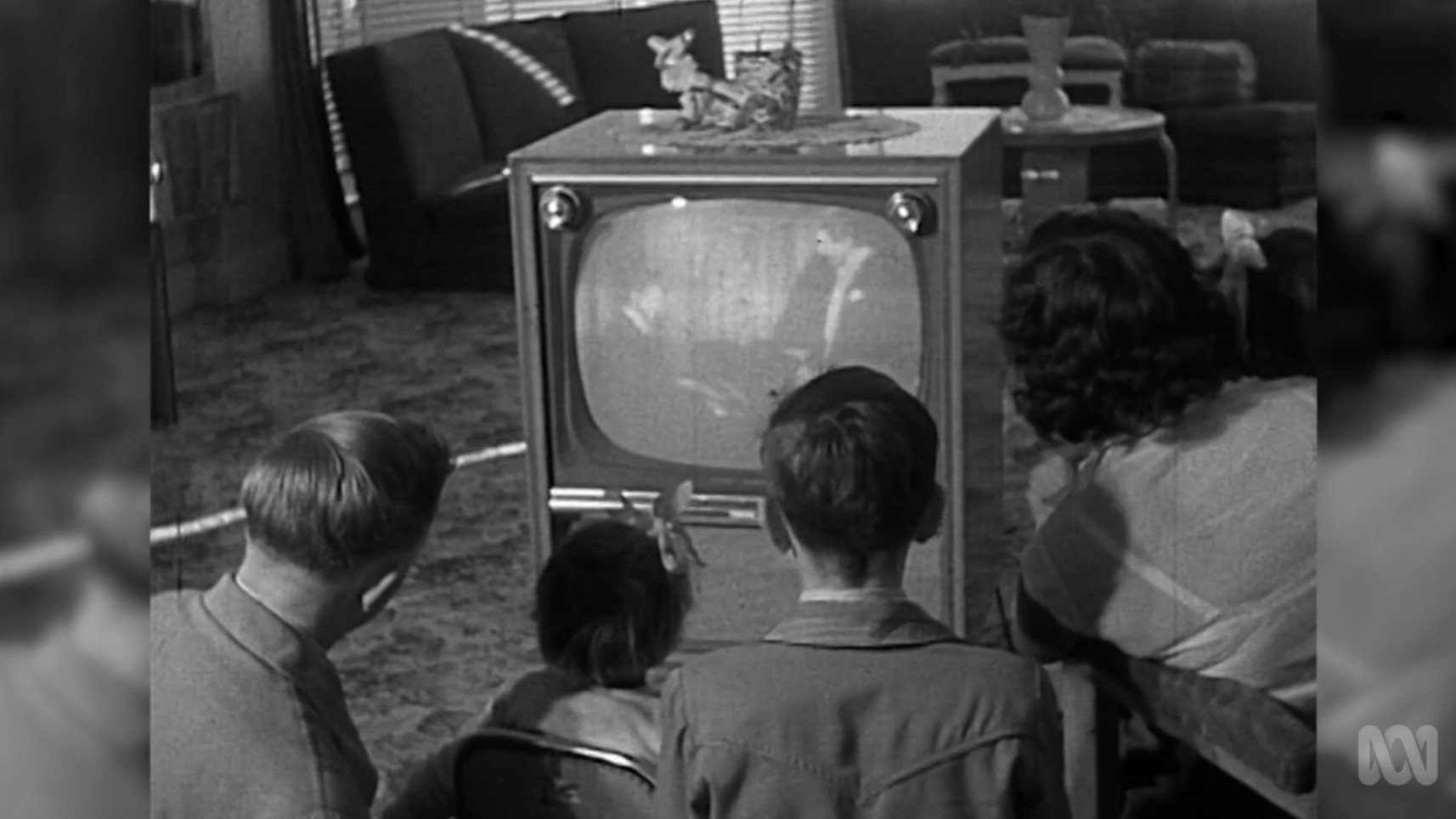

In the week Australia celebrated the 70th anniversary of its first television broadcast, the Albanese government is weighing the future of free-to-air television, including a potential online-dominant approach that would see a significant reduction in Australia’s existing broadcasting infrastructure.
On Tuesday, Minister for Communications Anika Wells declared consultations were open on the future of Australia’s approach to free TV.
Wells said the way people watch TV has “changed dramatically”, and the government was officially examining options to ensure free-to-air can continue to be delivered sensibly and sustainably.
According to a government discussion paper, Australia will weigh a potential “online-dominant” approach to push online mediums – such as broadcasting apps – into a lead role.
This would entail a “significant reduction” in the infrastructure used for free-to-air TV broadcasting, while terrestrial broadcasters would shift to a reduced ‘nightlight’ model for those “unable or unwilling” to adopt online alternatives.
The government also presented a ‘partial online’ approach where current broadcasting would operate alongside online mediums, and infrastructure would be modestly consolidated to pursue efficiencies.
A third approach would see broadcasting capabilities enhanced and networks upgraded to a newer, more efficient standard – though this would be a “significant and complex undertaking” requiring investment in new transmission infrastructure.
“Free-to-air TV has been a fixture in Australian homes for nearly 70 years, bringing us the stories and characters we love, and the news and entertainment that matters to Australians,” said Wells.
“We want free-to-air TV to always be available to Australians however they choose to access it.”
The government’s free-to-air consultation closes on 24 November.
Online-only approach is on the table
The paper observed that more than half of surveyed Australians use a mix of over-the-air broadcasting and online free-to-air TV, though 20 per cent of viewers maintained a broadcast-only approach.
These users were more likely to be over 45 years old and live outside capital cities, while the 12 per cent of Australians using only online options were more likely to be living in metropolitan areas, and aged between 25 and 54.
.jpg)
How Australians are viewing free-to-air TV. Source: Technology scenarios for free-to-air television consultation paper.
Despite the substantial number of broadcast-only viewers, the government noted a variation to its proposed online approach would see the “full migration of free-to-air television services to the online medium”.
“Television broadcasting infrastructure and services would, under this approach, be decommissioned and no longer used to provide television services to consumers,” read the discussion paper.
The paper emphasised a full online migration would be a “planned and deliberate choice” that assumes a “tipping point” is reached where free-to-air broadcasting is no longer economically viable.
Damien O'Meara, lecturer in public relations for RMIT’s School of Media and Communication, said although it’s necessary to see bigger investment in online models, there are gaps in accessing such services.
“[There are also gaps] regarding prominence and discoverability of Australian content within an online-dominant model,” O’Meara told Information Age.
“The broadcast infrastructure was – and is – required to reach every part of Australia, and as such remains essential for the distribution of information and entertainment to all parts of Australia.”
“Further, the greater reliance on online models assumes socio-economic status will not impact someone’s ability to access the internet.”
Audiences decline, costs don’t
According to the paper, daily primetime audiences for free-to-air television services in the five mainland state capital cities have been declining for over a decade.
Operational costs of broadcasting transmission networks have meanwhile proven “significant and generally fixed”, meaning they don’t decline when audiences disengage or advertising revenue dries up.
Indeed, this dynamic contributed to the outright closure of Mildura Digital Television in 2024.
Meanwhile, the radiofrequency spectrum used to deliver free tv over the past 70 years is being eyed by mobile network operators for future 6G services – which could open the door to economic value and Commonwealth revenue.
The government is seeking to “explore the possibility of realising a spectrum dividend” for possible non-TV uses as part of the free-to-air policy development process.
And while primetime audiences have fallen, subscription video on demand (SVOD) services such as Netflix have grown to become the dominant mode of viewing screen content, with some 68 per cent of Australian adults using SVOD in 2025 compared to 29 per cent in 2017.
Broadcasting video-on-demand (BVOD) services such as ABC iview and SBS On Demand have also grown from 18 to 44 per cent.
The government’s potential online-dominant approach could theoretically see BVOD services improved to feature additional content or channels, though O’Meara said it remained unclear how such enhancements would “make local content prominent and ensure greater engagement with our local stories”.
“The ‘prominence question’ needs to be addressed if this model is to serve the long-held role of free-to-air broadcast television to include and make prominent Australian content as part of the offering,” he said.
“Investment in online models matters but will only succeed in a cultural respect if coupled with policies that drive culturally relevant, prominent local content for younger generations.
“That is, if we want this model to continue the ethos of what broadcast television offered us over the past 70 years.”