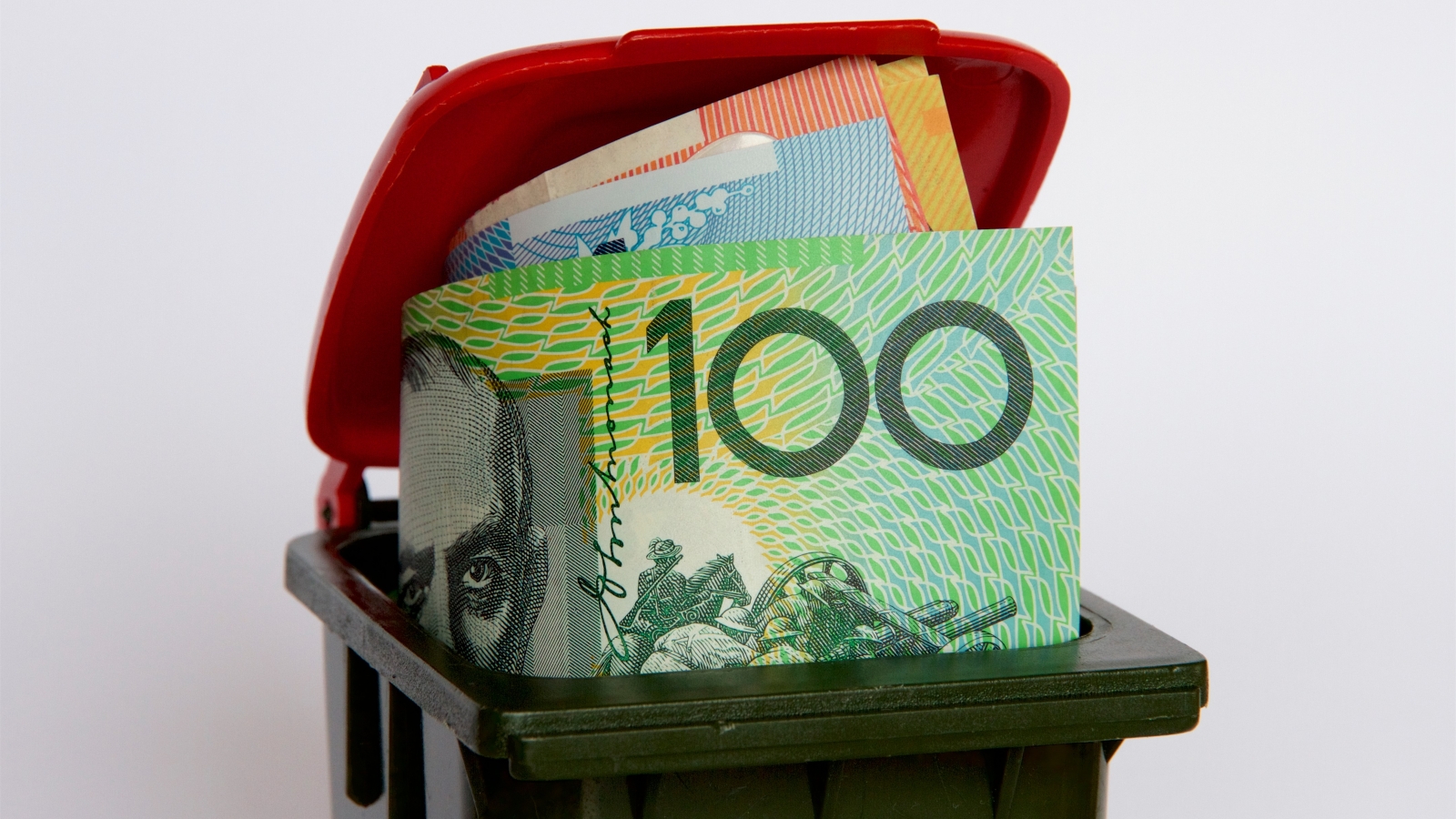

Whether you're running a two-person startup or a global operation, the same costly inefficiencies can drain your bottom line.
Here are the five biggest office money wasters, and how eliminating them could save you from spending a fortune rectifying future financial damage.
1. Meetings gone rogue
A 2024 report estimated the overall annual cost to firms of unproductive meetings was £50 billion ($95 billion) in the United Kingdom.
More than 3,400 professional employees globally were surveyed for the London School of Economics and Political Science study.
It found 35 per cent of business meetings are considered unproductive.
By reducing unproductive meetings by 35 to 29 per cent can reduce the cost of unproductive meetings each year by an estimate £10 billion ($19 billion).
One company’s ‘meeting cost calculator’
In an effort to reduce pointless meetings and costs, Shopify, the Canadian e-commerce giant, ran cost data on meetings during the course of 2023.
The company implemented a “meeting cost calculator” which popped up on employees’ Google Calendar when three or more guests were invited to gather, to show them how much it cost to bounce ideas in person or over Zoom.
The tool found a typical 30-minute huddle with three employees cost between $US700 to $US1,600 ($990 to $2,270).
Adding a C-suite member could push the meeting cost north of $US2,000 ($2,800).
Shaun Broughton, managing director for Shopify in the Asia-Pacific and Japan, says in 2025 Shopify deleted all meetings with more than two people, as part of their annual calendar reset.
The reason, he adds, is to help employees rethink if they need the meetings or not.
The internal meeting cost calculator is also available for staff to use.
“The cost calculator comes up with a price estimate by factoring in the average compensation data across roles and departments, with the amount of people attending, and meeting length,” Broughton says.
“This helps us maintain time for deep-focus work,” he adds.
By removing even three meetings a week per person, Shopify estimates it will see a 15 per cent reduction in overall costs.
That’s in addition to the 76,500 hours’ worth of meetings it culled the year it rolled out the calculator.

Shopify's 'meeting cost calculator' found even short meetings could incur substantial cost. Image: Shutterstock
2. The cost of a bad hire
A 2022 Australian HR Institute survey of over 1,500 HR professionals from Australia and New Zealand found the cost to hire an employee more than doubled in 2021, rising from $10,500 in 2020 to $23,860 per worker.
In an updated 2025 report, this figure now ranges from $15,000 to $35,000.
The 2022 study factored in costs such as lost productivity, staff turnover, rehiring and onboarding, training time, and team morale disruption for a bad hire.
According to the report, the time it takes to make a new hire increased from an average of 33.4 days to 40 days in Australia, and from 36.5 days to 50 days in New Zealand.
3. Not-so-wise tech
Australia's small and medium-sized enterprises (SMEs) are collectively investing $2.2 billion each year on digital solutions to help improve business operations, however three in five are finding some of these tools are in fact hindering them, according to business management platform MYOB’s 2022 Digital Disconnection report.
The survey of 1,500 Australian SMEs found 59 per cent said they were experiencing bad digitisation – where their business and people management software apps and tools run in silos, rather than seamlessly integrating with each other.
A 2025 study of 250 UK businesses by US firm Qlik found that despite widespread deployment, productivity gains from AI continue to be inconsistent.
More than half of business and IT leaders report that less than 50 per cent of their AI projects have delivered measurable improvements.
Even more concerning, only 11 per cent of respondents say the majority of their initiatives (over 75 per cent) have led to tangible gains.
Nearly half of AI professionals now worry their company has overinvested in costly, inefficient AI models, forcing a reassessment of their AI approach.
Billions lost
Dave Stevens, founder and managing director of Brennan, Australia’s largest independently owned systems integrator, said the billions wasted is staggering.
Stevens said that based on global analyst research by McKinsey, Boston Consulting Group, and Everest Group, between 70 and 79 per cent of digital transformation projects across Australia and New Zealand are estimated to fail to outcomes they originally promised.
“That’s roughly $35 billion of the estimated $47 billion being spent in Australia each year,” Stevens says.
Around 5 per cent of digital transformation projects deliver what was promised, on time and on budget.
“A further 20 per cent deliver some benefit, but only after cost overruns, delays, or both,” says Stevens.
“If the majority of spending is underperforming, it points to a significant level of misallocated capital.
“The funds wasted on the actual transformation not only impact to the bottom line, the failures impact staff satisfaction and in many cases damage relationships with customers.”
‘Dream selling’
Stevens believes most wastage in technology starts with what he calls “dream selling”, where technology is sold by vendors based on what it could do, not what it will actually deliver in a real business.
“We’re seeing organisations buy into the latest, often-overhyped trends without being clear on what problem they’re solving or opportunity they are creating,” he says.
“As a result, the solution becomes the centre of the project, instead of the business outcome.
“That’s where money starts leaking immediately.”
Brennan's Dave Stevens says billions of dollars are being wasted by some digital projects in Australia. Image: Shutterstock
4. Tax fines and penalties
An Australian Taxation Office (ATO) spokesperson said depending on the size of the business, a penalty for a failure to lodge can range from $330 to $1,650 for each 28‑day period (or part thereof) the lodgement is late, up to a maximum of five periods.
Significant global entities may receive much higher penalties.
Importantly, overdue debts are subject to a general interest charge.
The general interest charge is set by law and is currently 10.96 per cent.
Interest is calculated on a daily compounding basis on the amount overdue and is added to accounts periodically.
So, when you pay late, you’ll pay more – the message here is pay on time.
In the 2024-25 financial year, the ATO imposed fees of $9.43 billion in general interest to Australian business and taxpayers.
5. Small costs that add up
These money wasters may not always add up to much on their own, but collectively they can amount to hundreds of thousands of dollars wasted:
- Unmeasured marketing and advertising spend on campaigns without tracking return on investment (ROI);
- Overpaying for unnecessary office space or leases not in use;
- Unused subscriptions and software services that are rarely or never used and are forgotten;
- Fees associated with daily banking, such as transaction fees and high-interest credit card debt can really add up. Watch out for avoidable fees, such as overdrafts with high interest and account maintenance fees.