
Treasurer Jim Chalmers has said artificial intelligence could be the “biggest economic transformation in our lifetime” but new Treasury analysis shows businesses must do significantly more to make sure its full potential is realised.
A policy paper provided to Chalmers by Treasury warns that Australia may miss the huge productivity benefits on offer through AI if it is not used more significantly across the economy.
According to the note, about two-thirds of all Australian companies are now using AI in some form, but less than one in 10 describe this use as “significant”.
This uneven use risks creating a two-speed economy and if it continues, would mean Australia misses out on the potential for AI to boost productivity in a meaningful way.
A global accelerator
AI is the first credible accelerator of global productivity growth in nearly two decades, Treasury noted, and it will “push out the global productivity frontier”.
It found AI could boost Australia's productivity by between 1.5 and 2 per cent per year over the next year.
But the paper has maintained current growth forecasts at 1.2 per cent per year because of how AI is currently being used in Australia.
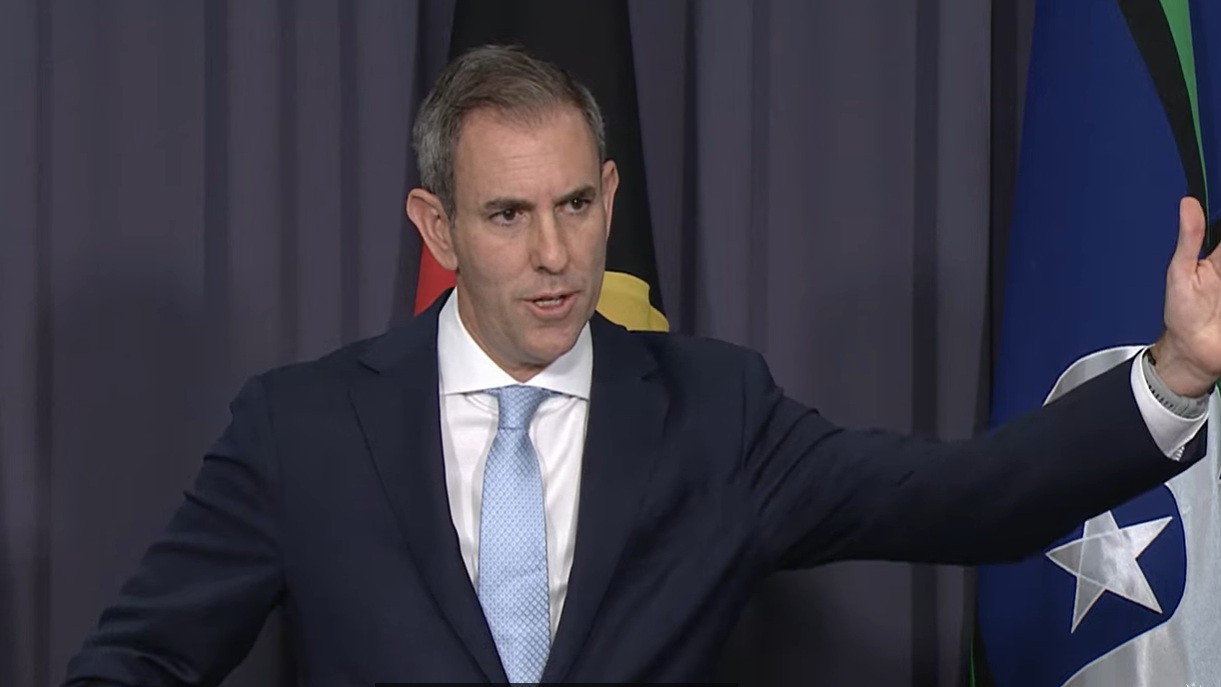
In response to the note, Chalmers said that AI is “shaping up to be the biggest economic transformation in our lifetime” and it will “impact every part of our economy and society, in every corner of our country”.
“We can’t just sit around and hope the benefits of AI fall into our lap,” Chalmers said.
The federal and state governments are grappling with how to regulate AI in a way that protects Australians but also embraces the economic potential of the technology.
Deputy Prime Minister Richard Marles is this week in the US and will be meeting with AI giants including Anthropic, OpenAI, Microsoft, Google, Amazon and NVIDIA, with Assistant Minister for Science, Technology and the Digital Economy Andrew Charlton also attending.
The advice provided to Chalmers in the Treasury note will help to shape a chapter about AI in the soon-to-be-released intergenerational report.
A two-tier system
It warns that the current rollout of AI risks seeing larger firms being able to move faster thanks to having more data, better access to skilled workers and the budget required to fully implement the technology.
It found that industries with the highest rates of AI uptake are finance, insurance, information, telecommunications and professional services.
The “rate and breadth” of AI adoption across the country remains slow, the note said, and AI alone is not a “substitute for structural reform”.
“Realising productivity gains requires investment in organisational capital, including changes to processes, business models, management practices and workforce skills,” it said.
Chalmers said that he was confident that Australia can “maximise on the economic upside and minimise the risks” of AI.
“Advances in AI are coming thick and fast, with frontier labs reaching new milestones in a matter of weeks, not years,” he said.
“We can’t just sit around and hope the benefits of AI fall into our lap. We have to reach out and take them.”
Treasury found Australia’s pipeline of AI-related investment could hit $150 billion by 2030, equal to about 5 per cent of GDP.
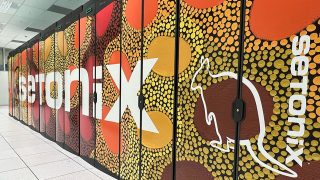
It found there are currently more than 160 data centres operating in Australia, with another 130 proposed.
It also said that the much-feared impact on jobs and mass layoffs from AI are yet to materialise.
Treasury is actively watching early-stage and entry-level workers overseas for signs of job impacts.
Earlier this week it was revealed that the federal government has quietly stopped measuring its goal of having 1.2 million workers in tech-related roles by 2030.
The Industry department has “ceased” conducting the tech jobs performance measure, according to its corporate plan.