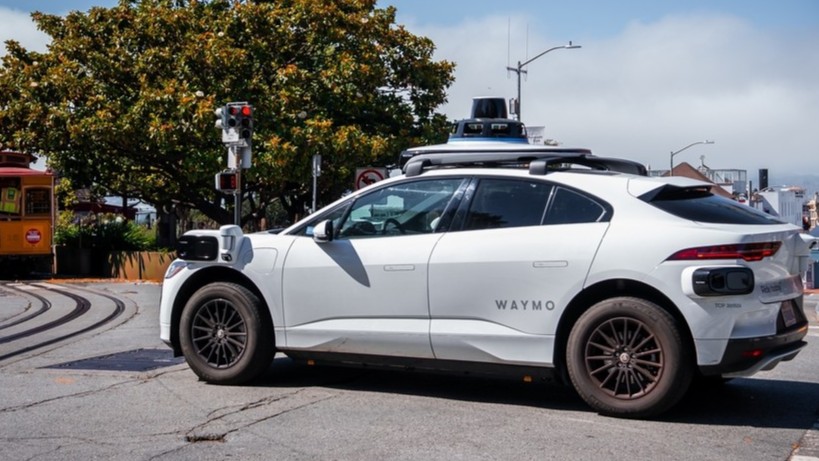

Waymo’s self-driving taxis are receiving “guidance” from human operators located around the world, a practice US lawmakers say raises potential safety and security concerns.
The Alphabet-owned company, which runs thousands of autonomous taxis across the United States and plans to expand to Australia, has long said its vehicles can request help from human “fleet response agents” when the software encounters unusual road situations.
But a US Senate Committee hearing last week revealed these “remote operators” are not all based in the US.
Waymo chief safety officer Mauricio Pena told the Congressional hearing that some workers providing “guidance” to vehicles driving on US roads are overseas, including in the Philippines.
“They do not remotely drive the vehicles,” Pena said.
“Waymo asks for guidance in certain situations and gets an input, but the Waymo vehicle is always in charge of the dynamic driving tasks, so that is just one additional input.”
Phone a friend
Waymo has previously said the human guidance works like a “phone-a-friend” service.
“When the Waymo vehicle encounters a particular situation on the road, the autonomous driver can reach out to a human fleet response agent for additional information to contextualise its environment,” a 2024 Waymo blog post said.
“The Waymo Driver does not rely solely on the inputs it receives from the fleet response agent and is in control of the vehicle at all times.”
The remote agent is contacted when the software encounters a scenario it does not know how to respond to.
The human agent can view live feeds from the car’s exterior cameras, a 3D visualisation of the environment around the car, and replay recent footage to understand events.
Communicating largely through questions and answers, the operator can suggest actions such as which lane to select or a possible path for the vehicle to consider.
‘Tremendous’ cyber risk
In response to the revelations, US Senator Ed Markey said that “having people overseas influencing American vehicles is a safety issue”.
“The information that operators receive could be out of date,” Markey said.
“It could introduce tremendous cybersecurity vulnerabilities. We don’t know if these people have US driver’s licences.
“It’s one thing when a taxi is replaced by an Uber or a Lyft. It’s another thing when the jobs just go completely overseas.”
A Waymo spokesperson confirmed the company’s “fleet response team” is “located in the US and abroad” and said workers must hold a passenger vehicle licence and undergo driving-record checks such as reviewing records of traffic violations, infractions and driving-related convictions.
“Additionally, they are routinely, randomly screened for drug use, and are put through thorough criminal background checks in addition to evaluations of their driving records,” the spokesperson told Futurism.
Markey warned the use of overseas assistance could pose “serious safety, national security and privacy risks”.
“Overseas remote assistance operations may be more susceptible to physical takeover by hostile actors, potentially granting them driver-like control of thousands of vehicles transporting passengers on American roads,” he said.
“Heavy and fast-moving vehicles could quickly become the weapons of foreign actors seeking to harm innocent Americans.”
Waymo is reportedly in plans to bring its robo-taxis to Australian shores, and has entered into negotiations with regulators to test its technology as early as this year.
Recently released documents show Waymo officials met last year with an assistant secretary at the Department of Infrastructure, Transport, Regional Development, Communication, Sport and the Arts.
The company has also been testing right-hand-drive technology in other markets.