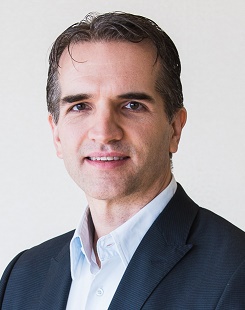



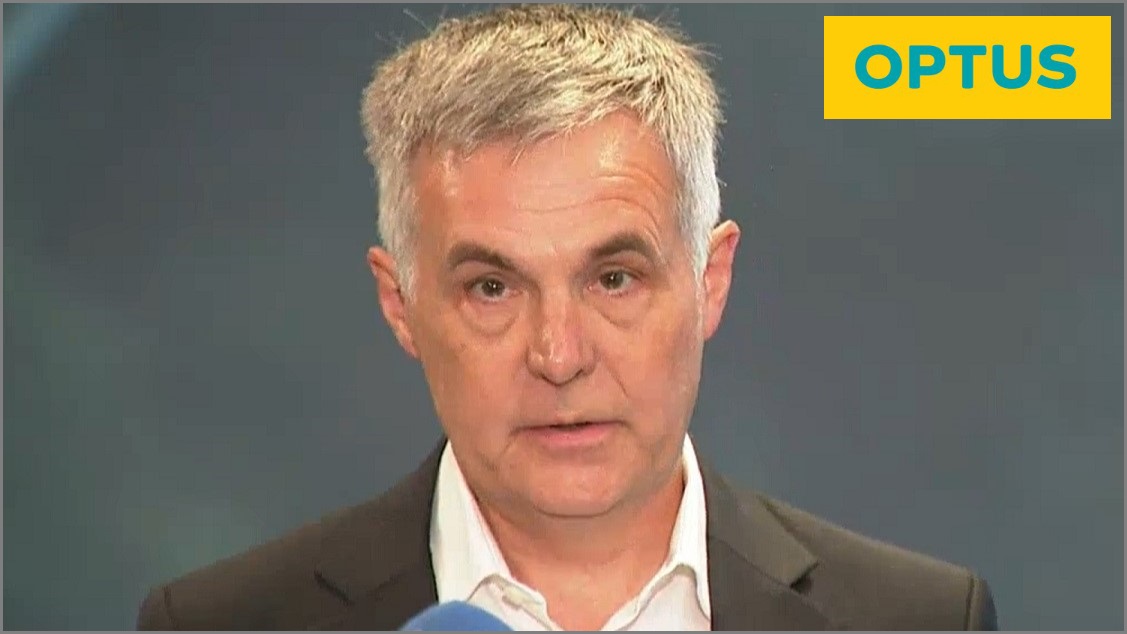

He was hired to save Optus after a series of major mishaps, but CEO Stephen Rue now faces the axe after a botched firewall upgrade caused a 13-hour Triple Zero outage that cost at least three lives – with recriminations flying as “deeply concerned” authorities investigate.
The deaths – including a 68-year-old woman from South Australia as well as 74-year-old and 49-year-old Perth residents – occurred when a widespread outage across SA, WA, NSW and the NT last week caused some 624 Triple Zero calls to fail.
Rue was alerted to the outage around 1:30pm on Thursday and at 3pm emailed the office of Communications Minister Anika Wells that there had been an outage affecting around 10 calls, but Wells said there were no further updates until late Friday afternoon.
Optus reportedly took nine hours to notify police, and the full scope of the outage – and its link to at least three deaths – wasn’t announced to authorities or the public until Rue gave a press conference late on Friday, leaving ACMA head Nerida O’Loughlin fuming.
The “perfunctory” and “inaccurate” Thursday emails were “just too late”, O’Loughlin said in a joint press conference with Wells, who said Optus has “no excuses here”.
Optus has “failed the Australian people” and “can expect significant consequences”, she said, promising that “Optus will be held accountable for this failure [and] must now work with government and ACMA to make their systems better.”
Leaders were scathing of the incident, with Prime Minister Anthony Albanese weighing in to say “Optus’ behaviour is completely unacceptable” and that he “would be surprised” if Rue wasn’t already considering whether his position at the company is tenable.
SA Premier Peter Malinauskas ripped into Optus over the delay, saying that ‘”a failure of this scale is serious… and the consequences have been devastating” and promising a “comprehensive investigation” into the outage and the “adequacy” of Optus’s response.
WA Premier Peter Cook was equally livid about the “completely unacceptable” incident, revealing that WA authorities were only notified about the incident late on Friday and promising he would “stop at nothing” to make sure Optus was held to account.
Not the first time – but will it be the last?
It’s not the first time telcos have failed to maintain access to Triple Zero services, as their telco licenses require: last November Optus, for one, was fined $12 million after more than 2,000 people couldn’t make emergency calls during its major November 2023 outage.
That outage led to a Senate report that urged network resilience improvements “as a matter of urgency” – and paved the way for government telco reform that, embarrassingly, was being announced on Thursday even as the outage was escalating behind the scenes.
Telstra was also recently fined $3 million for a 90-minute outage that saw 473 breaches of Triple Zero call handling rules – with ACMA member and consumer lead Samantha York saying at the time that “systems and contingency plans failed people in real need.”

Optus failed to notify authorities about its outage in a timely manner. Photo: Shutterstock
As a provider of access to emergency services Telstra “must have fail-safe systems and processes in place at all times,” Yorke said at the time – yet Optus apparently had no such fail-safe systems in place during this latest breach, leaving customers stranded.
Despite outrage over Triple Zero failures, efforts to introduce temporary disaster roaming capabilities – which would require telcos to provide emergency access to their mobile networks for customers of another network during an outage – are still in early days.
“We cannot afford single points of failure in our telecoms systems,” telecommunications consultant Paul Budde wrote in response to what he called “the nightmare scenario many of us have long feared…. [that] highlights years of underinvestment in safeguards.”
Despite the “sensible” recommendations of the Senate and Bean Report reviews – which advised telcos to have “redundancy, roaming, and rigorous Triple Zero testing… to prevent precisely this kind of tragedy” – Budde said telcos had still failed to improve their reliability.
“The Bean Review was designed to make sure that this never happened again after it happened last time around,” Wells said, adding that “it appears here that there has been ineffective implementation of those recommendations by Optus.”
Optus may Rue the day
This latest incident is the most serious of Rue’s tenure, which began last year when he was poached from NBN Co to “reinvigorate” Optus after his predecessor, former CEO Kelly Bayer Rosmarin, resigned after admitting the telco had no resilience plans for the 2023 outage.
Optus’s reputation has foundered ever since, with the company repeatedly ranked Australia’s least trusted brand, according to Roy Morgan, which this month noted its small improvement to fourth least trusted brand after backlash against grocery giants and Meta.
CEOs of companies suffering major failures are increasingly being held to account by impatient regulators, with Qantas executives and CEO Vanessa Hudson watching their bonuses trimmed by 15 per cent after that company’s recent major data breach.
With deaths involved, however, scrutiny of Optus – and Rue’s management – is likely to be far more intense, with state premiers and federal authorities promising investigations, and the possibility of criminal charges from state coroners called to review the deaths.
Even as investigations suggested the outage was “unlikely” to have caused the additional death an eight-week-old boy, Rue announced an independent review into the outage and the introduction of a “compulsory escalation process” for reports of Triple Zero outages.
Optus had not detected the failure to connect Triple Zero calls at the time, Rue said in advising that there was “no indication of a general network issue” and that every other part of the network’s operation “looked normal” at the time.
Telcos’ excuses are wearing thin, with Griffith University adjunct associate professor Graeme Hughes calling the outage an “unthinkable tragedy and a complete breach of the social contract between telcos and the public.”
“The lessons and penalties from the nationwide 2023 outage were clearly insufficient to prevent another disaster,” he said, arguing that “the public has a right to know why fail-safe systems… either did not exist or failed to function.”
“The government must take a firmer stance to enforce mandatory network resilience and introduce stronger, more punitive measures for critical failures…. The time for lenient penalties and polite conversations is over.”