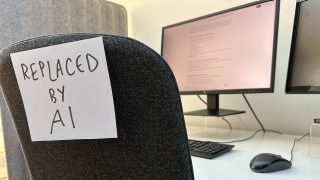

Some Australian employers “have shifted their recruitment patterns toward hiring more senior and experienced workers, and away from hiring as many junior staff” amid the rise of generative artificial intelligence, a government study has found.
Local software company ReadyTech told Jobs and Skills Australia (JSA) it now hired “fewer entry-level engineers” and increasingly relied on more experienced developers as it implemented technologies such as genAI agents and coding assistants.
An unnamed senior leader at the firm told JSA’s first-of-its-kind Generative AI Capacity Study there was “no logical business reason to take on a junior engineer and train them up” in the same way the company previously had, according to documents released this month.
ReadyTech — which employees more than 500 people and has offices in Australia, New Zealand, and the United Kingdom — was a case study in JSA’s research, which involved “interviews, focus groups, and consultations conducted between October 2024 and July 2025”, the agency said.
The overall findings of the study, released in August, found that while entry-level jobs “may be more likely to transform than diminish” in Australia, the technology sector “may be among the first to restructure its entry-level intake”.
JSA said while the number of entry-level roles across the economy was yet to decline, it “should continue to be monitored closely” given Australia's increasing use of genAI “and the emerging capabilities of agentic AI to undertake structured, routine tasks”.
ReadyTech’s move away from junior developers
ReadyTech's increasing use of genAI — including all of its software engineering teams using Github Copilot as a coding assistant — had led it to reduce the number of junior developers it employed overseas and instead hire senior ones based in Australia, JSA said.
A senior ReadyTech leader told the agency, “We've returned those roles back to Australia because a really strong Australian senior would outperform multiple offshore resources as they became more productive — it wasn’t necessarily the case pre-Copilot.
“One byproduct of that has also been that there is no logical business reason to take on a junior engineer and train them up in situ in the same way.
“So we've seen a shift where we hire fewer entry-level engineers."
The senior leader allegedly told JSA that part of ReadyTech's focus on senior engineers also stemmed from their broader industry knowledge.
Experienced engineers would need to not only “effectively support [juniors] through coding” but also use their expertise to “explain the space that we’re developing these products for”, they said.
“Education — tertiary education — is actually really complex. Compliance — highly regulated.
“You can't just look at the code base and pick it up and know instinctively how you're going to add value.”

ReadyTech told the government study it was no longer hiring as many entry-level software engineers as it increased its use of AI. Image: ReadyTech
ReadyTech hoped to use genAI to increase its ability to produce software and provide customer support “without a corresponding increase in human resources”, JSA said.
The company said AI-assisted coding had improved its efficiency by over 25 per cent, “along with improved software reliability and reduced time spent on debugging and rework”, according to the agency.
The firm has also added two AI support agents to its customer service team: one which retrieves information for staff, and another which drafts responses to customers for humans to review.
The bots were now used in around 70 per cent of ReadyTech support requests and had led to “improved response times and enabling human support staff to have a greater focus on more complex issues”, according to JSA.
ReadyTech said its AI agents also meant new hires needed less support from senior staff, as they could simply ask the AIs for information, the agency said.
However, the senior leader also told JSA it was “unacceptable to us to think that we’re never going to offer an entry level role”.
They said there would “always be an open door” into the company's customer support team, as employees from that team often ended up transitioning into other areas of the business.
“We have doubled down on our successful strategy of employing individuals with potential from any background in our support team where they are immersed in our culture, our products, our customers and our ways of working,” the senior leader said.
“In this time, we work to identify the right pathway to pursue; we define, design and deliver the skills they need through partnerships.
“And when the time is right, we will support these individuals into that opportunity.”
'We don’t need that position anymore, because AI can do it’
Organisations also reported genAI had reduced or changed entry-level roles in other industries such as the arts, healthcare, and law, JSA said.
Participants in the study “indicated that entry-level roles in voiceover, junior design, and freelance content creation are being displaced, as AI tools can generate passable work instantly, and often at lower or no cost”, the agency said.
An unnamed organisation told JSA around half of voice acting work was now done by AI, reducing the number of entry-level roles in that profession.
In healthcare, participants generally believed entry-level roles involving administrative or repetitive tasks “could be most impacted” by AI automation, the agency said.
AI chatbots and scribes in healthcare had also reduced the need for some administrative roles “by automating tasks such as writing referral letters and transcribing case notes”, JSA said.
A medical researcher told the agency their employer no longer hired full-time bioinformaticians, as AI was more efficient at analysing data.
“We used to hire bioinformaticians so that they could analyse the data we collected from patients,” the researcher said.
“But now we don’t need that position anymore, because AI can do it.”
In the legal system, while major firms such as Ashurst, and Gilbert and Tobin were “investing in AI while continuing to recruit graduates”, some junior lawyers held concerns about entry-level jobs and said they were expected to possess new skills such as AI prompt engineering, JSA found.
A graduate lawyer allegedly said they believed research jobs in the legal system were “more at risk to be replaced by AI” than more senior roles, as paralegals at some firms already heavily used genAI.
But one small, unnamed firm’s managing partner told JSA they did not think junior legal jobs would disappear because many firms did not trust genAI, given the technology often cited fake cases or incorrect precedents which sometimes went unchecked by humans.
“I think it’s made some of the little stuff easier and quicker,” the partner said.
“But my industry’s been told for at least a year that a lot of the junior lawyer jobs will be disappearing, and I don’t see that happening any time soon.”