
Australia’s Productivity Commission says the federal government should pause its work on mandatory guardrails for high-risk uses of artificial intelligence and only introduce specific regulation of the technology as “a last resort”, given its potential economic benefits.
The warnings were part of an interim report released on Tuesday night, in which the commission argued AI could boost Australia’s economy by $116 billion and labour productivity by 4.3 per cent over the next decade.
The commission’s recommendations come as the Albanese government prepares to regulate AI, potentially through a dedicated AI Act and bans on the riskiest uses of the technology.
The government has spruiked AI as an enabler of greater productivity, and the rise of increasingly powerful and accessible AI models is expected to be a key topic at its productivity roundtable later this month.
While the Productivity Commission warned against new regulation which “could stifle the adoption and development of AI and limit its benefits”, it said the government should close gaps in existing laws which had been “exposed by AI”.
Commissioner Stephen King said AI and data technologies “could help Australia get back on the path to growth”, if coupled with “the right policy approach”.
“Like any new technology, AI comes with risks,” he said.
“But we can address many of these risks by refining and amending the rules and frameworks we already have in place.
“Adding economy-wide regulations that specifically target AI could see Australia fall behind the curve, limiting a potentially enormous growth opportunity.”
Treasurer Jim Chalmers said on Wednesday he welcomed the interim report, and suggested the government would attempt to "chart a middle course” when regulating AI.
“It is not beyond us, in my view, to maximise the opportunities of AI while we manage the risks the best that we can,” he said.
“And that's really consistent with the approach in the Productivity Commission report released overnight.
“We can chart a middle course that makes our workers and our people and our industries beneficiaries, not victims, of technological change.”
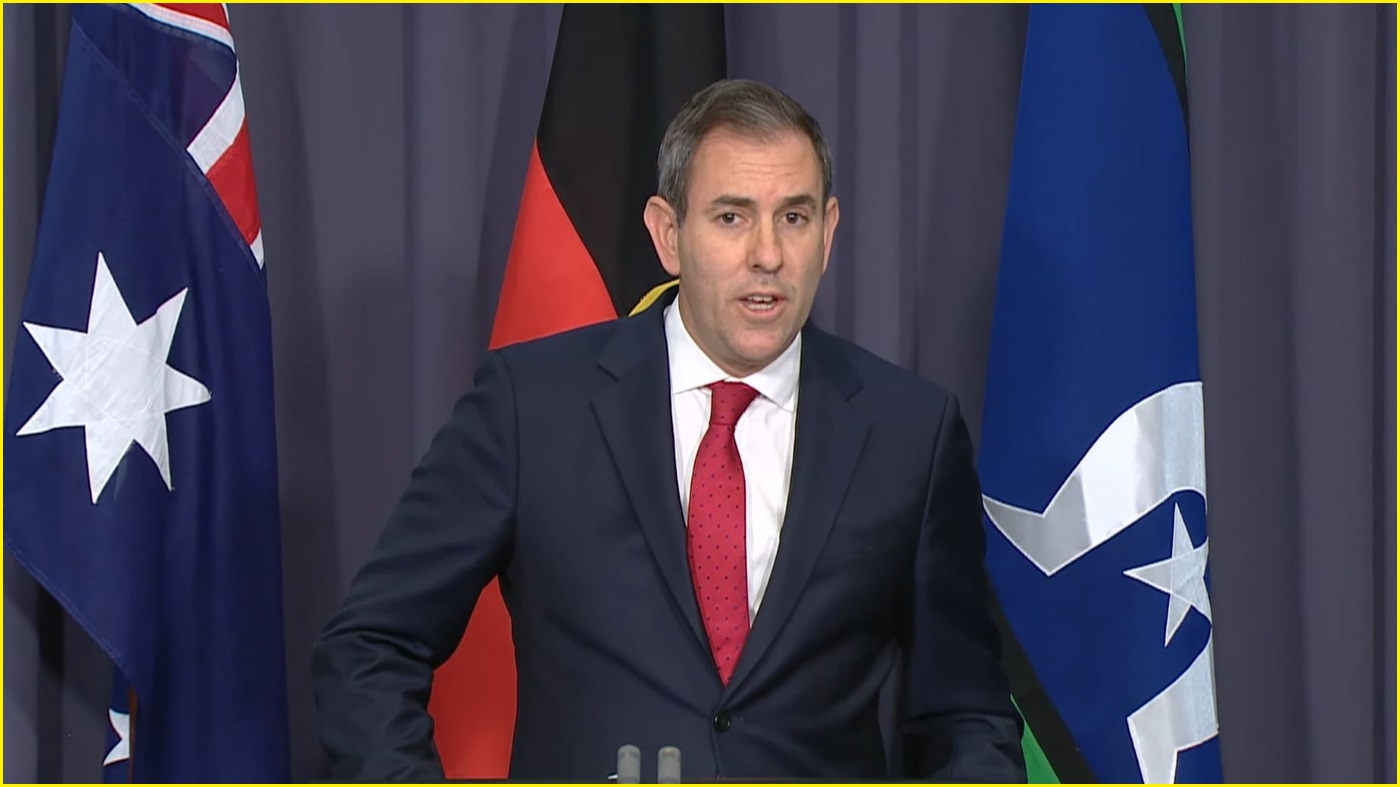
Treasurer Jim Chalmers says Australia 'can chart a middle course' when regulating AI technologies. Image: Australian Parliament / YouTube
Unions want protections from AI-related job losses
Trade unions, which are set to take part in the economic reform roundtable, have called for the government to implement both a standalone AI Act and protections from AI-related job losses.
While the Productivity Commission’s interim report suggested AI could spur economic growth, it also said it was unclear “how many jobs will be changed, gained or lost”.
“Overall, most forecasts expect AI to result in a net increase in the number of jobs but there could be a sizeable number of workers that are displaced,” the commission noted.
Chalmers described workers’ concerns about the impact of AI automation and augmentation on their jobs as “genuine” and “legitimate”.
“The onus is on us as governments to show people that AI or other changes in technology can be a force for good,” he said.
“That means listening to workers, it means empowering them with the skills that they need to get ahead as technological change gathers pace — we're very attentive to that.”
Deputy Prime Minister Richard Marles last week said “almost everyone in the economy” now needed “some form of skill” to use AI, which he described as an “astonishing tool” at the launch of the 2025 ACS Australia’s Digital Pulse report.
Commission considers copyright changes for AI training
The Productivity Commission said it would also consider whether a new “fair dealing” exception should be introduced to allow companies to use Australians’ copyrighted material without permission to train AI models.
Fair dealing exceptions already allow some material to be used for research, news, criticism, and satire purposes, and the Productivity Commission has previously argued in favour of broader ‘fair use’ laws in Australia to mirror those in the United States.
The commission said it was now “seeking feedback about the likely effects of a text and data mining exception on the AI market, the creative sector and productivity in general”.
Digital rights advocacy group Electronic Frontiers Australia accused the commission of being influenced by US President Donald Trump’s deregulation of that country’s AI sector, which has benefited Big Tech companies.
Australian music rights management organisation APRA AMCOS and the National Aboriginal and Torres Strait Islander Music Office (NATSIMO) argued the seeking of feedback for a fair dealing exception revealed “a clear preference for weakening copyright protections to benefit AI platforms”.
Minister for Industry, Innovation and Science, Tim Ayres, told ABC News on Wednesday the government did not have any plans to change the country’s existing copyright laws.
The Productivity Commission said it would accept feedback and submissions on its interim report until 5pm AEST on Monday, 15 September, ahead of the final report’s release later this year.