



Canva is preparing to introduce AI agents which can carry out tasks in design, marketing, and sales, the Australian software firm’s co-founder and chief product officer Cameron Adams has revealed.
“I will tease that we're releasing probably the first phase of our agentic workflows in a couple of weeks,” Adams told the crowd at an AI event in Sydney on Thursday hosted by chipmaker NVIDIA, which counts Canva as a client.
While agentic AI companies such as Akira AI and Beam AI have already released tools which integrate their own agents into Canva, Adams said the company's first-party agents would work as “proper teammates” alongside human users.
“Having a design team member, or marketing team member, or a sales team member that is an agent just opens up so many possibilities for scaling teams, and enabling people to start businesses,” he said.
While Adams did not confirm whether Canva’s AI agents would be available to users without a paid subscription, he suggested Canva’s “next phase” would involving democratising access to such features.
The company typically allows all users some access its AI features, but paying Canva Pro subscribers face less restrictions to their use of new tools.
Canva in April announced its virtual assistant Canva AI, which can generate designs, images, and text using a text prompt, and is available with limited access to free users.
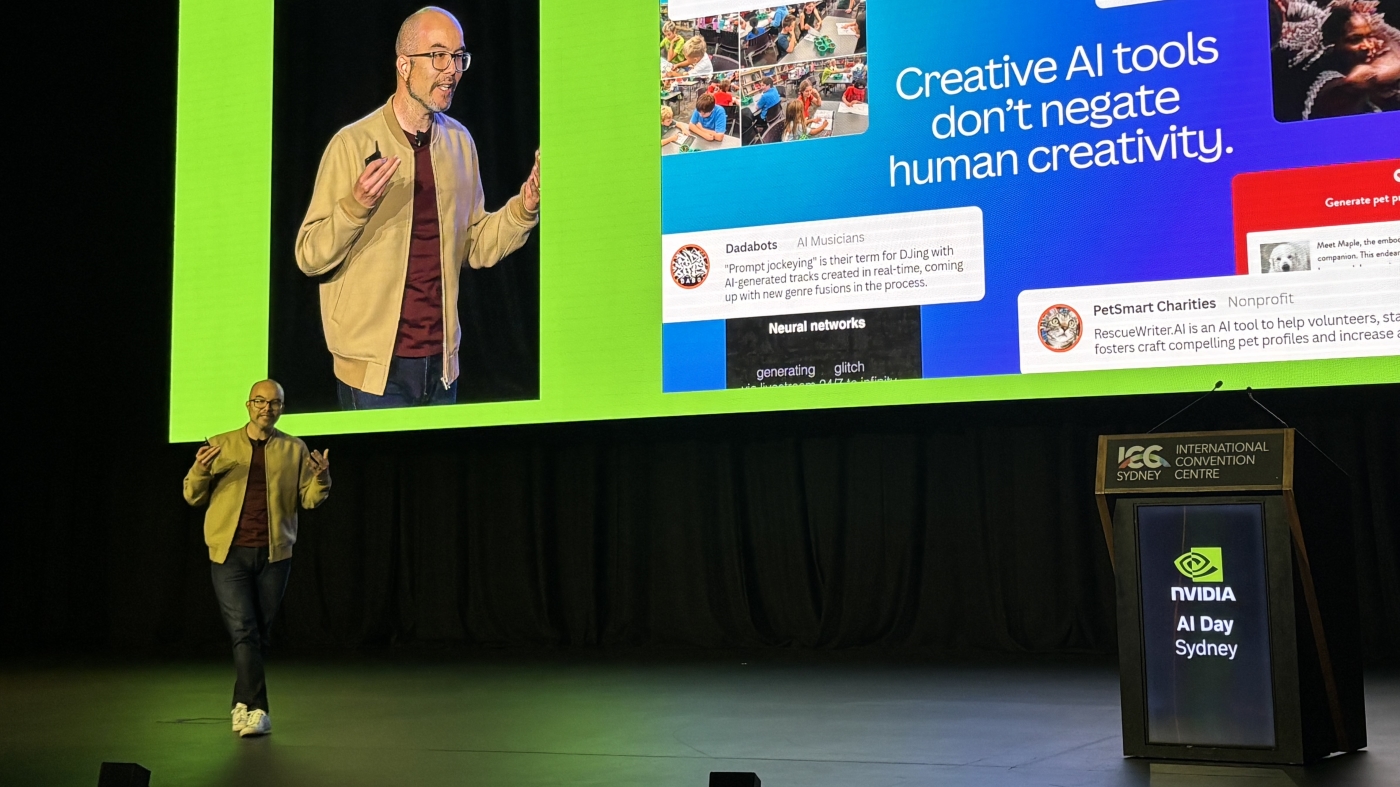
Canva's Cameron Adams speaks at NVIDIA's AI Day Sydney 2025. Image: Tom Williams / Information Age
'Not just typing into a prompt box’
Adams said he was particularly excited about Canva’s design-focused AI agents, which he said would complete tasks such as “tidying up” presentation slides, doing research, and pulling statistics and audience data to help with marketing strategies.
The features were “not just typing into a prompt box”, he said, as they would allow AI agents to actively assist on projects like a human would, including through access to Canva's whiteboard collaboration tool.
Adams argued creative collaboration between humans and AI agents would “become really important in the next couple of years”, and suggested the delegation of work to AI agents would be a skill some users would “need to master”.
“It's always going to be a collaborative process where you're editing, you're fine tuning, you're moving things around, you're asking [the agent] for ideas,” he said.
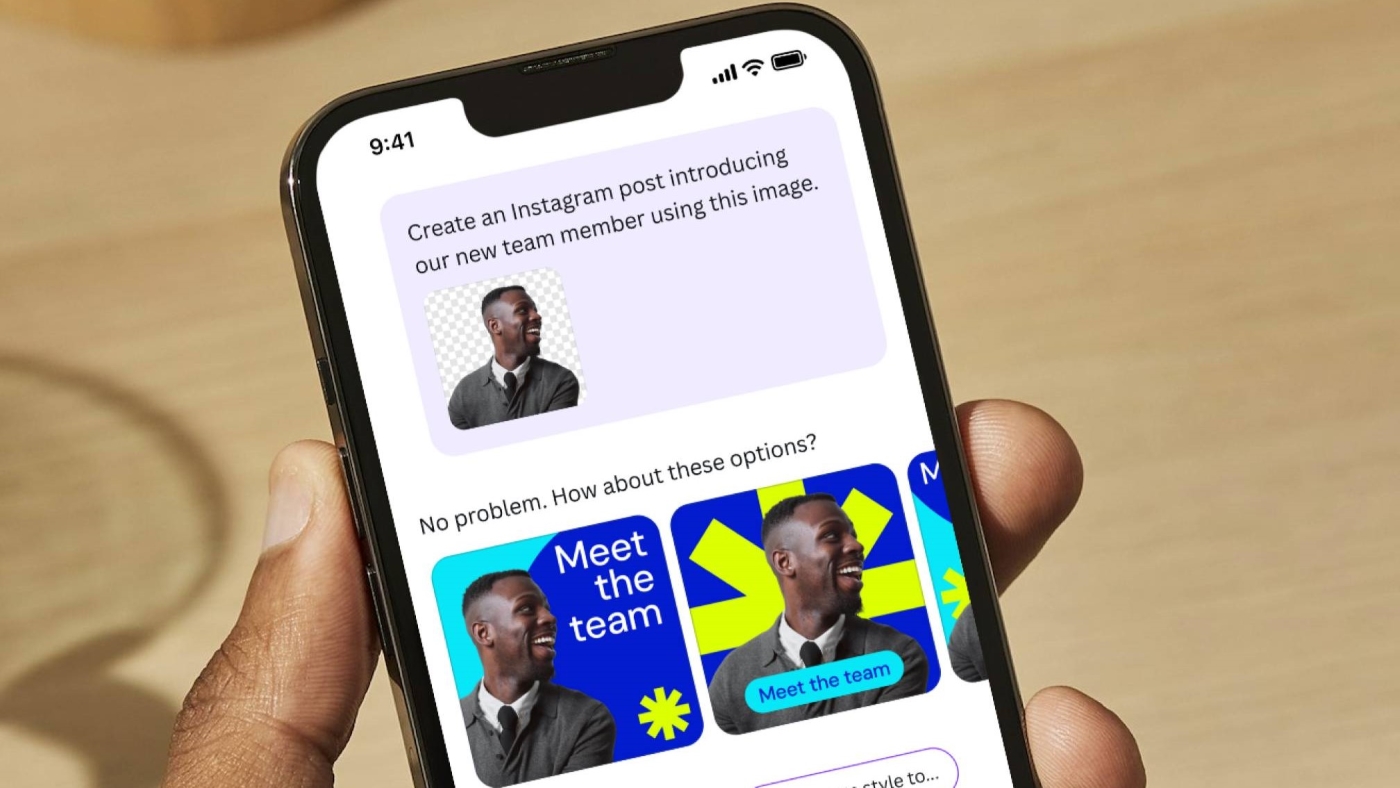
Canva launched its AI media generation assistant Canva AI in April. Image: Canva
Canva’s 'exponential’ spend on AI compute
Adams said Canva's spending on AI compute through partners like NVIDIA had risen “a tremendous amount” as Canva increased its use of generative AI tools at the same time as its user base has swelled to around 250 million monthly users.
“Definitely on the usage of GPUs, it's been exponential,” he said.
“I won't tell you what the bill is, because it kind of shocked me when I saw it last.”
Internally, Canva workers were already using AI agents to build automated workflows, Adams said, with more than half of the company’s software engineers also using AI coding tools such as Cursor.
The company's AI push has previously seen it face “internal concerns” after it decided applicants for many software development roles needed to show proficiency with AI-assisted coding tools during technical interviews.
Canva also laid off most of its team of technical writers earlier this year — a move which the firm told employees was not the result of its increasing use of AI.
NVIDIA AI Day Sydney 2025 ran during the same week as SXSW Sydney, which saw Melbourne-based AI company Maincode give the first public demonstration of its foundation model Matilda.