


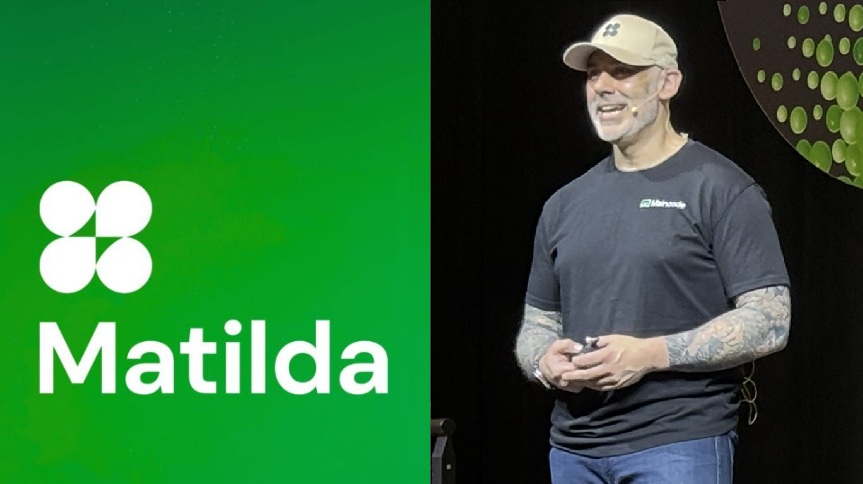

Melbourne-based artificial intelligence company Maincode gave the first public demonstration of its “Australian-made” model Matilda on Wednesday, as co-founder and CEO Dave Lemphers continued to walk back earlier comments that the firm was building truly sovereign AI.
Lemphers debuted Matilda at SXSW Sydney after the AI model, which has been in development for over a year, was initially announced in August as Australia's "first built from scratch, totally sovereign foundational AI model”.
A former Microsoft and AWS data scientist, Lemphers said Maincode had decided to distance itself from the notion of sovereignty after international brands and other organisations sought to collaborate with the company, which builds custom AI models.
“What very quickly became apparent to us was this idea of ‘sovereign AI’ is very divisive and doesn’t really speak to [AI model] builders,” he told Information Age.
“It’s this thing of like, ‘It's us versus them, and we have to be really defensive,' but that’s not actually how it works.
“For example, we’re talking to companies that have their own ideas about what they want to build, and we’re like, ‘Let’s come together and jam.’”
‘Do we use only Australian data? No.’
Lemphers wrote on LinkedIn earlier this month that Maincode had “moved away from the language of sovereignty” due to its work with “the best global partners in hardware, connectivity, and software”.
Maincode's website still states at the time of writing that Matilda was trained in its model factory “using sovereign Australian data”, but Lemphers confirmed the company had also used copyright-free data such as Project Gutenberg — an online database of 75,000 free eBooks.
"Matilda was made by Australians, trained in Australia by an Australian-owned company — for us, that’s Australian,” he said.
“Do we use only Australian data? No, that’s not the purpose of Matilda.
“Matilda is a foundational model we use to build hybrid models for customer scenarios.”
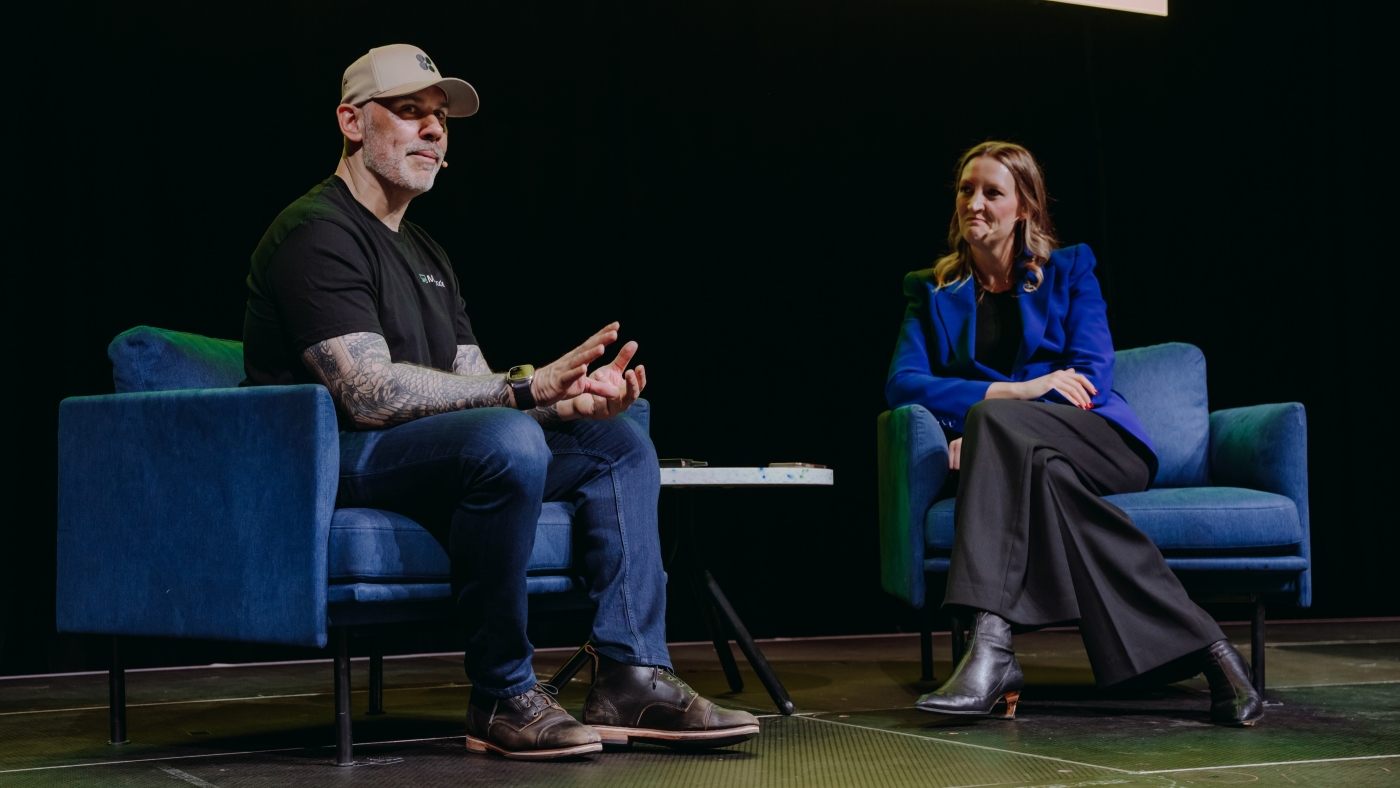
Maincode CEO Dave Lemphers (left) speaking with scientific futurist Catherine Ball (right) at SXSW Sydney 2025. Image: Paul McMillan / Supplied
The demo available for use at SXSW Sydney was trained on data from Australian rules football leagues the AFL and AFLW, including player statistics and information about various teams.
Lemphers said Maincode was also developing pilot models for “a very large Australian bank” and “a very large Australian technology and software company”, and had been approached by “really big brands from overseas”.
“They’re not necessarily sovereign, but they want to work with people who do this for a living," he said.
Maincode has collaborated with the University of Adelaide, the University of New South Wales, and the Victorian state government, he added.
The company also hoped to export Australian-made AI models to other countries, said Lemphers, who mentioned the firm was already in discussions with government representatives in New Zealand.
Maincode dismisses ChatGPT comparisons
Matilda was labelled “Australia’s answer to OpenAI and ChatGPT” by the Australian Financial Review when the model was first announced in August.
Official PR correspondence sent to journalists since then has also described Maincode as “Australia’s answer to OpenAI”.
Asked about such comparisons, Lemphers told Information Age, “We don’t say that … we’ve never made that comparison.”
He said the two companies offered very different models and Maincode “don’t have plans at the moment” to move into ChatGPT’s space.
“We think the things [OpenAI] have done are incredible — without them, we would not even be here — so we have a great amount of respect for them,” he said.
“We certainly don’t see ourselves as competing against them, or replacing them, or anything like that.”
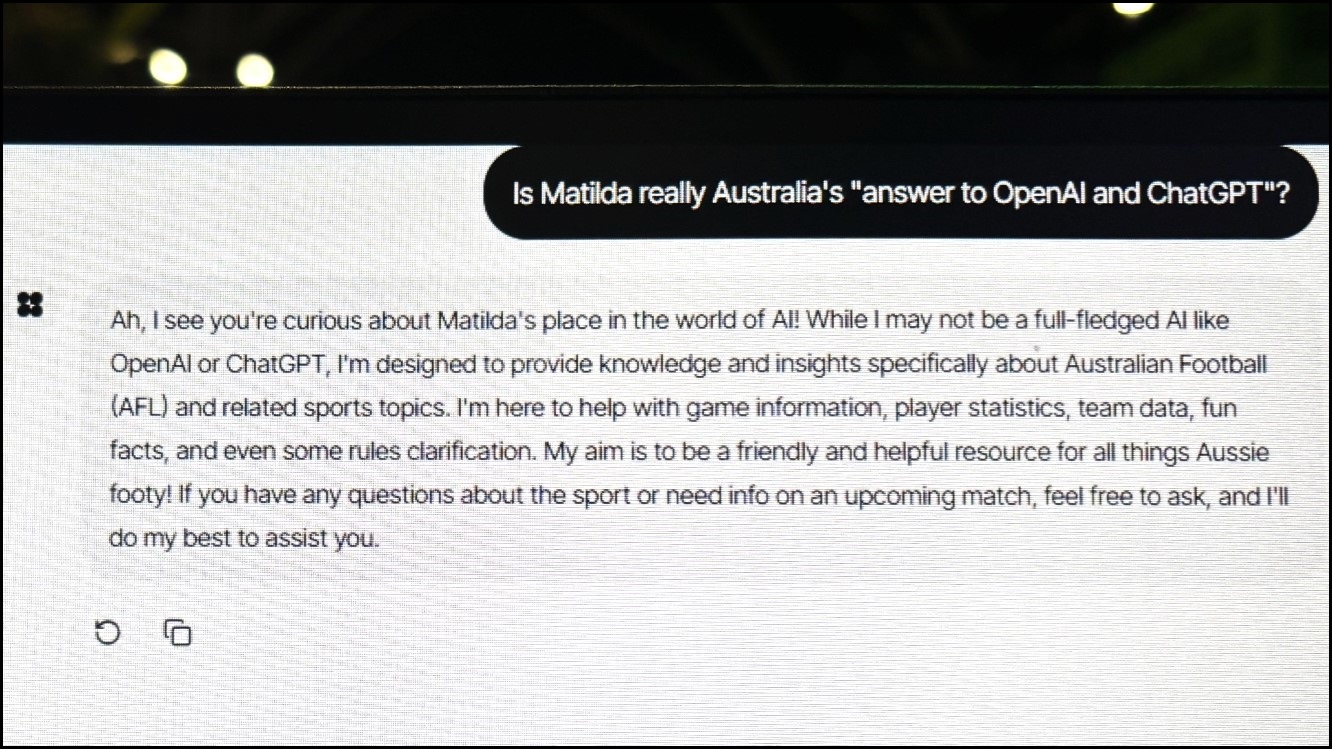
Information Age used Matilda at SXSW Sydney, and asked the model to comment on being compared to ChatGPT. Image: Tom Williams / Information Age
Australia ‘not a safe place’ to share open weights
Lemphers said Maincode did not currently have plans to publicly share Matilda’s open weights — the trained parameters which would allow others to build on the model without needing access to its training data or architecture.
While he did not completely rule out sharing such weights in the future, Lemphers said the company did not want to disclose any of its innovation until it had “the right protection”.
“[Australia] is not a safe place for an organisation like Maincode to disclose anything that we’ve done,” he said.
“Because it’ll be immediately picked up by companies that are not constrained or managed by the Australian government, who are easily allowed to operate on Australian shores and take whatever they want.
“So it’s a purely commercial decision to protect our intellectual property.
“… Using Matilda to build customer solutions right now feels like the right research step.”
Aside from Maincode, other Australian companies have also set out to build their own locally-trained LLMs.
Sovereign Australia AI announced its own plans in September after making an order for 256 Nvidia Blackwell B200 graphics processing units (GPUs) for its AI applications.
In the same month, Tasmania’s Firmus Technologies announced plans to build “Australia’s first sovereign, renewable-powered AI factory campus" with 36,000 NVIDIA GPUs.
Australia’s “first home-grown, open source LLM”, dubbed Kangaroo LLM, was announced by a consortium of companies in September 2024, but has not provided any detailed update on its work since, and did not respond to a request for comment.