



The under-16s social media ban will give young Australians more free time – but most will struggle to fill it, with new research finding young people gave up reading, arts, and playing music for pleasure during COVID in favour of spending more time on social media.
The new University of South Australia analysis of wellbeing survey data tracked 14,350 students, aged 11 to 14, between 2019 and 2022 to see how the way they spent their time after school changed during the lockdowns and social isolation of the pandemic.
During that time, the research found, students stopped using their four to five hours of daily after-school time to participate in music, engage in art, read for fun, hang out with friends, help with tutoring, and play sports – all once common pastimes among youths.
Yet whereas just 25.7 per cent of students never participated in art activities in 2019, for example, this had increased to 70.4 per cent of students by 2022; researchers noted a similar surge among those that never read for fun, from 10.8 per cent to 52.6 per cent.
Students who had never joined extracurricular music activities increased from 70 per cent to 85 per cent.
In the past, these and other solitary activities might have been a refuge for students forced to find ways to pass their time alone – but young people instead flocked to social media to fill the time void that the pandemic created.
Indeed, the proportion of students between 11 and 14 that used social media every day increased from 26.0 per cent in 2019 to 85.4 per cent by 2022 – a figure that has not declined after the end of the pandemic.
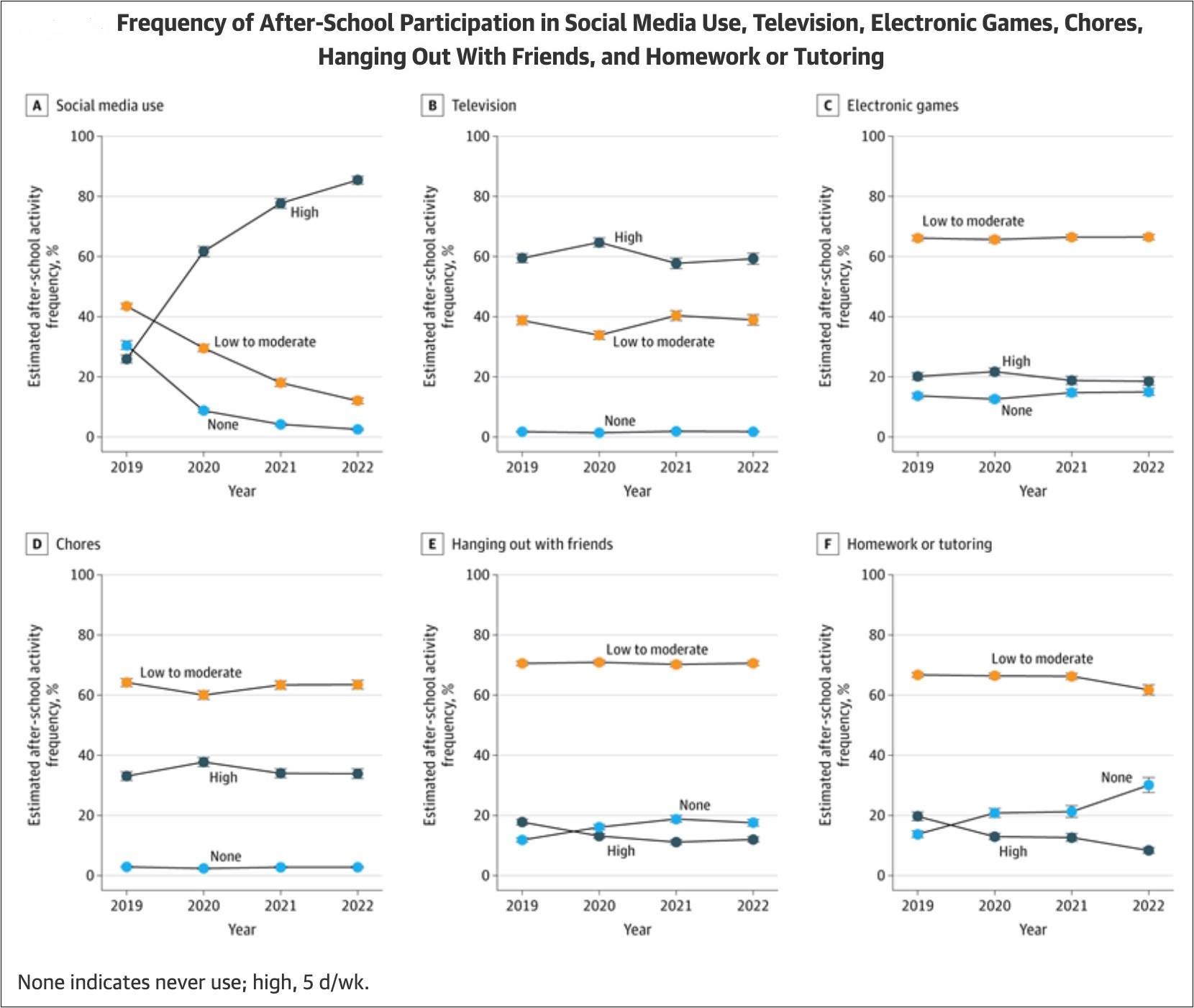
Source: JAMA Network, University of South Australia
The “very, very large increase” in young people’s social media use wasn’t surprising given its importance in maintaining social connections during the pandemic, researcher and PhD student Mason Zhou told Information Age.
Many students learned their social media habits by watching parents working from home, he said – yet as forced isolation ended and students returned to school, he added, they maintained their social media habits to the detriment of other pastimes.
“Students’ behaviour or lifestyle habits during the pandemic continued after that period,” Zhou explained, citing the effect of the life course theory that says students’ future behaviour or lifestyles are shaped by their experiences as adolescents.
“Because these changes happened during a critical stage of adolescence, and because they’ve persisted three years after COVID restrictions ended, they may have lasting impacts on young people’s health and wellbeing.”
Big changes, long-term implications
The findings come as the tech industry prepares itself for the 10 December commencement of the under-16s social media ban, with Meta recently warning its users aged under 16 they had two weeks to download their content before it’s deleted.
And Roblox – which began locking down young users’ accounts in September – is not covered by the federal legislation but nonetheless recently announced plans to launch a selfie-based age verification system in December.
With an estimated 1.3 million Australian children aged 8 to 12 on social media sites despite putative bans – and 95 per cent of 13 to 15 year olds using the sites in 2024 – dropping them from social media will give young people a lot of free time to fill.
That’s going to be confronting for social media users like the 44 per cent of respondents to recent Meltwater research who said they use social media platforms to fill their spare time – the second most common reason after keeping in touch with friends and family.
Teens spent an average 14.4 hours per week online in 2020, according to the eSafety Commissioner, while Meltwater noted that Australians now average 2 hours 58 minutes per day online using their phones – predominantly to access social media.
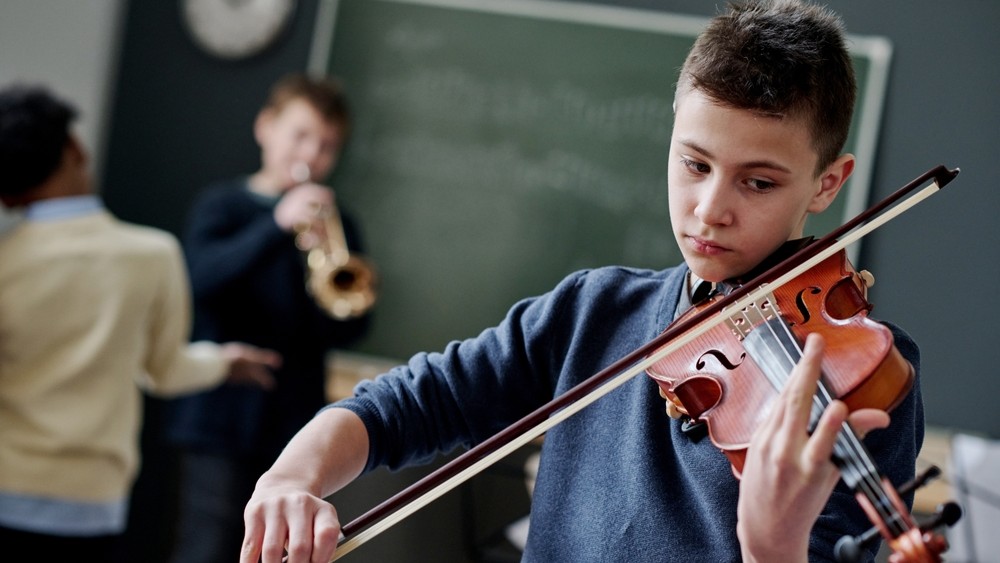
Children are not prioritising music over social media. Photo: Shutterstock
Once young Australians are forced to find other ways to spend their time, will they return to music, art, literature and the kinds of ‘right-brain’ creative, enriching pastimes that spawned the intellectualism of the Renaissance and the centuries since?
An opportunity for parents and educators to step up
The question is more than academic, since such pastimes shape the way that tweens think – and lay foundations for the critical thinking and other soft skills that employers crave even more than technical skills.
Creative pastimes seemingly prime young people for university Arts courses that teach such skills – which have seen a surge in interest and pricetags despite 2020 moves to steer young people away from arts subjects towards more ‘job-relevant’ courses.
Through this lens, the removal of under-16s from social media is an opportunity for parents, educators and policymakers to steer them back towards enriching pastimes – a goal that UniSA Professor Dot Dumuid, Zhou’s co-researcher for the study, supports.
“If social media is dominating [children’s] time, it poses developmental risks,” Dumuid said, warning that – without appropriate guidance – restricting access may just see children shifting to other digital platforms like gaming, messaging apps, or watching TV.
Children participating in extra-curricular activities like sports and arts “generally have better academic outcomes, stronger self-identity, improved social skills and better mental health,” she said, “all of which support mental and social development.”
Supporting young people’s wellbeing in the absence of social media means “we need to help them rebalance their time,” Dumuid explained, “encouraging them to reconnect with real-world activities that build skills, confidence, and social connection.”