
With another 12 months of news behind us, it’s time to open the installation file on a new year and ponder what we’re likely to see in the wild world of technology in 2026.
Developments in generative artificial intelligence dominated tech news in 2025, and we’re likely to see much of the same in 2026 as AI boosters continue to talk up the technology’s power while skeptics warn of a possible market bubble.
Aside from all the AI chat, 2026 is also likely to see a major shift in Australia’s online culture amid the under-16s social media ban and further age checks on platforms such as porn sites and search engines.
To find out more about what to expect in 2026, click on the sections below or simply read on:
- Australians will face more age checks across the internet
- The under-16s social media ban goes whack-a-mole
- Brace yourself for more AI in the workplace
- Apple's big year: A new Siri, new execs — and maybe a foldable iPhone
- AI becomes ‘the norm’ in cyberattacks
- SpaceX likely misses its goal of sending Starship to Mars
1. Australians will face more age checks across the internet
While the social media ban for under-16s forced new age assurance checks on technology giants and many Australians in December 2025, locals can expect to be asked to prove their age on even more platforms in 2026 — including search engines, porn sites, and app stores.
New legally enforceable industry codes co-developed by technology companies were registered by Australia’s eSafety Commissioner in 2025 for age-restricted content.
The codes state that platforms will need to hide or blur inappropriate content, and some will need to implement age assurance technologies similar to those seen in the under-16s social media ban.
Such technologies can include age verification systems, which use government documents or ID; age estimation systems, which typically use biometrics such as a selfie; and age inference systems, which often use data about online activity or banking accounts to infer a person’s age.
Australians can expect to be asked to prove they are aged 18 or over when accessing pornographic websites from 9 March 2026, when such services will be required to implement age assurance measures.
Australians signed in to search engines such as Google or Bing can expect to face age checks by 27 June 2026, when such services will be required to introduce age assurance and further filter search results for under-18s.
App distributors such as Google Play and Apple’s App Store will also be required to implement age assurance measures by 9 September 2026 so that only adults can download apps meant for over-18s, and they must also make sure apps are appropriately age-rated.
The new codes also require AI services to prevent chatbots from having sexually explicit conversations with minors — and we’ve already seen ChatGPT creators OpenAI announce plans to implement age checks as more online safety rules pop up around the world.
If Australia's new industry codes are not followed, companies can face civil penalties of up to $49.5 million per breach — just like under the country’s social media age ban.
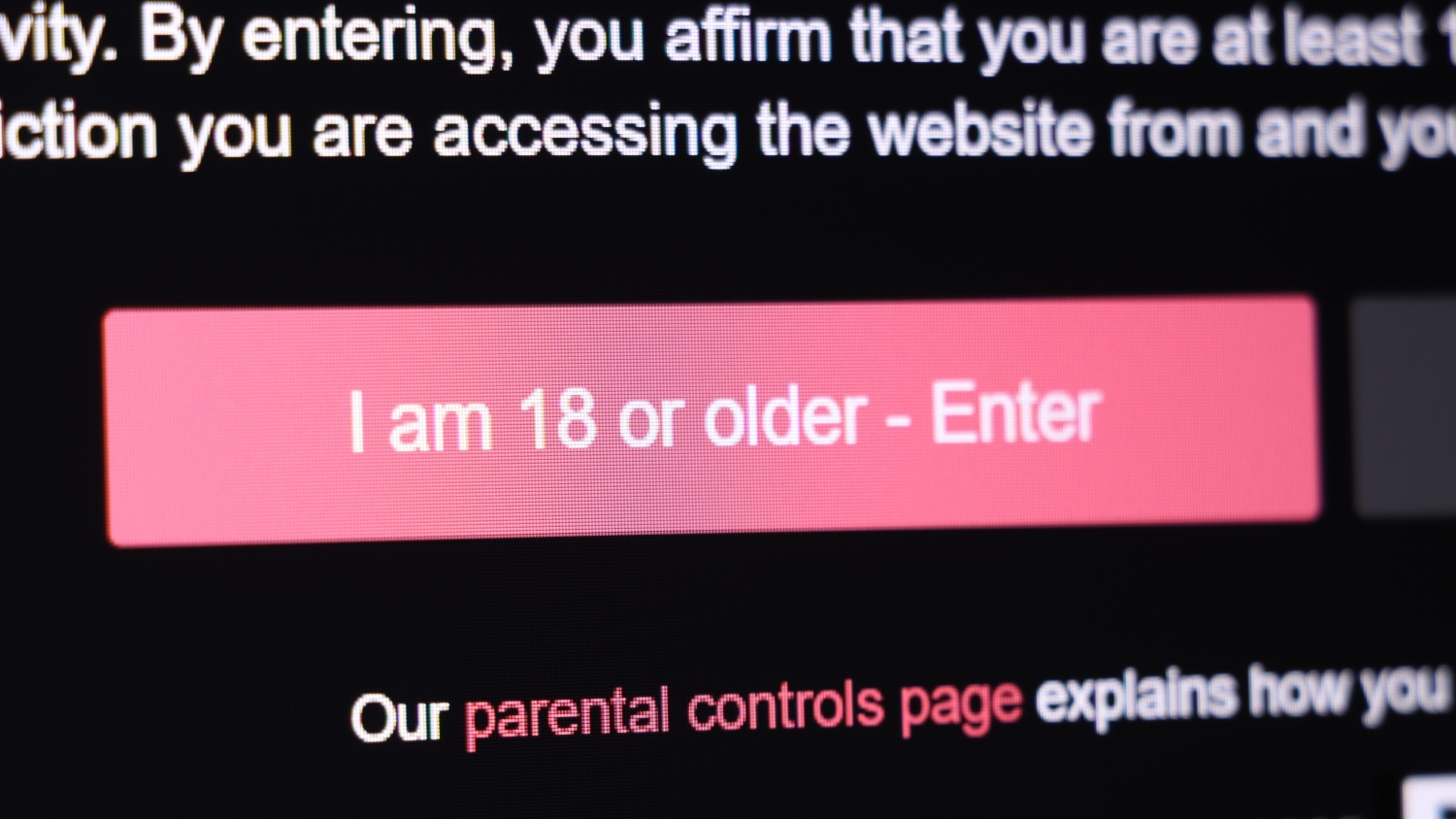
Australians will be asked to prove they are 18 or over when accessing pornographic websites from March 2026. Image: Shutterstock
2. The under-16s social media ban goes whack-a-mole
Australian children began moving to new online platforms even before under-16s were banned from almost a dozen popular social media apps on 10 December, and we can expect more platform-shifting in 2026.
Lesser-known apps such as Lemon8, Yope, and Coverstar began gaining traction with local users in November 2025, as young people jumped to platforms not designated under the government’s ban — which prohibits them from having accounts on the likes of TikTok, Snapchat, and Instagram.
We could well see some legislative whack-a-mole in 2026, because both the government and eSafety Commissioner Julie Inman Grant have pledged to monitor platforms which they have not yet designated and bring them under the ban if they deem it necessary.
There has also been a rise in the use of virtual private networks (VPNs) to disguise a device’s location, but authorities and social media platforms caught up in the age ban have dismissed the technology’s ability to trick them into thinking users are not located in Australia.
Under-16s were banned from holding accounts on 10 popular social media platforms in December 2025. Image: Shutterstock
Speaking of tricking people, the Australian Competition and Consumer Commission (ACCC) has warned scammers could target social media users in 2026 by pretending to be from social media platforms, age assurance providers, government, or law enforcement to trick people into sharing their ID or personal information.
Several other countries including Canada, Malaysia, Denmark, Norway, Ireland, and France are either developing or considering implementing similar social media age bans, and we could see some of those plans solidify in 2026.
Australia’s ban, meanwhile, is facing court challenges from Reddit and a group of free speech advocates — but experts have argued neither is likely to succeed.
The next legislative step for online safety we are likely to see from the Australian government in 2026 is the creation of a 'digital duty of care’ on Big Tech companies and platforms, after proposed legislation was delayed in 2025.
The laws would legally force major online platforms, including social media apps, to actively shield users from harm instead of relying on current systems involving users reporting issues to the platforms themselves.
3. Brace yourself for more AI in the workplace
While 2025 was the year agentic AI became slightly more useful — but still not great for much beyond software engineering — 2026 is likely to see many workplaces more deeply integrate generative AI systems.
More AI projects, including AI agents, are expected to move out of experimental or pilot stages in 2026 as more businesses demand return-on-investment (ROI).
However, market intelligence company IDC suggests "45 per cent of AI-fuelled digital use cases in Asia-Pacific and Japan will fail ROI targets due to unclear gains and poor data foundations” in 2026.
The Australian government is also planning to more deeply integrate AI tools in its own work in 2026, while also launching an Australian AI Safety Institute.
While it already holds AI contracts with the likes of Microsoft and OpenAI, the government has plans to appoint a chief AI officer to every federal agency in 2026 to “drive adoption and advocate for strategic change” in each office.
The change is also expected to see every government worker given access to generative AI tools, as well as guidance and training on how to properly use them.
Sharryn Napier, Asia-Pacific vice president at Microsoft’s developer platform GitHub, argued government agencies could become “talent magnets” by embracing agentic AI in the coming year.
“AI-powered workflows will attract developers who have long avoided the sector due to legacy systems and slow delivery cycles, unlocking a new wave of innovation and better outcomes for citizens,” she said.

Prepare to hear a whole lot more about generative AI agents and tools in 2026. Image: Shutterstock
The increasing focus on AI at work could see more local tech companies begin to unofficially embrace the so-called ‘996’ grind culture to boost their productive in the AI race, according to Australian technology recruiter Ellis Taylor.
The ‘996’ work culture refers to working from 9am to 9pm six days a week, for a total of 72 working hours per week.
The concept, which originated in China’s tech industry, was adopted by some Silicon Valley firms and startups in 2025 — including many working in AI — but has since begun to spread to other countries.
Taylor recently wrote that two of his firm’s clients have already “unofficially” adopted the ‘996’ mindset in Australia.
“I was skeptical, though their talent bars are arguably the highest in Australia,” he wrote.
“You’ll soon be competing with more and more of these companies who are conceptually twice as productive.”
While some organisations have begun demanding or allowing AI to be used during recruitment assessments, research and advisory firm Gartner argues “atrophy of critical-thinking skills, due to genAI use, will push 50 per cent of global organisations to require ‘AI-free’ skills assessments” in 2026.
“Recruitment will increasingly emphasise the ability to demonstrate problem-solving, evidence evaluation and judgment without AI assistance,” the company said.
“This shift will lengthen hiring processes and intensify competition for talent with proven cognitive capabilities.”
Some industry figures have also suggested physical AI systems could become more prominent in workplaces and society in 2026.
Physical AI essentially refers to using AI to take actions in the real world — think self-driving vehicles, autonomous drones, humanoid robots, and smart factories and warehouses in which robots and humans interact.
As Rev Lebaredian, vice president of simulation technology at Nvidia, said at the company’s AI Day conference in Sydney in October:
“The era that is upon us now is one where we’re going to take these [AI] agents and give them physical bodies — so they can interact inside the physical world, and not only manipulate ones and zeroes, but manipulate atoms.”
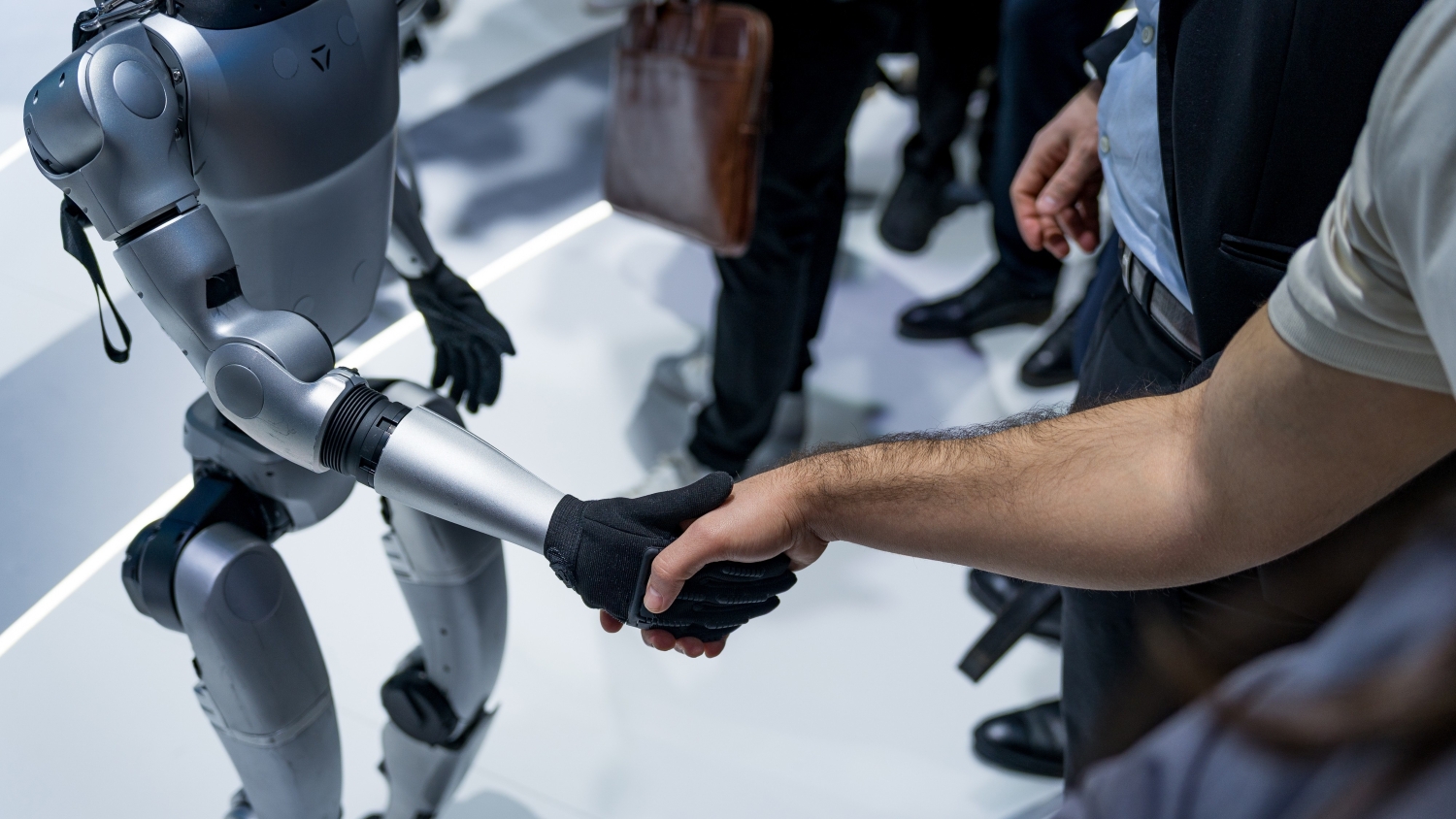
Humanoid robots are slowly beginning to hit the consumer market. What could possibly go wrong? Image: Shutterstock
Nvidia — which has ridden the genAI boom’s demand for its GPUs to become the most valuable company on Earth — has repeatedly argued that physical AI will be the technology’s “next ChatGPT moment”.
Dr Tomasz Bednarz, the company’s director of strategic researcher engagement, told the CEDA 2025 AI Leadership Summit in October that physical AI was “the next trillion-dollar industry” and “the next steppingstone” was humanoid robots.
“We believe it’s time for them,” he said.
Tesla says it plans to begin producing millions of its Optimus humanoid robots in 2026, but CEO Elon Musk is known for often over-promising — something we’ll revisit a little later in this article.
4. Apple's big year: A new Siri, new execs — and maybe a foldable iPhone
Apple has a lot riding on 2026.
The iPhone maker is promising to finally deliver a deep generative AI revamp of its digital assistant Siri, which it heavily marketed for 2025 but delayed releasing as it continued to fall behind its AI rivals.
While Apple released a suite of AI features as ‘Apple Intelligence’ in 2024 and added new features in 2025, Siri’s AI upgrades have so far been limited.
In March 2025 the company pulled a series of TV advertisements it had used to promote an unreleased version of Siri which used genAI to tap into a user’s personal information and apps to find answers and carry out actions, much like an AI agent.
CEO Tim Cook says “a more personalised Siri” is now on track for 2026.
Speaking of Cook — while there has been some speculation that Apple’s chief will step down in 2026, the company is already undertaking one of its largest executive revamps in recent years, following a string of big-name departures.
Apple announced the departure of its AI head John Giannandrea in December, with former Google and Microsoft AI researcher Amar Subramanya joining the company to lead Apple’s AI work.
Days later, it was reported Meta had poached Apple's chief of user interface design, Alan Dye, to become the social media giant's chief design officer as it pushes further into hardware such as smart glasses.
Apple also announced its general counsel Kate Adams would step down from her role and be replaced by Meta’s chief legal officer Jennifer Newstead, while its head of governmental affairs Lisa Jackson would also retire in January 2026.
Amid major executive shakeups, Apple is said to be working on several key new devices — the first of which we could see in 2026.
The company is reportedly planning to either release or tease its first foldable iPhone in 2026, taking it into a category which competitors such as Google and Samsung have already existed in for several years.
 Apple is expected to tease or release its first foldable iPhone in 2026. AI-generated image: Tom Williams / Information Age
Apple’s move into foldables is expected to see shipments of foldable smartphone screens grow 46 per cent year-on-year in 2026, according to market analyst firm Counterpoint Research.
Guillaume Chansin, an associate director at Counterpoint, said Apple would be “the key driver” as it started to purchase panels for a book-style folding iPhone.
“We also think a foldable iPhone is going to reinvigorate the broader market, helping to massively grow panel shipments in 2026,” he said in a statement.
“… We are moving into a new era where book-type foldables will be the main form factor for the segment.”
Apple is also reportedly planning to rejig its iPhone release schedule, with its more premium Pro and foldable devices to be released in September and its cheaper base iPhone models to be released six months later around March or April.
Aside from a foldable iPhone, 2026 could also see Apple unveil new smart home devices, touchscreen MacBooks, or smart glasses, according to several reports.
5. AI becomes ‘the norm’ in cyberattacks
Experts predicted both offensive and defensive uses of AI were likely to become increasingly visible in cybersecurity in 2025 — which largely rang true — and many are expecting things to escalate further in 2026.
“We anticipate threat actors will move decisively from using AI as an exception to using it as the norm,” Google’s Threat Intelligence lab wrote in November.
“They will leverage AI to enhance the speed, scope, and effectiveness of operations, streamlining and scaling attacks across the entire lifecycle.”
Both attackers and defenders are expected to more heavily utilise agentic AI to carry out their work, Google Threat Intelligence said, with cybercriminals also expected to “accelerate the use of highly manipulative AI-enabled social engineering” in 2026.
This includes what is known as vishing (voice phishing), in which an AI-generated clone of a person’s voice is used to impersonate company staff or executives — a technique which some speculated was potentially used in 2025’s Qantas data breach.
“The use of AI-generated audio has already been observed in extortion attempts, but in 2026 we expect organisations to face an onslaught of audio- and video-generated content used for business email compromise, phishing, and other targeted attacks,” wrote Dr Carl Windsor, chief information security officer at cybersecurity firm Fortinet.
“If people already fall for text-based attacks, resulting in billions of dollars of losses, imagine how many there will be once people receive calls or even video calls from their CEO telling them to transfer money,” he said.
Harry Chichadjian, security director for Australia and New Zealand at search AI company Elastic, argues cybersecurity will see “an accelerating AI arms race” in 2026.
Given threat actors’ use of AI tools and cyber skills shortages reported by many Australian organisations, “AI is the only viable solution to the problems it creates", he tells Information Age.
“By automating repetitive triage and surfacing high-fidelity insights, AI empowers analysts to do more with less and transforms detection and response from reactive firefighting to a continuous, data-driven defence.”
6. SpaceX likely misses its goal of sending Starship to Mars
While Elon Musk’s SpaceX has been saying for years that it plans to send its first Starship rocket to Mars in 2026, it appears everything would have to go perfectly smoothly for that to occur — and nothing goes perfectly smoothly in rocket science.
The company's ambitious goal had a major setback in June 2025 when a Starship rocket exploded during a static fire test.
 SpaceX's plans to begin a Starship flight to Mars in late 2026 are unlikely to pan out as it had hoped. Image: SpaceX / Supplied
Musk has acknowledged there is only a “slight chance” of a Starship liftoff to Mars in November or December 2026 — the next time Earth and Mars’s orbits are aligned — as “a lot needs to go right for that”.
“More likely, first flight without humans in about 3.5 years, next flight about 5.5 years with humans,” he said in August.
The first Starships to attempt to land on Mars would “gather critical data on entry and landing, serving as the forerunners to future crew and cargo deliveries to the Martian surface”, SpaceX has previously stated.
The company is also reportedly planning to go public in 2026 as it seeks to raise more than $US30 billion ($45 billion) in what could be one of the largest initial public offerings to date.
It could well be too risky to attempt a Mars flight in the same year.
You can look back at Information Age’s 12 top stories of 2025 here.