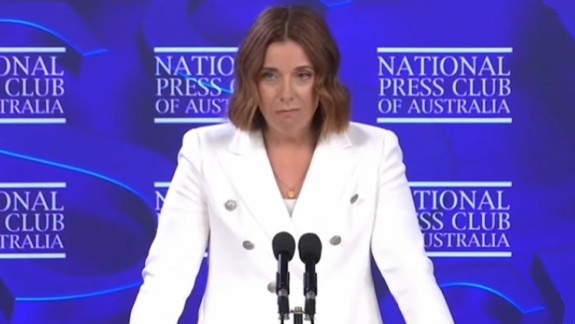

Australians shouldn’t expect the new social media age ban to instantly wipe every under-16 user from the major platforms, nor will tech giants be fined immediately for failures, Communications Minister Anika Wells has warned.
From 10 December, any social media service that meets certain criteria must take “reasonable steps” to stop under-16s from holding accounts, or risk fines of up to $49.5 million.
Speaking at the National Press Club one week before the rules take effect, Wells said it will likely take “some time” before most children’s accounts are removed.
“Yes, there will still be kids with accounts on 10 December, and probably for some time after that,” she said.
“But our expectation is clear: any company that allows that is breaking the law.”
Wells – who is currently embroiled in a travel controversy after spending almost $95,000 to fly to New York – said children will naturally try to bypass age checks, and that the new “age assurance sieve” will take time to catch existing underage accounts and block new ones.
She added that while the system won’t be perfect at the start, the government won’t ease pressure on the platforms.
“We know it won’t be perfect from day one, but we won’t give up – and we won’t let the platforms off the hook.”
Regulation takes time
Wells said that regulation “rarely acts fast” and that tech firms will not be facing the fines straight away.
“What you can expect is on 11 December, eSafety will send notices to the 10 platforms we have named in our dynamic list,” she said.
“These notices will seek evidence including how many underage accounts they had on 9 December before the law started and…after.”
She also suggested that newer apps gaining popularity as potential workarounds may be captured by the ban.
Lemon8, a social media service owned by TikTok parent company ByteDace, and Yope, a photo-sharing app, have both skyrocketed up the Apple and Android app stores, and are being promoted as services to get around the age ban.

Teenagers are already jumping on other apps to circumvent the under-16s social media ban. Photo: Shutterstock
Wells said the government would have “more to say” about these platforms, while the eSafety Commissioner has issued a “please explain” to these companies and asked them to self-assess whether the age rules apply to them.
YouTube to comply, but not happy about it
In the lead up to the ban coming into effect, a number of social media giants have unveiled how they plan to comply with it.
YouTube on Wednesday confirmed it would be complying with the social media age ban, but expressed strong dissatisfaction with the policy.
In a blog post, YouTube Australia public policy senior manager Rachel Lord said that from 10 December, YouTube users aged under 16 will be automatically signed out and lose access to certain features, and the channels of creators aged under 16 will no longer be viewable.
These users will be presented with a pop-up notice saying “Due to a new local law, you won’t be able to sign in…videos you’ve created won’t be visible on YouTube, but you can always download them”.
The age of YouTube users will be determined based on age association with their Google account, and “other signals”, Lord said.
These users will still be able to continue watching YouTube videos while signed out.
Lord called the changes “disappointing”.
“This rushed regulation misunderstands our platform and the way young Australians use it,” Lord said in the blog post.
“Most importantly, this new law will not fulfil its promise to make kids safer online, and will, in fact, make Australian kids less safe on YouTube.
“Even as the ban comes into effect next week, we will continue to work with the Australian government to advocate for effective, evidence-based regulation that actually protects kids and teens, respects parental choice and avoids unintended consequences.”
YouTube initially avoided the social media age ban, but was later included in it after the eSafety Commissioner labelled its omission “inconsistent”.
Google cops fine
YouTube parent company Google was this week fined $55 million by the Australian Federal Court for uncompetitive agreements with Telstra and Optus that limited the choice of consumers when it came to search engines on their Android devices.
The understandings from December 2019 to March 2021 restricted Android devices to just having Google as the pre-installed search engines.
In turn, Telstra and Optus received a share of the revenue Google hoovered in from ads displayed when Google Search was used on the phones.
Google earlier this year admitted to this behaviour and jointly submitted with the consumer watchdog that it should pay a $55 million penalty, which was accepted by the Federal Court this week.