
After a decade of work, the federal government has committed to finalising formal road rules, regulations, and technical and cybersecurity standards for self-driving cars by 2027, even as autonomous vehicles are already on Australian roads.
The new National Road Transport Technology Strategy (NRTTS), including the 2024-27 National Connected and Automated Vehicle (CAV) Action Plan nationwide framework, replaces National Land Transport Technology Action Plans from 2020-23 and 2016-19.
Earlier plans made “significant progress… in preparing for the deployment of CAVs,” the new plan says, noting simultaneous work to develop a single national automated vehicle safety law (AVSL) “so that automated vehicles (Avs) operate safely and legally on public roads.”
Recognising the need for nationally consistent laws around self-driving vehicles and other emerging road transport technologies, the strategy new considers issues such as safety, accessibility, security, data and privacy, standards and interoperability.
Designed to “complete the work underway to establish the end-to-end AV regulatory framework for the safe commercial deployment of AVs in Australia,” the new plan replaces the now deprecated National Policy Framework for Land Transport Technology.
That framework included development of self-driving car regulations and refining Co-operative Intelligent Transport Systems (C-ITS) for inter-vehicle communications – one-time “emerging road transport technologies” that are now the work’s focus.
By 2027, the new framework commits the government to finalising a national regulatory framework for automated vehicles; leveraging agreed principles to create a national roadmap for C-ITS; and “cross-cutting” legal, privacy, infrastructure and other actions.
The plan “will help identify gaps in Federal, state and territory laws to ensure these systems are helping keep Australians safe on our roads,” said Catherine King, Minister for Infrastructure, Transport, Regional Development and Local Government.
The CAV horse has already bolted
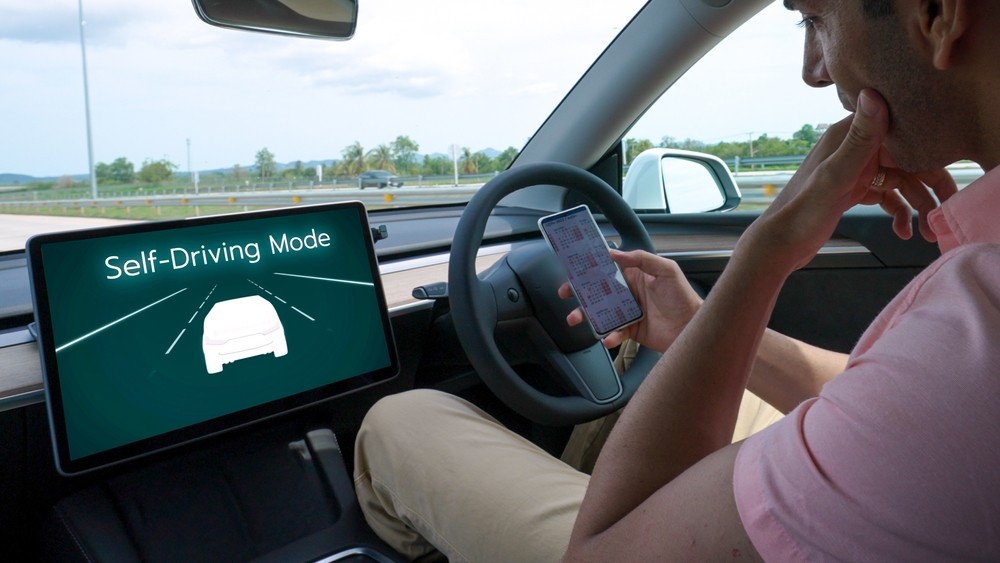
The new action plan comes weeks after revelations that car giant Tesla had quietly sideloaded its Full Self-Driving (FSD) (Supervised) technology into a range of Australian vehicles, seeding it with reviewers who casually disregarded road rules to try it out.
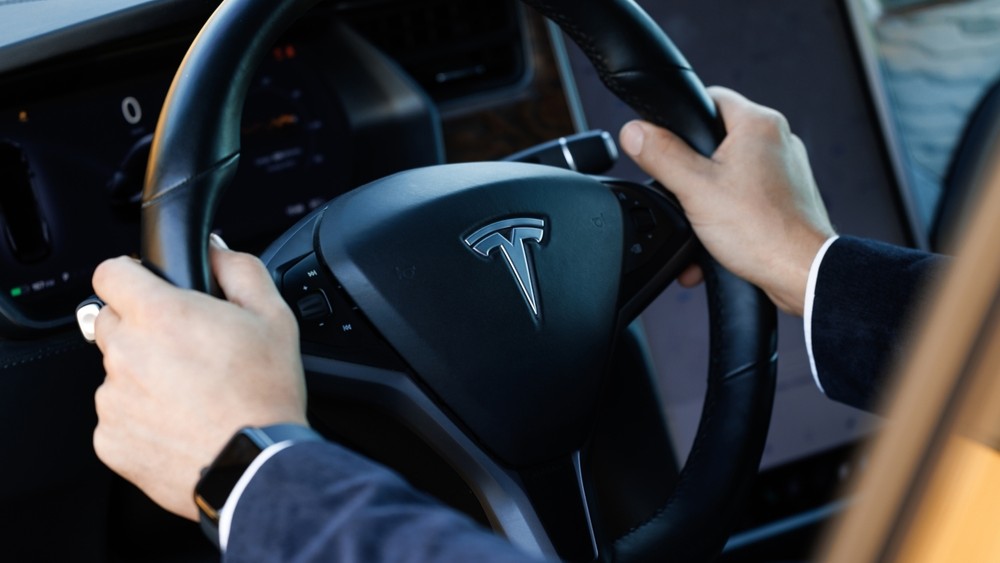
There are state requirements that drivers maintain control of their vehicles at all times. Photo: Shutterstock
Despite state requirements that drivers maintain control of their vehicles at all times, FSD – which this month became officially available to Tesla owners as either a $10,100 one-off payment or a $149 monthly subscription – is now live on Australian roads.
Its launch was seemingly never considered by the authors of the new CAV Action Plan, which says the AVSL will ensure “AVs operate safely and legally on public roads”, informing UN-led efforts to develop international AV standards.
Those standards will inform Australian Design Rules (ADRs) “for the first provision of vehicles with an ADS to the Australian market…. so that vehicles with these features and systems can be supplied in Australia” by the time the AVSL is finalised in 2027.
Given that ADS vehicles are already operating on Australian roads, the new CAV Action Plan’s two-year timeframe shows just how far behind the curve the government’s regulations are – and how legally ambiguous today’s FSD-enabled Teslas are.
The local launch has also pressured insurers that are still considering the insurability of self-driving cars – a question the plan addresses by suggesting the AVSL “will primarily regulate the corporations that assume responsibility for vehicles with an ADS”.
Apportioning blame for the failures of self-driving cars became critical after Tesla was recently fined $364 million ($US243 million) – a finding it is appealing – for FSD’s role in a fatal Florida car crash that drove it to settle other similar cases last month.
The Action Plan’s pronouncement would seem poised to exculpate drivers using FSD, significantly upping the legal exposure of Tesla and any other companies subsequently introducing self-driving cars to Australia.
Getting self-driving cars to talk
Even as Tesla drivers explore the impressive and harrowing capabilities of FSD in live tests – a process that has one expert referring to Australian road users as “guinea pigs” – the new CAV Action Plan is simultaneously looking to finalise a key control technology.
C-ITS – which lets vehicles wirelessly co-ordinate their actions with other nearby vehicles by broadcasting messages about their position, movement, and actions –has been in development in Australia for years, with strong successes in trials to date.
Principles for nationwide C-ITS deployment have been endorsed by transport ministers and trials “have grown in size and complexity”, with programs of work including a Security Credential Management System to ensure C-ITS signals can’t be spoofed.
Based on the new CAV action plan, the AVSL and self-driving car regulations will probably be finalised before widespread C-ITS deployment, which will first require a range of work including the building of a national C-ITS roadmap slated for this year.
Vehicle connectivity standards will be translated to ADRs as they are finalised internationally, with efforts focused on ensuring that Australia’s C-ITS systems can be used by imported vehicles “to minimise barriers to entry and deployment”.
With a slate of ‘cross-cutting actions’ also outlined, transport authorities and their legal counterparts have their work cut out for them.
The initiatives outlined in the new CAV Action Plan, King said, “build on existing work… to ensure these new technologies are fit for purpose…. We know as technology in vehicles progresses, it is important we keep relevant frameworks up to date.”