
Wi-Fi was initially created to connect devices within around 50 metres of a base station, but new innovations are expanding its usefulness – and its range – as Australian firm Morse Micro gears up to launch Wi-Fi with a proven range of 16 kilometres globally by next year.
The Sydney based company – which also has offices in the UK, California, Taiwan, China, India and the UK – last year reported that Wi-Fi HaLow, which is officially known as IEEE 802.11ah, had streamed video at 2Mbps over 16km in a remote desert area.
That’s well off the 106km world record held by Wi-Fi HaLow pioneer Teledatics – yet, Morse Micro notes, such tests aren’t “just about maintaining a connection [but] about delivering meaningful data rates that can support practical applications.”
For a team including the original inventors of Wi-Fi – a CSIRO invention that dates back to the 1990s – the sweet spot for those applications is the Internet of Things (IoT), a market that it will pursue through a newly minted deal with Browan Communications.
That deal will pair Morse Micro’s MM8108 chip with Browan’s wireless technology to release IoT 2.0 products that Morse Micro co-founder Michael de Nil calls “a new class of connected devices [that] scales across industries and applications.”
It follows a series of deals with industrial technology suppliers like Gateworks, The Things Industries, LitePoint and AzureWave that will, backed by $88 million in recent Series C funding, help Morse Micro use Hi-Fi HaLow to extend IoT across large distances.
That included $35 million from the National Reconstruction Fund Corporation (NRFC), whose CEO David Gall noted that as “Australia’s largest semiconductor manufacturer and a home-grown Australian success story” Morse Micro employs over 130 people and has 36 patents.
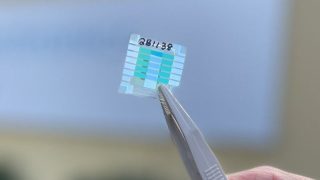
Morse Micro’s Wi-Fi HaLow technology can penetrate walls and other obstacles that stop normal Wi-Fi in its tracks, reaching up to 1km away in urban environments and 16km in rural environments – but what does its technology actually do?
Read on to find out.
How is Wi-Fi HaLow different to normal Wi-Fi?
Wi-Fi HaLow is part of a family of wireless networking standards that dates back to 1997, when the original 802.11 standard was released based on research work at CSIRO.
Wi-Fi operates in unlicensed radiofrequency bands – most commonly 2.4GHz but also, since the 1999 introduction of 802.11a, 5Ghz and, since Wi-Fi 6 (802.11ax) was introduced in 2021, 6GHz.
In general, the higher the frequency the faster data can be sent – but the shorter the range and the more likely the signal is to be intercepted by walls, buildings, and other obstacles.
So, while new Wi-Fi standards have generally focused on increasing the speed of your Wi-Fi services, coverage has suffered – part of the reason why today’s fast in-building wireless networks frequently use mesh Wi-Fi to extend their range.
First published in 2017, Wi-Fi HaLow takes a different approach by using radiofrequency bands in the 860MHz to 900MHz range, which were previously used to connect mobile phones to base stations kilometres away.
In 2021, the government made this spectrum available again by auctioning it off after the shutdown of 2G mobile services – as it will do again after last year’s 3G shutoff – and that spectrum is now available for technologies like Wi-Fi HaLow.
In Australia and New Zealand, Wi-Fi HaLow is focused in the 915MHz to 928MHz sub-band, although exact frequencies vary by country.
Signals at these frequencies can penetrate walls and obstacles much better than those at 2.4GHz or higher speeds, meaning that Wi-Fi HaLow will behave much differently – and reach much farther – than the Wi-Fi you use every day in your home or office.
What products will support it?
Morse Micro’s testing proved it could sustain a 2Mbps streaming video service from 16km away, Wi-FI HaLow isn’t about logging onto your home Wi-Fi network from your office; rather, the company sees it as a game-changer for IoT devices operating across large areas.
Morse Micro believes Wi-Fi HaLow will prove more useful than alternatives like LoRaWAN, RedCap – an Optus backed low-power 5G standard running at 150Mbps/50Mbps – and LTE-M and NB-IoT, which Telstra uses to support IoT devices like meters, sensors, and trackers.
Wi-Fi HaLow, de Nil said, will provide “ultra-long range, ultra-low power, and massive capacity” that will allow the company and its partners to “revolutionise IoT, similar to the way Wi-Fi did for computers and laptops.”
Morse Micro released a development platform for Wi-Fi HaLow last year and its partnership with Taiwanese firm Browan Communications is expected to deliver new devices by next year – using both companies’ tech to offer speeds of up to 43Mbps at “extended range”.
This means it could support everything from periodic water sensors to remote, solar-powered monitoring cameras – letting farmers track remote paddocks, herds and crops, or businesses to set up surveillance cameras across multi-hectare campuses without wiring.
Like all Wi-Fi technologies, Wi-Fi HaLow is hardware-dependent so you won’t see support for it in your smartphone any time soon, although it could in theory be added to existing Wi-Fi chipsets that already support a range of 802.11 standards.
Why would I want to use it?
Wi-Fi HaLow’s better penetration of walls means you may be able to use it to simplify your office (or home office) network – connecting handheld devices, tracking tags and equipment across a corporate campus, multi-level office building, warehouse, or remote site.
Since a 16km radius would allow one Wi-Fi HaLow base station to cover over 800 square kilometres, it could be transformative for smart cities – which will be able to connect hundreds of traffic and street lights, parking meters, sensors, cameras, back to a single point.
ABI Research expects there will be over 100 million Wi-Fi HaLow devices in use by 2029, while Omdia IoT practice lead Andrew Brown believes the market for Wi-Fi HaLow equipment will quickly grow as customers expand from video to other applications.
“HaLow has a distinct advantage over other low power wireless technologies in the transmission of high-resolution video,” he said.
“If HaLow can establish a market beachhead in video, the infrastructure can then be leveraged for non-video IoT applications.”