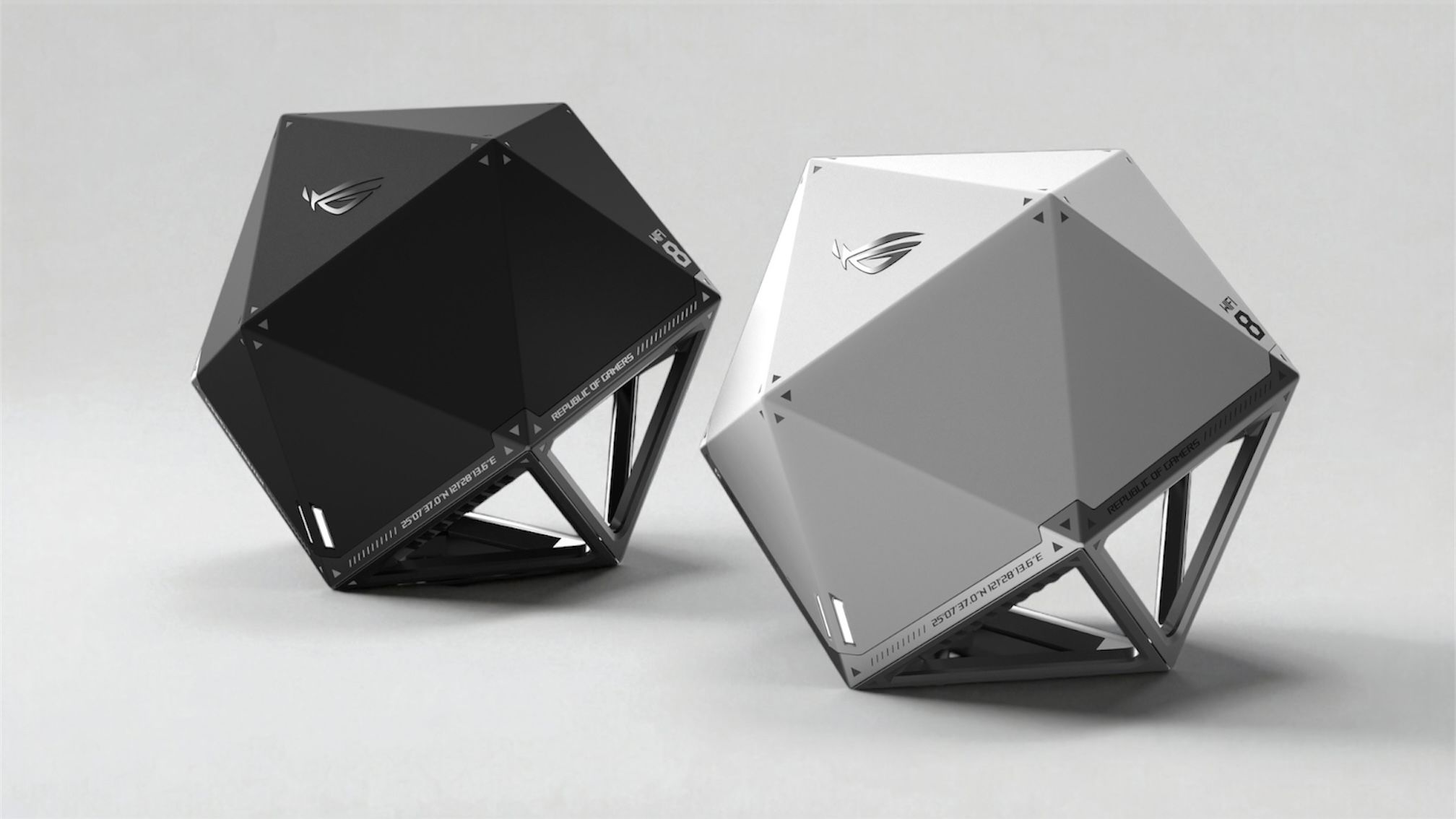

With Wi-Fi 7 compatible equipment barely in the market, vendors at CES 2026 took the opportunity to show off early versions of Wi-Fi 8 gear that could hit by year’s end – but it is only the start of a flood of wireless innovation on the way.
Described as an “AI enabling” Wi-Fi standard that is “smarter and more dependable” than earlier versions, Wi-Fi 8 – formally known as IEEE 802.11bn – comes on the heels of Wi-Fi 7 (802.11a), whose formal device certification program for retail devices only began in 2024.
That standard came three years after Wi-Fi 6, which itself took eight years to be finalised after Wi-Fi 5 emerged in 2013 – with ever-shorter development cycles highlighting the rapid pace of innovation in an industry sector keen to give customers new reasons to upgrade.
The design and technical components of the 802.11bn project are still being finalised, but that did not stop vendors like ASUS, MediaTek, Broadcom and TP-Link from visiting CES with live, working early versions of Wi-Fi 8 equipment that will evolve with the standard.
Early working group objectives aimed to improve performance, latency, and connection reliability by at least 25 per cent compared with Wi-Fi 7, which was focused primarily on boosting speed but made some reliability compromises that Wi-Fi 8 aims to remedy.
Wi-Fi devices communicate with base stations using a range of wireless channels at once, for example – but when there is interference or devices are at the fringe of the Wi-Fi signal, transmission on all channels slows down at the same time, reducing speed and range.
Wi-Fi 8 addresses this with technologies like Unequal Modulation (UEQM) – which lets devices only slow down channels that are suffering interference – and eight new Modulation and Coding Schemes (MCS) that provide more options for transmission speeds.
This means that instead of having a fast Wi-Fi connection that quickly drops off as you move away from the base station, Wi-Fi 8 will be able to gently wind back transmission speeds – maintaining connections at the edges of your property or office, where Wi-Fi 7 may fail.
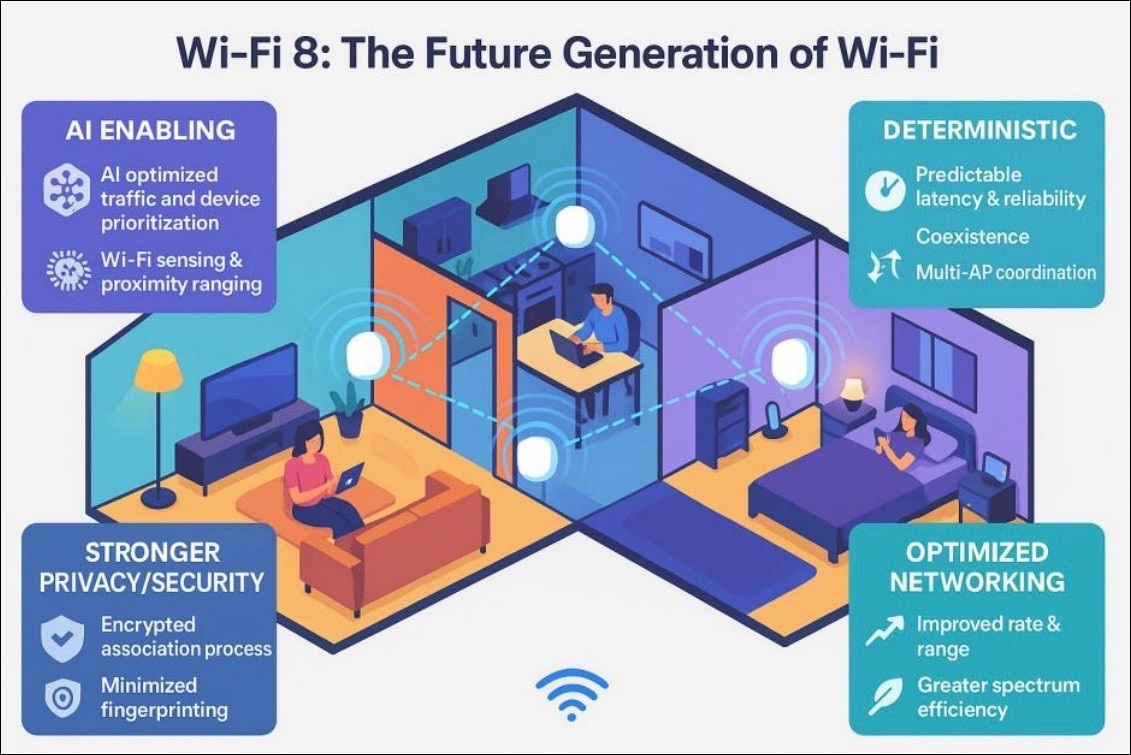
Wi-Fi 8's developers want to make your hotspots more reliable, with higher data rates where AI applications need them. Image: Intel
Wi-Fi for the AI era
True to form at a CES event where AI was baked into everything from washing machines to showers, automatic AI chefs, dishwashing robots, and all manner of weird gadgets, the companies building Wi-Fi 8 are also pitching it to both support and empower AI.
Wireless sensors, generating data that is processed by AI, will give Wi-Fi 8 networks spatial awareness – for example, analysing connection data in real time to recognise when a conference room is loaded with attendees, or when a presenter is gesturing or moving.
Intel calls this “context awareness” critical for a “decade of innovation centred around the need for ultra-reliable, deterministic, secure, and smart connectivity that will be largely driven by AI powered applications that will consume and generate large amounts of data.”
Little wonder they are so keen to get it out the door; with global AI computing capacity doubling every seven months, the smarts built into Wi-Fi 8 – which Intel describes as “where wireless meets AI” – are seen as crucial to new forms of digital interaction at the ‘AI edge’.
Wi-Fi 8’s low latency and predictable performance are key to this, whether you’re using VR headsets or augmented reality smart glasses to interact with the world in real time, or using autonomous robots or vehicles to navigate and instantly respond to real-world objects.
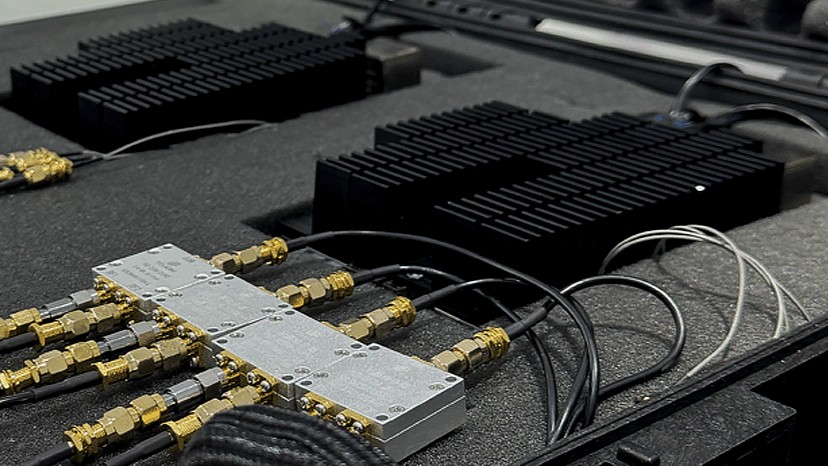
The fact TP-Link’s Wi-Fi 8 demo network still fills a briefcase shows how far the technology has to go. Image: TP-Link
Wireless innovators are just getting started
Industry watchers expect Wi-Fi 8 to hit the mainstream in 2028, but that won’t stop early adopters from releasing pre-standard equipment by year’s end with the ability to upgrade it to the final standard using a firmware update – an approach that’s been used before.
Yet as the tech industry moves to make wireless networks perform more the like wired ones they seek to replace, innovators are pushing the envelope in other ways.
This month, US Federal Communications Commission (FCC) chairman Brendan Carr said the regulatory body would vote to create a new type of wireless device, known as geofenced variable power (GVP), that uses unlicensed 6GHz radiofrequency spectrum for extremely fast data transmission within a small area.
Whereas existing regulations limit interference by capping the amount of power Wi-Fi devices can transmit, GVP devices will be allowed to use “significantly higher” power because their high frequency limits their range – and the likelihood of interference.
GVP devices will deliver “supercharged Wi-Fi and a new generation of wireless devices,” Carr explained, flagging uses like immersive AR/VR, short-range Wi-Fi hotspots with blistering speeds, and low-latency automation within defined spaces like factories or cruise ships.
Also set for an upgrade is SpaceX owned Starlink, which recently received FCC approval to launch 7,500 more second-generation satellites which will speed its services to 1Gbps by flying satellites closer to Earth and transmitting data across a broad range of frequencies.