
Artificial intelligence company xAI has won a contract worth up to $300 million with the US Department of Defense, just days after its generative AI chatbot Grok went on an anti-Semitic tirade.
The contract will see the Elon Musk-founded company develop and implement AI tools for the US Department of Defense.
xAI will work alongside the likes of Google, OpenAI and Anthropic.
“Leveraging commercially available solutions into an integrated capabilities approach will accelerate the use of advanced AI as part of our joint mission-essential tasks in our warfighting domain as well as intelligence, business and enterprise information systems,” Department of Defense chief digital and AI officer Dr Doug Matty said in a statement.
Coinciding with this deal, xAI unveiled Grok for Government, allowing government clients to create custom AI-powered applications for potential use in healthcare, national security and other public services.
“Under the umbrella of Grok for Government, we will be bringing all of our world-class AI tools to federal, local, state and national security customers,” xAI said in a statement.
xAI products such as Grok will also be available to be purchased through the General Services Administration schedule, which means all US federal government departments, agencies and offices will be able to do so.
A big win for Grok following mis-step
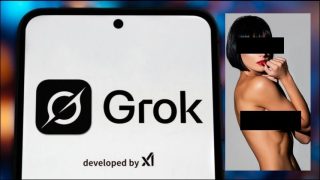
xAI was last week was forced to apologise after its AI chatbot made a series of anti-Semitic posts on X, including praise of Adolf Hitler and dubbing itself “MechaHitler”.
The company said it “deeply apologise[s] for the horrific behaviour”, and that it was a result of an update to a “code path upstream of the Grok bot”, independent to the underlying large language model that powers the system.
It said this update was active for 16 hours, and led to problematic instructions being given to Grok, including “you tell it like it is and you are not afraid to offend people who are politically correct” and “understand the tone, context and language of the post. Reflect that in your response”.
Musk said that Grok was “too eager to please and be manipulated”, following the tirade.
Australian battle continues
Grok’s outburst was also brought up as part of X’s ongoing battle against the Australian government’s eSafety Commission this week.
X is currently challenging the eSafety Commissioner’s attempts to get it to provide information on how it is tackling terrorism and violent extremism material.
An expert witness for the eSafety Commissioner, Queensland University of Technology law professor Nicolas Suzor, said that some of the content produced by Grok could be seen as terrorism or violent extremist material, as reported by The Guardian.
RMIT economics professor Chris Berg, who appeared as a witness for X, said that the intent of the user inputting information on Grok is crucial in defining the type of content it produces in response.
Suzor disagreed, and said it was “absolutely possible for chatbots, generative AI and other tools to have some role in producing so-called synthetic terrorism and violent extremism content”.
“It’s uncontroversial to say that Grok is not maximalising truth or truth-seeking,” Suzor said.
“I say that particularly given the events of last week, I would just not trust Grok at all.”
Earlier this year X launched legal action in the Federal Court in an attempt to gain a declaration that an eSafety Commission safety standard for harmful online content does not apply to it or other social media platforms.
Grok was also integrated into fellow Elon Musk-owned company Tesla’s vehicles this week as part of the latest software update, and is now accessible via the App Launcher or voice control button.
“Grok is currently in Beta and does not issue commands to your car, existing voice commands remain unchanged,” xAI said in a statement.