



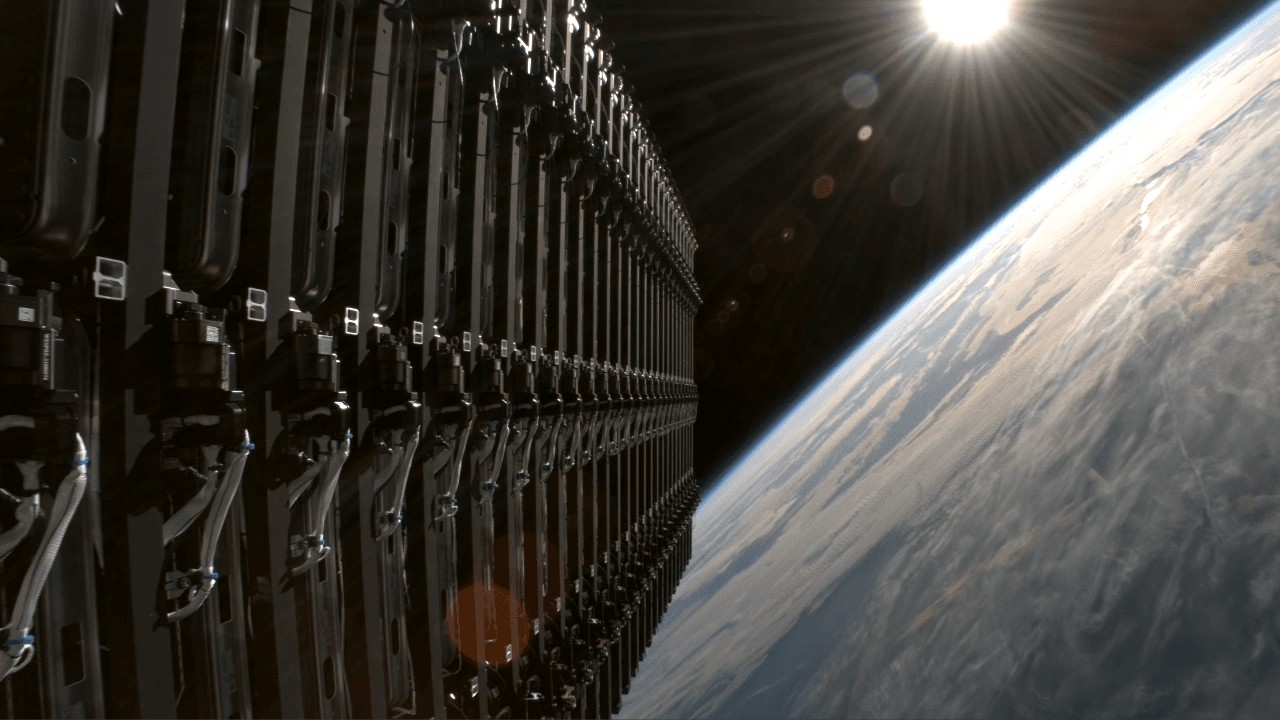

Elon Musk says he plans to deploy 1 million orbital data centres around the Earth, as his rocket company SpaceX acquires his artificial intelligence firm xAI ahead of an expected initial public offering (IPO).
SpaceX, which builds rockets, launches satellites, and runs Musk’s satellite communications business Starlink, confirmed in a statement on Tuesday that it had purchased xAI.
The AI business operates both Musk’s social media platform X (formerly Twitter) and the generative AI chatbot Grok.
Confirmation of the acquisition came after SpaceX requested regulatory approval in the United States to launch 1 million orbital data centres, according to documents released on Friday.
If approved, that request would allow SpaceX to deploy solar-powered AI data centres which Musk believes would overcome problems faced by similar infrastructure on Earth such as their high demand for electricity, and water for cooling.
“Global electricity demand for AI simply cannot be met with terrestrial solutions, even in the near term, without imposing hardship on communities and the environment,” Musk wrote in a statement.
“… By directly harnessing near-constant solar power with little operating or maintenance costs, these satellites will transform our ability to scale compute.”
SpaceX’s acquisition of xAI reportedly valued the enlarged business entity at $US1.25 trillion ($1.8 trillion), ahead of an expected IPO later this year which some analysts believe could be the largest initial share sale in history.
Are data centres in space even possible?
Several companies are working on technology to create data centre satellites which are cheap enough and powerful enough to be deployed for AI workloads.
Google revealed in November 2025 that a moonshot project it dubbed Project Suncatcher was “exploring how an interconnected network of solar-powered satellites” could be used to scale machine learning (a branch of AI) in space.
The company said it planned to launch two prototype satellites in early 2027, but admitted the project faced significant engineering challenges such as “thermal management, high-bandwidth ground communications, and on-orbit system reliability”.
Aerospace firm Blue Origin, founded by Amazon’s Jeff Bezos, is also reportedly developing orbital data centres of its own, while Nvidia-backed startup Starcloud sent a GPU-equipped satellite into space in November to run AI models.
Musk, who is known for bold predictions, said he estimated space would become the cheapest place to enable AI compute “within two to three years".
“This cost-efficiency alone will enable innovative companies to forge ahead in training their AI models and processing data at unprecedented speeds and scales, accelerating breakthroughs in our understanding of physics and invention of technologies to benefit humanity,” he wrote.
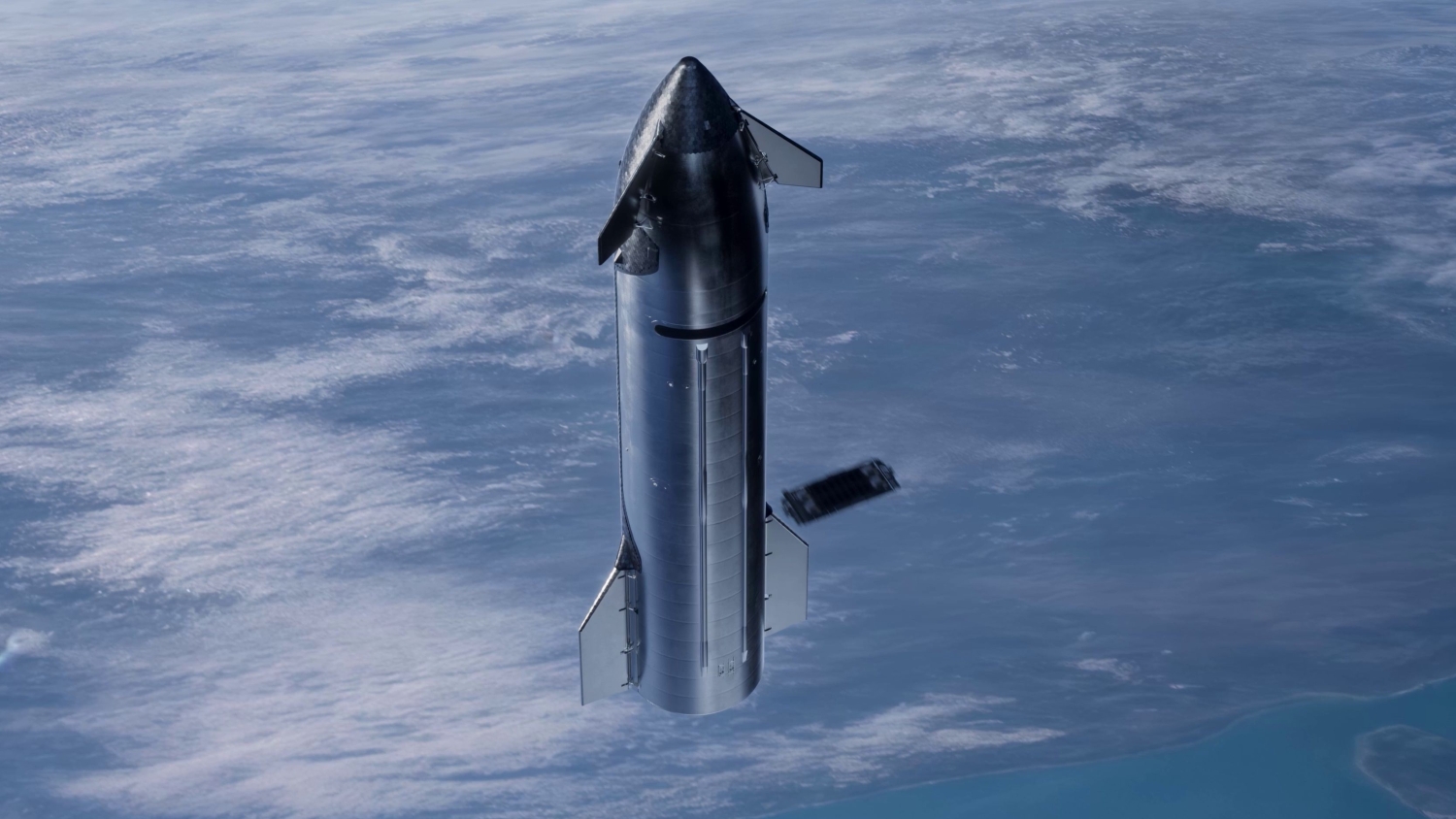
SpaceX's Starship rocket (pictured) is designed to be capable of satellite deployment. Image: SpaceX
Launching a constellation of 1 million orbital data centres would also bring humanity closer to Musk’s goal of becoming a multi-planetary species, he said.
Musk even suggested his data centre plan would allow for factories on the Moon to “manufacture satellites and deploy them further into space”, allowing AI compute to become accessible in deep space.
“The capabilities we unlock by making space-based data centres a reality will fund and enable self-growing bases on the Moon, an entire civilisation on Mars and ultimately expansion to the Universe,” he said.
Musk also suggested on X that Tesla’s humanoid robot Optimus — which the company plans to begin mass-producing after stopping some car production — would become the first self-replicating machine “capable of building civilisation by itself on any viable planet”.
Musk claims ‘political attack’ as X office raided
News of SpaceX's acquisition of xAI came just a day before French cybersecurity authorities raided the Paris office of X as part of an investigation into suspected offences relating to child pornography and unlawful data extraction.
The investigation, which initially examined the suspected abuse of algorithms, had extended to include X and Grok controversially allowing users to generate sexualised deepfakes, as well as “Holocaust denial content”, prosecutor Laure Beccuau said.
Both Musk and former X chief executive Linda Yaccarino had also been requested to appear before local authorities in April, French officials said.
“This is a political attack,” Musk wrote on X in response to the raid.
X’s global government affairs team described the actions of French authorities as “a politicised criminal investigation” and “an abusive act of law enforcement theatre”.
“The allegations underlying today’s raid are baseless and X categorically denies any wrongdoing,” the company said in a statement.
“Today’s staged raid reinforces our conviction that this investigation distorts French law, circumvents due process, and endangers free speech.
“X is committed to defending its fundamental rights and the rights of its users.
“We will not be intimidated by the actions of French judicial authorities today.”
Yaccarino described the incident as an “outrageous example of another EU proxy campaign to pressure Elon Musk and X”.
Several countries, including the United Kingdom and the European Commission, have opened investigations into Grok’s processing of personal data and its ability to facilitate image-based abuse.
Australia’s eSafety Commissioner Julie Inman Grant said in January that her office had concerns about the Grok platform, but she has not announced any formal investigation.