



Prime Minister Anthony Albanese has said the use of X’s Grok tool to create non-consensual sexual images is “completely abhorrent”, as countries around the world investigate the social media platform and consider banning it.
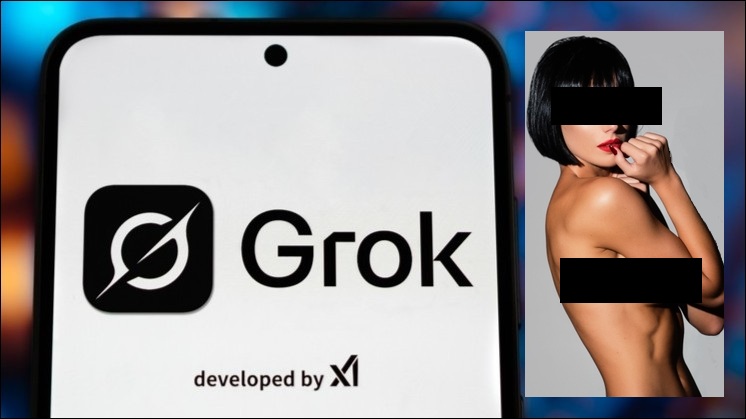
Grok, the generative AI chatbot built into Elon Musk’s X social media platform, has been shrouded in controversy in recent weeks after it was shown to allow users to create non-consensual sexual images of people.
Using the tool on X, users are editing photos with voice or text prompts to create new images, often of women and children.
Following the widespread backlash, Musk said users found to be using Grok to create illegal content would be treated like they themselves had uploaded it, adding the Grok feature was restricted to paying X users.
Nations begin to act
A number of countries are now understood to be investigating X and the Grok service, with some already moving to ban the platform as a whole or just the generative AI tool.
Indonesia and Malaysia blocked access to Grok over the weekend.
An Indonesian minister said that the deepfakes on Grok were a “serious violation of human rights, dignity and security of citizens’ online”.
In the UK, government is set to make the creation of non-consensual sexual images using AI illegal, and to outlaw the supplying of tools to create such images by companies.
It is already illegal to share deepfakes of adults in the UK, but the changes will make it a criminal offence to create or request them.
It comes as the UK media regulator Ofcom also officially launched an official investigation into Grok, saying that reports of its use in recent weeks were “deeply concerning”.
The regulator said that the creation of naked deepfakes by the AI chatbot could amount to “intimate image abuse or pornography”, and that “sexualised images of children” could be considered “child sexual abuse material”.
UK Prime Minister Keir Starmer has also strongly criticised X over the issue and said that the move to restrict the Grok features to paying users only was “insulting” and “not a solution”.
Albanese over the weekend confirmed that UK Prime Minister Keir Starmer had raised the issue with him and said that the use of AI tools to create non-consensual sexual deepfakes was “abhorrent”.
“The fact that this tool was used so that people were using its image creation function through Grok is, I think, just completely abhorrent,” Albanese told the media on Saturday.
“It, once again, is an example of social media not showing social responsibility.
“And Australians, and indeed, global citizens, deserve better.”
Despite the condemnation, the Australian government is continuing to spend large amounts of money advertising on X, and using the platform to communicate with Australians, as reported by Crikey.
The federal government spent nearly $3 million advertising on X in the first year after Musk bought the platform, and a number of departments, including Treasury, are continuing to promote content on the site.
Regulators begin to investigate
The eSafety Commissioner is also looking into the issue, with Julie Inman Grant saying she was “concerned” about the use of Grok.
“While the number of reports eSafety has received remains small, eSafety has seen a recent increase from almost none to several reports over the past couple of weeks relating to the use of Grok to generate sexualised or exploitative imagery,” Inman Grant said.
The eSafety Commission said it would use its remove notices powers where appropriate and had written to X asking for more information on what safeguards are in place to stop the misuse of Grok.
Opposition Leader Sussan Ley also criticised X and Grok over the weekend.
“It is totally unacceptable and it needs the strongest possible response, and we support any efforts to deliver that strongest possible response,” Ley told the media.
Musk said that critics of Grok and X were looking for “any excuse for censorship”.
It’s not the first time that Grok has been shown to produce highly questionable and sometimes illegal content.
In August 2024 a new version of ChatGPT allowing users to generate images with few safeguards was quickly used to produce deepfakes of politicians, nude images and pictures of people using drugs and weapons.
A year later, a “spicy” video generation mode was added to Grok, allowing users to create uncensored deepfake nudes of women and female celebrities.
Grok also went on an anti-Semitic tirade last year after a software update ordered it to “not shy away from making claims which are politically incorrect, as long as they are well substantiated”.
Soon after the changes were made, Grok — developed by Musk’s company xAI — made a series of anti-Semitic posts, including praising Adolf Hitler and repeating several anti-Semitic tropes.