





The chief executive and chief financial officer of a bankrupt AI company that was once worth more than $2 billion have been charged with fraud, after alleging faking “virtually all” of their customers and revenue.
Former iLearningEngines CEO and founder Puthugramam 'Harish' Chidambaran and ex-CFO Sayyed Farhan Ali Naqvi have been indicted in New York with 10 charges relating to defrauding investors and lenders.
iLearningEngines was an AI-based digital education company that claimed to have an “out-of-the-box AI platform that empowers customers to productise their institutional knowledge and generate and infuse insights in the flow-of-work to drive mission critical business outcomes”.
The company was founded in Maryland in 2010 and went public on the Nasdaq stock market index in April 2024.
It secured separate loans of $55 million ($US40 million) and $27 million ($US20 million) from the New York City branches of two financial institutions.
On the back of this, the company peaked with a market capitalisation of more than $2 billion ($US1.5 billion).
‘Intricate web of sham contracts’
According to an indictment by the US Attorney’s Office, iLearningEngines’s success was built on an “intricate web of sham contracts with purported customers” who were mostly “fabricated”.
The indictment claimed that at least 90 per cent of the $588 million ($US421 million) revenue the company reported in 2023 was made up.
It is alleged that the company “falsely inflated” revenue by hundreds of millions of dollars through fake contracts with companies that they or other employees controlled.
“As alleged, the defendants exploited investor excitement over the AI boom and presented a rosy financial outlook to investors and lenders that was built on lies,” US attorney Joseph Nocella Jr said in a statement.
“While the defendants pitched iLearning as a way to revolutionise training and education through AI, the truly artificial part of the defendants’ story was iLearning’s customers and revenues.”
The indictment alleged the firm would sign contracts sometimes worth tens of millions of dollars per year with employees or family members who pretended to be senior executives at made up companies.
They would then create fake information about these companies, including websites for the shell companies, to “deceive investors and lenders into believing that iLearning’s customers were real”, the attorney alleged.
The indictment also claimed the two accused convinced their friends and associates to enter into these sham contracts and to lie to the company’s auditor and potential investors and lenders.
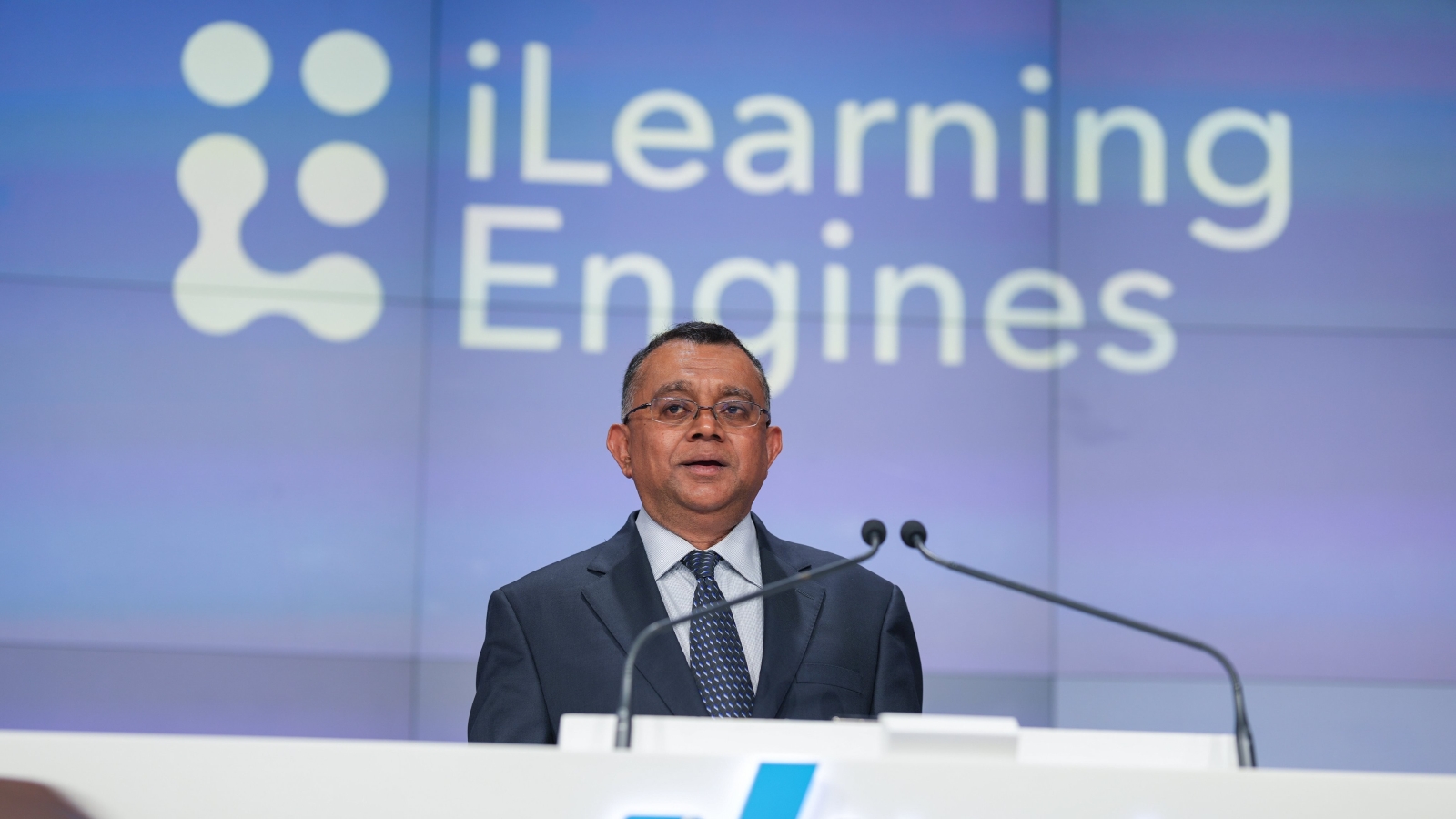
Former iLearningEngines CEO Puthugramam 'Harish' Chidambaran (pictured) and his ex-CFO have been charged. Image: Nasdaq / X
‘Round tripping’
iLearningEngines has also been accused of “round tripping” this money by sending it to the fake clients, who then sent it back to the company so it could be claimed as revenue.
In August 2024, an investment research firm released a report claiming the company had misrepresented its revenue, and iLearningEngines’s stock price tanked.
Just months earlier, the company appeared at a Data and AI Edge event in Sydney, showcasing its “AI solutions that are reshaping the future of learning and work automation”.
The company eventually entered liquidation in March last year.
The US indictment claimed that before this, the two accused “profited handsomely” from the alleged fraud.
According to the claims, Chidambaran received more than $698 million ($US500 million) in common stock and about $17 million ($US12.5 million) in restricted stock units.
Naqvi was allegedly awarded common stock worth approximately $15 million ($US11.2 million) and was paid out nearly $6 million ($US4.5 million) in cash to cover tax liabilities.
The pair have been charged with running a continuing financial crimes enterprise, securities fraud, wire fraud, and conspiracy to commit securities fraud and wire fraud.
If found guilty of these charges, they face a mandatory minimum term of 10 years imprisonment and a maximum term of life.
In 2025 a United Kingdom-based AI company was found to have also used “round tripping” to overstate its revenue by a factor of four.
That company billed itself as providing advanced code-writing AI, but it was revealed that it actually used an Indian software farm that employed 700 human developers.