
China has reportedly restricted international travel for leading AI talent at two of the top tech companies.
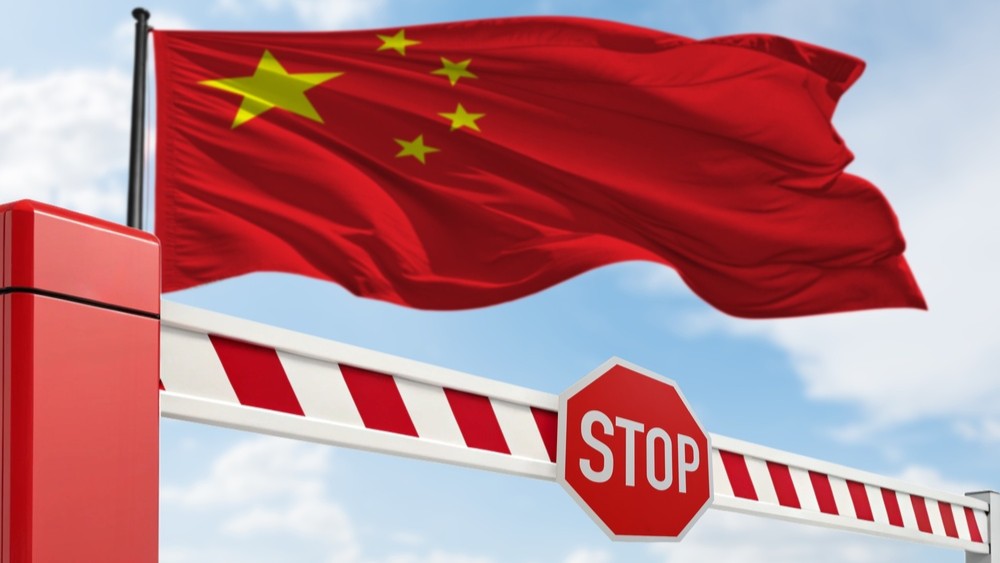
As reported by Bloomberg, professionals at Chinese artificial intelligence company DeepSeek and tech giant Alibaba Group Holding Ltd have been handed travel restrictions depending on the strategic importance of their work.
Unnamed sources told the publication that numerous individuals involved in advanced AI work would require approval from relevant authorities before travelling out of the country.
Among those reportedly impacted by the restrictions are startup founders, researchers, and executives.
The anonymous people who tipped off Bloomberg did not specify how widely the travel restrictions may be imposed, or what specific roles could be impacted.
Notably, however, authorities have reportedly added individuals to a travel restriction list based on how important their work is to the country, rather than level of seniority alone.
Alibaba and DeepSeek were contacted for comment but did not respond prior to publication.
Chinese giants race for AI chips
The reported travel restrictions indicate China may be attempting to better safeguard its advancements in AI, particularly from rival market leaders in the US.
Though state entities in China often hold the passport documents of senior staff and officials, restricting citizens based on their profession is far less common.
Notably, Alibaba announced on 20 May that the company’s AI efforts had “moved beyond the initial investment phase and entered full-scale commercialisation”, signalling a centring of the technology across the Chinese tech giant’s entire business.
The company notably produces proprietary T-Head AI chips as a growing domestic alternative to Nvidia chips in the US, where Washington has notably restricted the sale of processors to Chinese customers.
Further, US president Donald Trump recently said Beijing has broadly refused to let Chinese companies buy Nvidia’s H200 AI chips because “they want to develop their own”, while Chinese tech giant Huawei recently declared it would develop new semiconductors to rival global industry benchmarks.
DeepSeek, meanwhile, shook the AI sector last year when it produced a chatbot that topped app store downloads.
The chatbot, according to DeepSeek, was backed by a large language model (LLM) that reportedly shattered cost-to-performance metrics of the time, though the company’s foothold has reportedly shrunk with newer iterations.
China meddles in Meta AI acquisition
The reported travel restrictions arrive amid a controversy between Beijing and US tech giant Meta.
After Meta announced the acquisition of Singapore-based AI firm Manus for $2.8 billion (US$2 billion), Beijing demanded the deal be revoked on the basis that Manus was previously based in China.
Chinese authorities reportedly barred two of Manus’s co-founders from leaving the country while regulators investigated the acquisition.
History in the making
Speaking with Information Age, University of New South Wales AI expert Toby Walsh said China had done a “very good job” of bringing AI talent back onshore in the last few years.
“But it now seems these might be one way journeys,” Walsh quipped.
“It’s unsurprising that China is putting such protections in place.
“With tech companies in the US offering sport star salaries in the tens or hundreds of millions of dollars, it’s hardly surprising that China wants to prevent talent from leaving.”
Niusha Shafiabady, director of Women in AI for Social Good lab at Australian Catholic University, said China’s restrictions did not indicate the country was purely “trying to catch up” to the US.
“Rather, this move may reflect an effort to consolidate and protect its existing capabilities while accelerating progress in strategic AI sectors amid increasing global competition and technological fragmentation,” she said.
Shafiabady also noted that, historically, scientific talent migration has had “profound geopolitical consequences”.
“One of the factors that contributed to the rise of the US as a scientific and technological superpower was its openness to European scientists during World War II and the years surrounding it,” she said.
“Today, AI expertise is increasingly being viewed through a similar strategic lens.”