



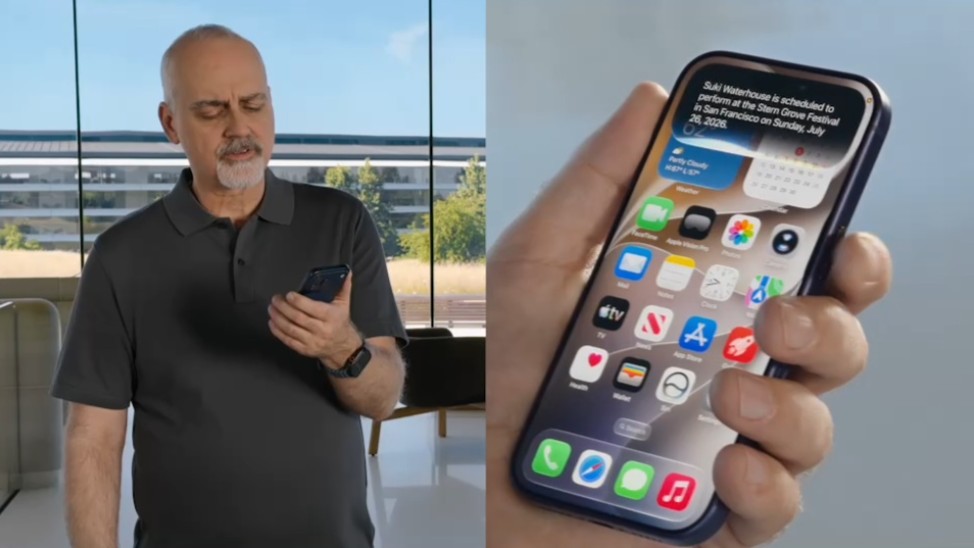

It was the generative AI (genAI) upgrade customers had waited years for: Apple has finally unveiled a fully AI-powered version of Siri, promising a dramatically more capable assistant that can understand personal context, analyse on-screen content, and carry on natural conversations across its devices.
The long-awaited Siri AI will be added to iOS 27, iPadOS 27 and the new ‘Golden Gate’ macOS when they launch later this year, with developer testing beginning immediately.
Apple first promised major AI features in 2024 and has sold millions of devices compatible with its Apple Intelligence platform, but delays and early stumbles with its planned “completely reimagined” assistant created rare turbulence for the company and frustration among users.
Now described as a “profoundly more capable and conversational assistant with personal context understanding, broad world knowledge and onscreen awareness”, Siri AI has introduced a ChatGPT-style interface that can draw on both public information and personal data including emails, messages, photos and files to answer questions and complete tasks.
Users can ask follow-up questions, with Siri AI available across Apple tools, in a new dedicated app, using an Apple Watch, CarPlay or AirPods, or by swiping down from the Dynamic Island in a design that puts genAI absolutely everywhere on the devices.
Siri AI is also integrated into apps such as Calendar, Spotlight and context menus, enabling it to read your screen and provide further information about the images, files and text it sees – with conversations flowing seamlessly across Apple devices.
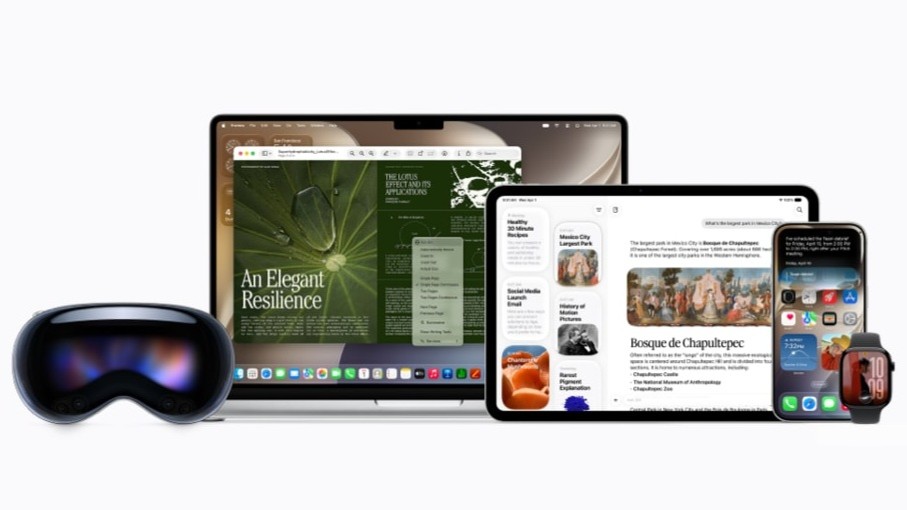
The new Siri AI features will be avilable across Apple's suite of devices, but you'll need the latest hardware to use it. Photo: Apple
As well as empowering Siri AI to write emails and other text, Apple has focused the AI tools on photos and images, allowing users to edit images using text descriptions and adding features like Spatial Reframing, which lets users recompose photos after they’re taken.
GenAI, but not as we know it
Siri AI marks a significant shift for Apple for another reason: even as OpenAI, Google, Anthropic, and SpaceX jostle for primacy, Apple opted out of that race – instead partnering with Google in a US$1 billion per year licensing deal that builds on Google’s Gemini.
Apple’s version reportedly uses a custom Gemini model with 1.2 trillion parameters, and rather than running all processing on the Google cloud, Siri AI taps dedicated Apple Intelligence hardware to run a broad range of functions on the device.
This lets Siri AI respect users’ data privacy by, for example, editing images, writing emails or summarising content on the device while more complex queries are escalated to Apple’s Private Cloud Compute (PCC) – which has now been upgraded to run on Google Cloud.
In extending PCC onto the Google Cloud, Apple has also partnered with Nvidia, Intel and Google to leverage their Confidential Computing, TDX and Titan hardware platforms, designed to maintain strict controls over user data.
The new solution, Apple said, “incorporates PCC’s exceptional security and privacy properties at every stage, including the industry’s most comprehensive transparency guarantees that allow external security researchers to verify our privacy commitments.”
“These capabilities help ensure that even outside of Apple’s hardware and data centres, user data will continue to be protected by the full force of PCC’s extraordinary security and privacy properties”.
Google is contractually barred from using customer data for AI training.
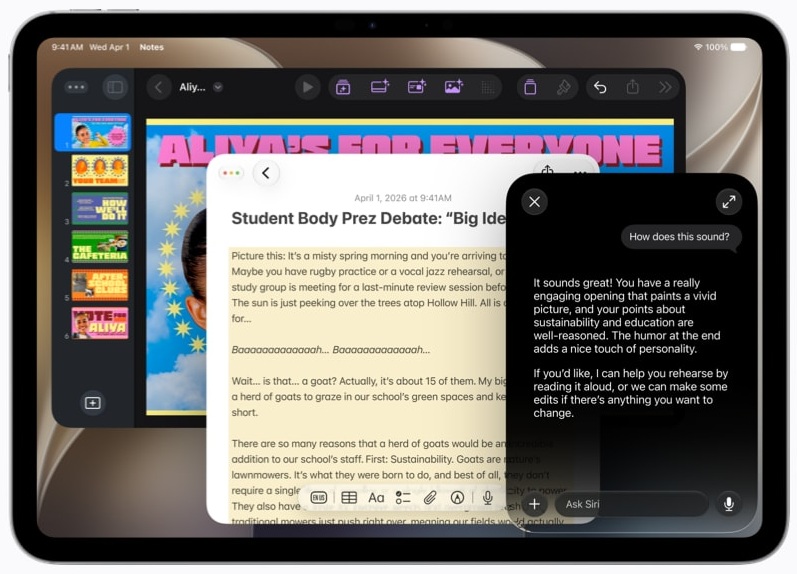
Siri AI can scan data across Apple apps to form summaries. Photo: Apple
Despite the scale of the announcement, investors reacted cautiously.
Apple's shares fell nearly 2 per cent following the keynote after weeks of speculation had fuelled expectations of a major AI-driven boost.
The company’s stock remains up around 13 per cent for the year.
Not quite for everybody
This year’s WWDC is the last to feature long-term CEO Tim Cook, who will hand over leadership to hardware boss John Ternus on 1 September.
For all the new features Apple has announced, there are some caveats in that not every Apple device will support all of the new capabilities – leaving most users with an updated operating system but without many of the headline AI features.
The new iOS 27 will run on a broad range of devices, however full Siri AI capabilities will only be available on its newest devices – including the iPhone 17 Pro and Pro Max, iPhone Air, iPads with M4 or newer CPU, Macs with M3 or later CPU, and Apple M5-based Apple Vision Pro.
Significantly, users in Europe won’t have access to any of the Siri AI features regardless of which device they own.
That’s because for all of its work to ensure data can move securely between genAI platforms, Siri AI has become a casualty of Apple’s ongoing clashes with EU regulators over the EU’s Digital Markets Act (DMA), which they say requires it to open its products to competitors.
Apple opened up its App Store to competitors in late 2024 after intense pressure from EU regulators, but this time around Apple has called their bluff because it’s concerned that opening up Siri AI to other companies’ chatbots would create “serious risks to users”.
The EU’s “extreme interpretation” of the DMA would force Apple “to give any AI system nearly unlimited access to a user’s device,” Apple explained, “as well as the ability to act on that access autonomously without a user’s ongoing visibility and control.”
“Security researchers have already shown that AI systems can be hijacked to steal personal data like passwords and photos, and to permanently alter files and account settings without a user’s consent,” Apple said, and “these risks are quickly increasing in frequency and scope.”



,%20john%20ternus%20(right)%20hello%20apple%20instagram.jpg.transform/320x180/img.jpg)