




Australians now face potential age checks when using search engines while logged in to accounts from the likes of Google and Microsoft, as the latest piece of the nation’s new online safety codes took effect on Saturday, 27 June.
Age assurance checks on search engines will see some Australian internet users asked to share government identification, undergo facial age estimation, or complete a credit card check to prove they are aged 18 or over.
Many Australians who have held Google or Microsoft online accounts for years will not be asked to confirm their age, as the companies likely already know whether they are an adult.
But others will need to undergo age checks using technologies similar to those implemented under the government’s under-16s social media ban, if they try to access age-restricted content or features in search engines.
Google, which dominates Australia’s online search market, offers users three ways to verify their age: sharing an image of a government-issued ID such as a driver’s licence or passport, taking a selfie on their phone for age estimation checks by third-party provider PrivateID, or by undertaking a credit card check.
“If you’re old enough, you’ll instantly get access to more services,” Google’s age verification page states.
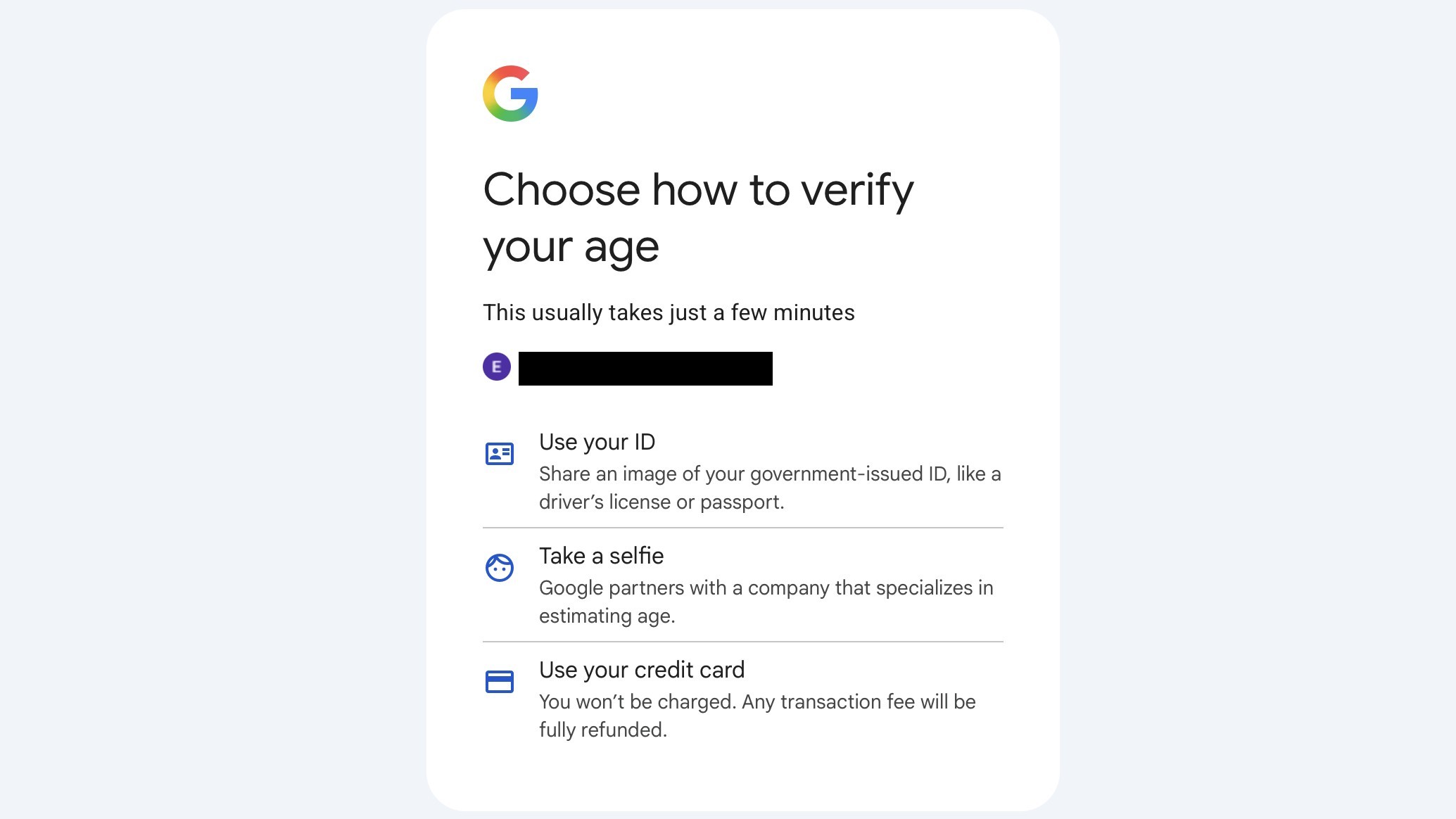
Google's age assurance tools allow the use of government ID, a selfie, or credit card details. Image: Screenshot / Information Age
Technology companies co-developed the new rules at the request of Australia’s eSafety Commissioner Julie Inman-Grant, who has sought to prevent children from accessing content such as pornography or high-impact violence.
The new industry code does not prevent Australians from using search engines while in a logged out state, but search platforms must apply safety measures by default for such users, including by blurring pornographic or violent material.
If a search engine’s age assurance tools believe a signed-in user is likely to be under the age of 18, that platform will need to set its safety tools at their highest setting by default to filter out harmful content.
Platforms must also provide crisis prevention information to users who search for self-harm material, under the new rules.
Failure to comply could result in civil penalties of up to $49.5 million per breach for online platforms.
The eSafety Commissioner's office was contacted for comment on whether search engines were complying with the new code, but did not respond by deadline.
Neither Google nor Microsoft responded to requests for comment about age assurance checks in their search engines.
Yahoo, which gets its search results from Bing, told Information Age that while it is “not subject to Australia’s online search engine code”, it “proactively complies with a majority of the measures contained in the code as a matter of best practice”.
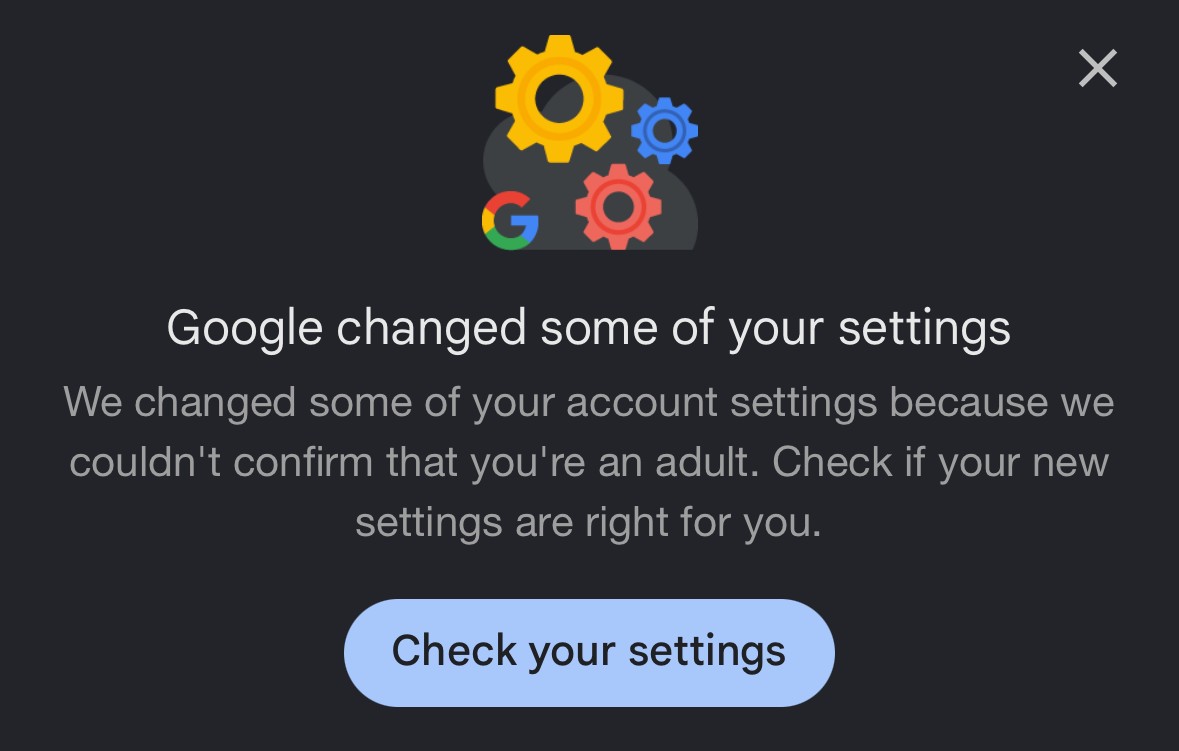
Google users who have not had their age checked may see this message when searching. Image: Screenshot / Information Age
Questions over accuracy, privacy, and effectiveness
Age assurance checks may raise accuracy and privacy concerns for some Australians, much like they did for the under-16s social media ban, according to RMIT University professor of information sciences, Lisa Given.
“Facial age estimation technologies typically have a one-to-three-year error rate, so their effectiveness in assessing a user’s age with the search engine code will be similar to what we’ve seen with the social media ban,” she said.
“This means, for example, that a 16-year-old could be estimated to be over the age of 18 and inappropriately access content restricted to those 18-years and older.
“At the same time, a person who is 19 could be estimated to be under 18 and not able to access content appropriate to their age.”
Many Australians are also concerned about privacy, “particularly when they are asked to provide ID to assure their age” or when their data is sent to third-parties, Given said.
“While Google has explained that a selfie will be ‘deleted’ after PrivateID estimates their age, some users may still feel uncomfortable going through these kinds of age checks,” she said.
Google receives an estimated 90 per cent of Australian search traffic, followed by Microsoft's Bing. Image: Shutterstock
A key limitation of the new rules is that when a user is not logged in to a search engine, accessing adult content or disabling SafeSearch settings to reveal such content remains easy to do.
“This means that while thumbnail images will be blurred in search result lists when a person is not logged in, it also means that young people can still access that content by clicking on those links,” Given said.
“While this may appear inconsistent with the spirit or general intention of the rules, this is a limitation of the regulation, as written.”
Users will also likely attempt to skirt the new rules by using a virtual private network (VPN) to disguise their online location.
Under Australia’s latest online safety codes, services must “consider whether age assurance measures have been designed to comply with privacy laws”, as well as “whether the impact on user privacy of any such measures for a service is proportionate to the online safety objectives”, according to eSafety documents.
The agency first asked industry associations representing technology companies to develop so-called ‘Phase 2’ codes in 2024, which were formally registered by eSafety in June 2025.
While some of the changes took effect from 27 December 2025, platforms had six months to implement age assurance for search engines.
Age checks coming to more online platforms
Age checks have been mandated for many online services in Australia under the country’s latest online safety codes, with further implementations still to come.
The nation’s under-16s social media ban legislation took effect in December 2025, before websites containing pornographic material were forced to implement more stringent age checks in March 2026.
Generative AI services and chatbots with the highest risk of generating pornography, self-harm material, or violent material are also required to adopt age assurance or access controls, while online video game stores are required to check ages before providing access to games rated R18+.
App stores have until early September to begin age assurance checks before allowing users to download apps rated 18+, but the likes of Apple and Google have already implemented some age check tools on their app stores.
The federal government is also developing Digital Duty of Care legislation, which the communications minister has said will “force the online industry to take stronger action to keep users safe”.