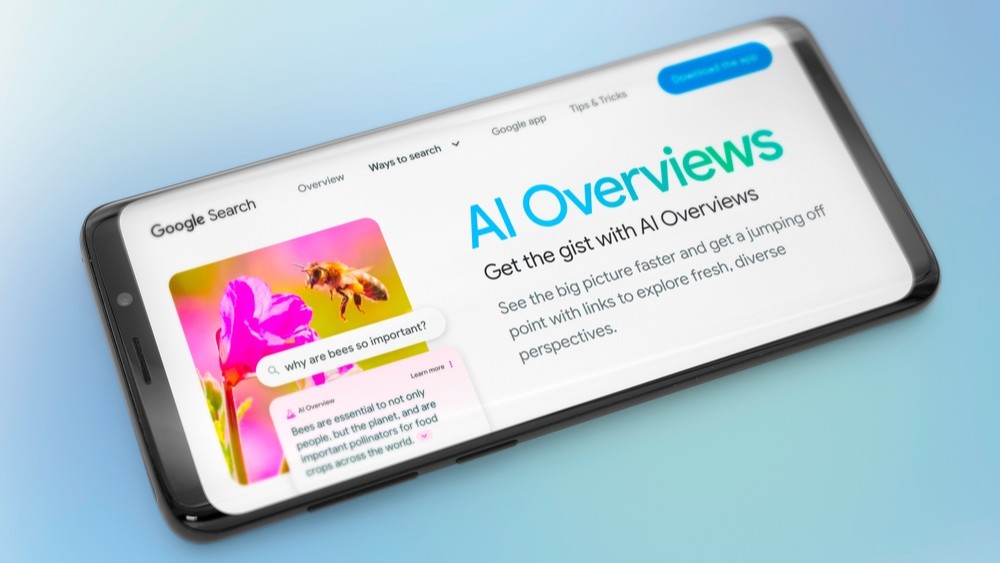

Legal experts are closely watching a German court ruling that found Google legally responsible for the content of its AI-generated search summaries, a decision that could have significant implications for AI liability worldwide.
The ruling, handed down by the 26th Civil Chamber of the Regional Court of Munich, arose from a lawsuit filed by two book and magazine publishers.
The publishers sought an injunction after Google’s AI Overviews feature allegedly "wrongly linked" them to fraudulent and dishonest business practices.’
Google claimed the plaintiffs couldn’t block the publication of the AI summaries because the companies were not natural persons with individual rights, but the court disagreed in ruling that Germany’s “right to express oneself… also protects entrepreneurial personality rights.”
“The publishers submitting the application are directly affected by being named in the overview texts in dispute,” the court ruled in granting an injunction on the publication of the problematic AI summaries, “as they are named and clearly identifiable.”
More significantly, the court ruled that Google can be held accountable for the Overviews texts “because the disputed display of the ‘results with AI’ is not merely a display or linking of search results, but rather its own content attributable to the search engine operator.”
“The deciding factor is whether the operator of the search engine adopts the content of the search results,” the court – which specialises in press and expression law – said, adding that “the results of the [AI] query are summarised and evaluated in the author’s own words.”
“In this way, the search engine operator creates independent statements for which [it] is responsible, going beyond the individual search results that are later displayed via links.”
Could similar litigation happen in Australia?
The German court’s judgement is not yet final, but the decision nonetheless marks a major legal change after years in which Google avoided liability for search results – for example, in a 2022 High Court of Australia decision – because links weren’t considered original content.
Australia’s corporate defamation rules are different than those cited in the German decision but there is some recourse for small businesses, Clayton Utz partner and head of AI Simon Newcomb told Information Age, and “expressly recognised” defences for digital giants.
“There have been lots of cases involving online platforms and by and large they aren’t liable when they just pass on information from someone else,” he said, but “none of that is going to apply where you’ve got new content – and that’s where an AI overview really changes things.”
For example, Newcomb explained, the “very broad” Australian Consumer Law (ACL) could prove more useful in litigating the accuracy of Google’s AI Overviews, since the ACL prohibits corporations from making misleading statements in the course of trade.
“In a situation where it's an incorrect interpretation, or it's a straight-out hallucination, those [defamation] protections are not going to apply to search engines or to online platforms”.
That said, he noted, genAI’s probabilistic nature – which means it generates new content with each query and may not produce the same answer twice – could present a challenge for plaintiffs, since it would be difficult to prove Google had shown the same content to other users.
Nonetheless, he said, “if similar defamation had happened to an individual in Australia, I think that they would have a decent claim to defamation, subject to these hurdles – but in theory they could do it.”
When search is no longer just search
Companies have been held liable for the mistakes of genAI before – as when a court found Air Canada liable for erroneous advice its chatbot provided for a customer, and when lawyers were found to have submitted AI-generated case citations that didn’t exist.
One recent analysis found Google’s AI Overviews are accurate 9 times out of 10, but that nearly half “contained facts not supported by the cited sources” and only 39 per cent were “trustworthy” – in other words, “both correct and fully supported by cited sources”.
With Google managing an estimated 5 trillion search results per year, inaccuracies in even 10 per cent of those AI Overviews – 500 billion summaries – could create tremendous liability for Google as well as genAI giants OpenAI, Anthropic, SpaceX and others.
“AI Overviews can no longer just be helpful summaries,” Forrester principal analyst Nikhil Lai said, adding that “now, they must be legally defendable outputs.”
Google – which has gone all-in on AI Overviews and last month debuted its biggest change to search in over 25 years as users increasingly favour AI summaries over individual links – has issued a terse statement saying that it is “carefully reviewing” the German decision.
"We invest deeply in the quality of AI Overviews,” it said, “to ensure that the overwhelming majority of responses provide accurate information, and they are designed to reflect the information that exists on the web."