
Meta’s shift towards relying on users to report hateful conduct has not led to an increase in antisemitic content across its social media platforms, a company executive told Australia’s Royal Commission on Antisemitism and Social Cohesion on Monday.
Meta, which owns Facebook, Instagram, and Threads, announced controversial changes in January 2025 that included a push to reduce "censorship” and supposed over-enforcement of community standards on its platforms.
Founder and CEO Mark Zuckerberg said the changes would “get rid of a bunch of restrictions” on topics such as immigration and gender.
"It means we're going to catch less bad stuff, but we'll also reduce the number of innocent people's posts and accounts that we accidentally take down," he said at the time.
The removal of hate speech content on Facebook fell from about 5.8 million items between October and December 2024 to only 1.2 million items between July and September 2025 after the policy changes took effect, the royal commission heard this week.
There was a similar drop at Instagram, where Meta took action on 7.4 million items between October and December 2024, but only 2 million between July and September 2025.
Royal Commissioner Virgina Bell asked Meta’s global director of core policy, Benjamin Good, to explain data presented to the inquiry which showed a 79 per cent drop in the amount of hateful content Meta had acted on since its policy changes.
While Good agreed that the number was roughly correct, he said he did not know “if this relates solely or entirely to a switch to reactive enforcement” and did not wish to speculate.
Meta shifts to more ‘reactive’ approach
Good told the commission that Meta’s previously more “proactive” approach to content moderation was “the gold standard”, but it brought with it “a significant risk of over-enforcement".
The company’s more “reactive” current approach relies more on users reporting harmful content, rather than systems actively identifying such posts, he said.
"It's true there may be content that we don't remove because it is not reported, but I do want to emphasise we are very carefully monitoring the extent to which that is the case," Good said via video link.
Reactive enforcement was still “a very effective mechanism” because harmful content was still being reported and removed, he argued.
Counsel assisting the royal commission, Richard Lancaster, suggested to Good that Meta’s reliance on user reporting had led to “substantial” complaints from Jewish groups that believe more antisemitic content is now appearing on Meta’s platforms.
Good suggested Meta’s engagements with Jewish advocacy groups had instead been “overwhelmingly productive and constructive”.
"Of course if we miss content, we should learn from that and get better, and I have had conversations with groups whenever they see trends that they've identified that they think we should be removing,” he said.
Meta’s previous content moderation system had restricted some Jewish communities from speaking out against antisemitism, Good suggested.
The royal commission heard at least four antisemitic posts which appeared on Facebook during the inquiry’s hearings were not initially found by Meta to have violated community standards, but were later removed when a review of its decision was requested.
Good argued Meta’s moderation processes had improved in recent years, and it was focused on removing content linked to the likes of terrorism and child exploitation through proactive methods using artificial intelligence.
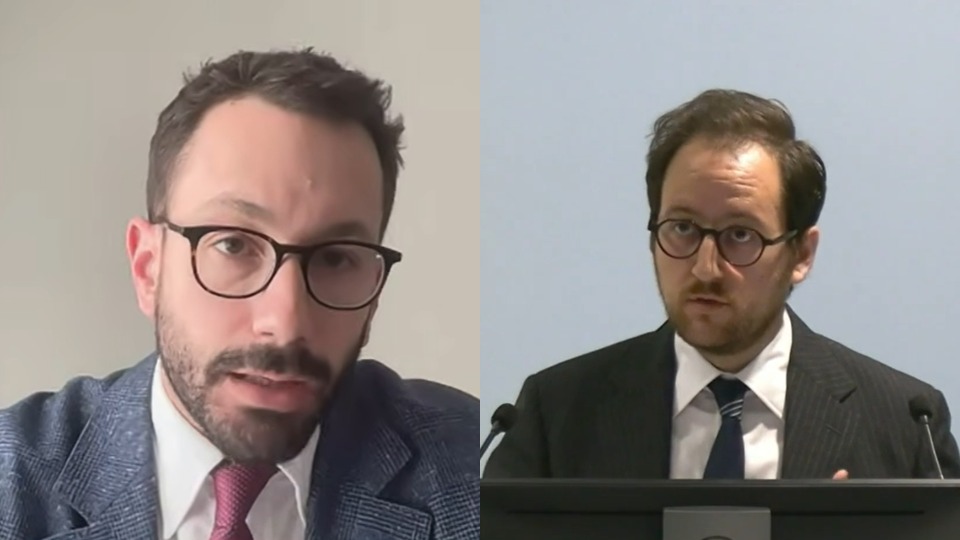
Meta's Benjamin Good (left) and TikTok's Zachary Hecht (right) appear before the Royal Commission on Antisemitism and Social Cohesion. Images: Royal Commission
Harmful content proactively removed, TikTok says
Video-sharing platform TikTok told the commission it tends to proactively remove potentially harmful content in order to “err on the side of caution”.
Accounts inciting violence against Jews would be “banned right away”, potentially after even one instance of such content, TikTok’s global head of policy, trust, and safety, Zachary Hecht, told the commission on Tuesday.
TikTok removed more than 270,000 videos which breached its safety and civility guidelines out of 336 million videos posted on the platform in the 2025 calendar year, the commission heard.
The company also removed other videos which breached guidelines related to the likes of nudity, misinformation, spam, and health.
Around 110 million videos were published on TikTok in the first quarter of 2026, the commission heard.
Of those, more than 67,000 videos were removed for breaching safety and civility guidelines.
Hecht said this was largely done proactively by AI systems.
The inquiry heard reports of “high volumes of antisemitism” on TikTok, but also “high removal rates when such content is reported”.
Hecht said the company sought to remove content without requiring users to report it, but admitted the system was not perfect.
“For all of our community guidelines, in Q1 in Australia we removed 98 per cent of content proactively, before a [user] report,” he said.
“... Content moderation is not always perfect, and so there are instances where we would not have gotten it right, but as content is viewed more we take additional steps to continue reviewing it.”
TikTok also needs to “stay on top of” techniques employed by some users to share antisemitic content in “veiled ways”, he said, adding that the firm is monitoring “emerging keywords” and other signals to do so.
YouTube is also scheduled to address the inquiry on Tuesday afternoon.
The commission said it had not yet received responses from social media platforms X (formerly Twitter) and Telegram.