


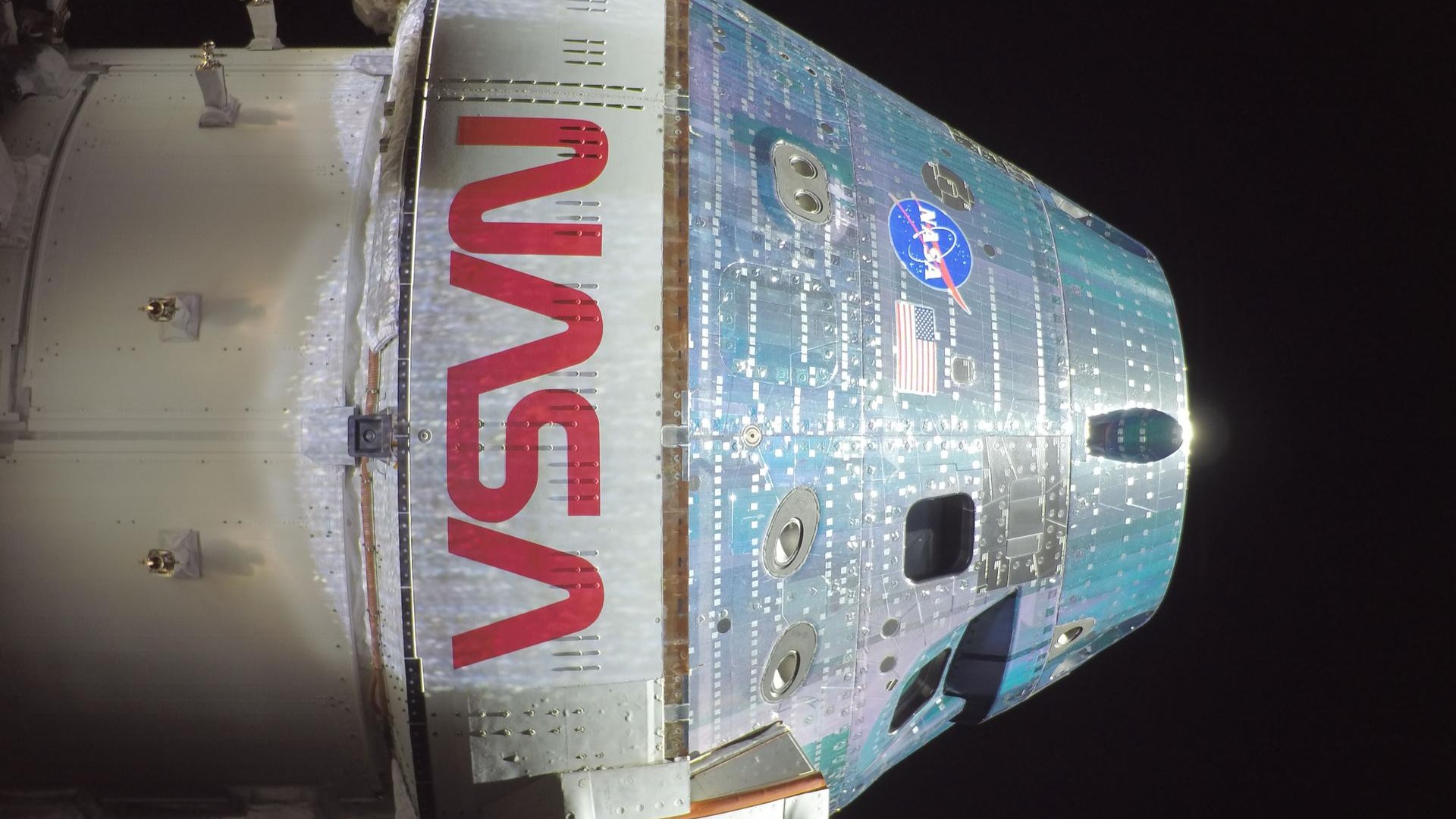

Astronauts on US space agency NASA’s latest lunar mission have ventured farther into space than any humans before them, but that doesn’t mean they’ve been spared the frustrations of troubleshooting Microsoft Outlook.
During a Thursday livestream for NASA’s Artemis II journey to the Moon, astronaut Reid Wiseman was heard grappling with complications on Microsoft’s email software.
“I have two Microsoft Outlooks, and neither one of those are working”, Wiseman told mission control.
Soon after, NASA workers reportedly used remote access software to troubleshoot Wiseman’s on-vessel PC – a Microsoft Surface Pro – and ensure the software had been set up correctly.
Flight director Judd Frieling affirmed during a Friday press conference that the issue was promptly fixed, and the underlying cause was a hiccup in the software’s configuration.
“Yeah, this is not uncommon … we have this on station all the time,” said Frieling.
“Sometimes Outlook has issues getting configured, especially when you don't have a network that's directly connected.
“Essentially, we just had to reload his files on Outlook to get it working.”
NASA’s mission to orbit the Moon is being interrupted by Outlook (New) and Outlook (classic) both refusing to open 😂 pic.twitter.com/aiakIfARYO
— Tom Warren (@tomwarren) April 2, 2026
NASA’s Orion spacecraft successfully launched on Thursday, and is crewed by Wiseman alongside NASA’s Victor Glover, Christina Koch, and Canadian Space Agency astronaut Jeremy Hansen.
Notably, the crew are the first astronauts to travel to the Moon since the NASA Apollo program’s final crewed mission in 1972.
The Artemis II crew has ventured more than 406,000 kilometres from Earth during a flyby around the dark side of the Moon, constituting the deepest any humans have travelled into space.
The mission is a test flight designed to gauge how Orion operates in a deep space environment.
At the time of publication, the spacecraft is six days into its approximate 10-day journey.
Houston, the dunny’s blocked
Further to complications with Outlook, the crew also faced intermittent issues with Orion’s toilet facility.
These began with a “priming” issue on Thursday, which was resolved after Koch partially dismantled the toilet for repair work guided by mission control.
Koch told a livestream audience that although she was initially concerned there could have been something “fouling up the motor”, the issue subsided after the bathroom had a “little time to warm up”.
“I’m proud to call myself the space plumber… I like to say [the toilet] is probably the most important piece of equipment onboard,” Koch joked into a floating microphone.
“I’m the space plumber, I’m proud to call myself the space plumber.”
— NASA (@NASA) April 3, 2026
Mission specialists like @Astro_Christina train for all roles so they can jump in wherever they’re needed. Sometimes that means fixing vital machinery, like the spacecraft toilet. pic.twitter.com/RGBWkwRgX7
Issues resurfaced on Saturday after the toilet was unable to dump all its waste overboard – leading NASA engineers to estimate ice may have clogged a wastewater line.
“Engineers have been using the vent heaters to melt any potential ice that may be clogging the line and orienting the vent toward the Sun to help mitigate the issue,” wrote NASA.
Information Age understands the bathroom has since been fixed, though astronauts also reported a non-biological smell coming from the facility.
"It was some sort of burning odour, and then it was definitely in the hygiene bay,” Hansen told mission control.
Debbie Korth, deputy manager for the Orion program, affirmed there was no unusual activity in the vessel’s thermal or power systems.
Partial comms outage soon after launch
Though NASA celebrated a smooth launch from Florida on Thursday, staff suffered a sudden cut in communications just 50 minutes into the flight.
“During a planned handover between satellites, the Orion spacecraft underwent a communications issue, leading to a temporary, partial loss of comms,” NASA chief Jared Isaacman said following the launch.
“The uplink from [the capsule communicator] to the crew was being heard by the crew, but we could not hear the responses for a brief period of time.”
Officials quickly regained contact following the temporary outage, while Frieling later confirmed the blackout was related to a “ground issue” that would not be a concern moving forward.
“We essentially found a bug that we didn't know was there before,” said Frieling.
He explained the outage was linked to a configuration issue in a “serial communication processor” used to translate radio messages from the spacecraft.
A standard, routine change in settings resulted in the processor falsely reporting that its intended configuration settings had taken effect, when they actually had not.
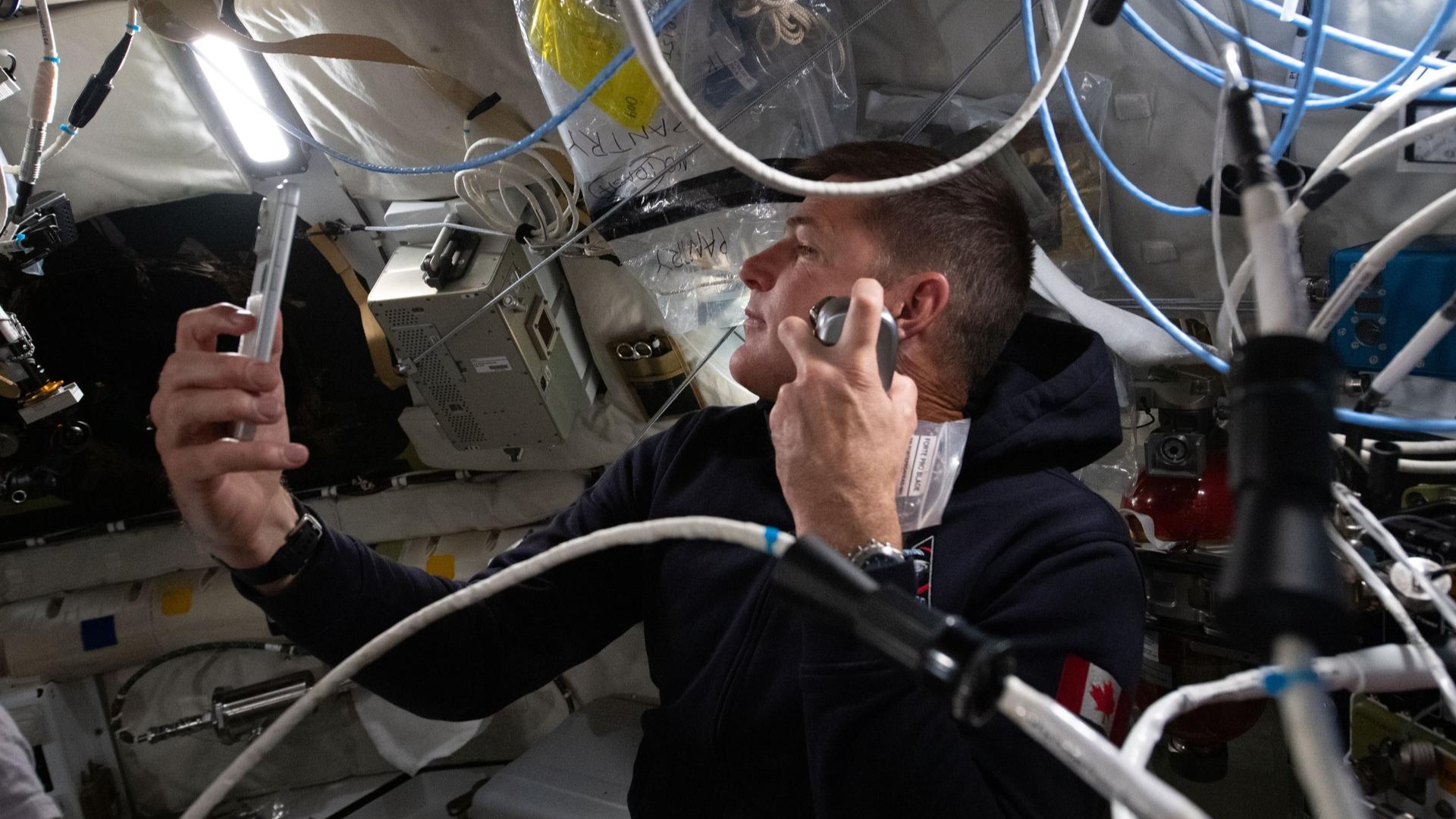
Canadian astronaut Jeremy Hansen holds an iPhone while shaving inside the Orion spacecraft. Image: NASA
iPhones and GoPros in space
While Earth-based staff have been busy collecting and analysing troves of valuable data from the Artemis II mission, its astronauts have used spare moments to document their journey via common consumer technology.
Equipped with iPhone 17 Pro Maxes, two Nikon D5 cameras, and four GoPro Hero 11 action cameras, the crew was able to send a swathe of images to Earth over the weekend.
NASA has since uploaded a ‘Journey to the Moon’ web gallery of images taken aboard the vessel – including a handful of pictures which, according to their metadata, were captured on iPhones.