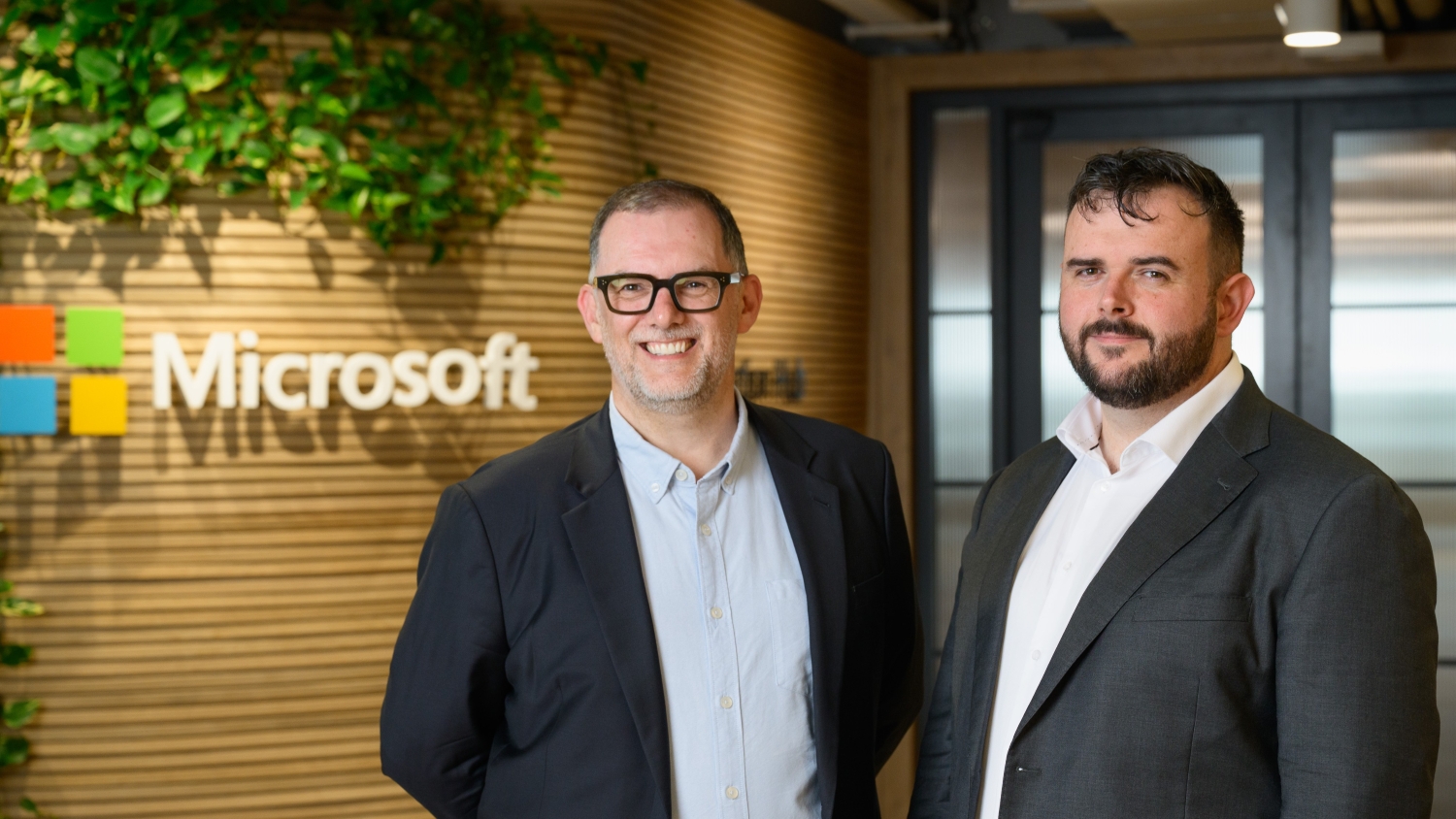

Microsoft has signed an Australian-first agreement with the country’s biggest union group to ensure workers have greater say in artificial intelligence adoption.
Microsoft announced the Framework Agreement with the Australian Council of Trade Unions (ACTU) on Thursday, outlining a series of commitments around how workers would be supported through the introduction of AI tools and services.
The ACTU consists of 38 affiliated unions that collectively represent about 1.8 million workers.
Its agreement with Microsoft incorporates three core priorities: sharing information and learning, embedding the worker voice in tech development, and collaborating on public policy and skills.
“Australians deserve AI that helps people thrive,” Microsoft Australia area vice president Steven Miller said in a statement.
“This agreement signals our commitment to ensure workers’ voices are at the heart of Australia’s AI transformation and no-one is left out of the national opportunity this technology presents.
“We’re proud to come together with the ACTU to set a new standard for responsible AI diffusion across Australian workplaces.”
Putting workers front and centre
As part of the deal, Microsoft has agreed to provide union leaders and workers with practical insights on AI trends and applications, including through formal learning sessions.
It would also open channels for workers to share experiences, insights, and concerns about tech development to inform how it is designed and deployed, and work together to shape responsible AI policy and upskilling or reskilling opportunities, the company said.
Australian workers are concerned that AI is being developed and deployed in workplaces without their input, ACTU assistant secretary Joseph Mitchell said.
“Microsoft Australia’s commitments to recognise the fundamental workplace rights of its workers and engage meaningfully with their unions is a first for global technology companies operating in Australia,” Mitchell said.
“This partnership ensures workers will be able to access resources through their unions to better engage with and contribute to the design of AI systems in their workplaces.”
The AI agreement comes on top of a new Memorandum of Understanding signed by Microsoft and the Australian Services Union, Professionals Australia, and the Shop Distributive and Allied Employees Association, setting out principles and recognising the rights of Microsoft workers in Australia.
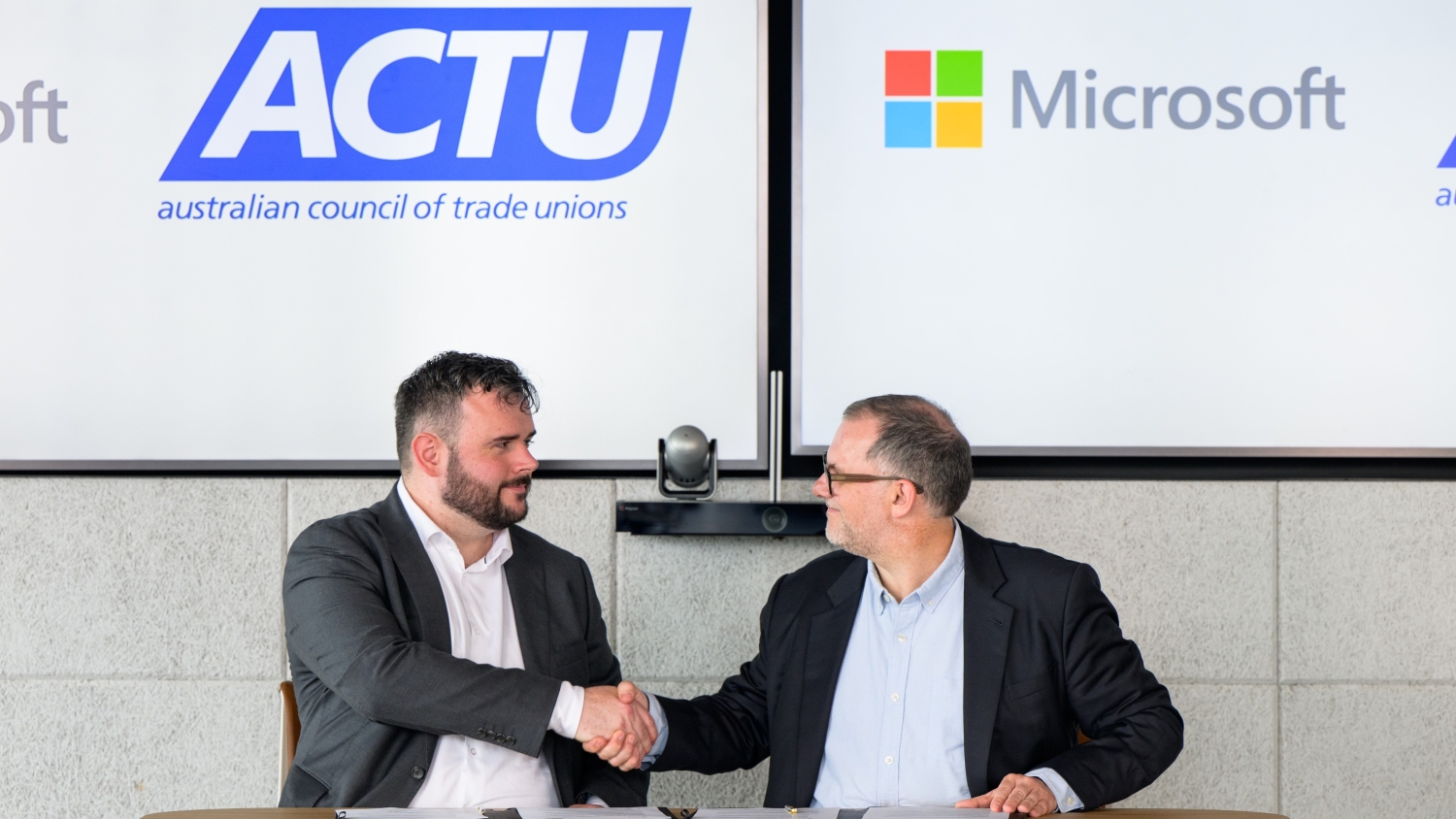
The Microsoft and ACTU agreement is an Australian first for a global technology company. Image: Supplied
‘Timeless principle of the fair go’
Microsoft’s workplace AI agreement with the ACTU has been welcomed by the federal government, with Assistant Minister for Science, Technology, and the Digital Economy Andrew Charlton saying it is a “positive step”.
“When businesses and unions work together it is Australians who ultimately benefit the most,” he said.
“Labor will always back efforts to ensure new technology works for people, and not the other way around.
“Our adoption of AI should embrace the timeless principle of the fair go; the ideal that no-one should be held back or left behind on Australia’s journey.”
The ACTU said the agreement set “a new benchmark for workers’ rights in the tech sector”, and pushed for other global tech companies operating in Australia to follow in Microsoft’s footsteps.
“It’s time for other big tech and large employers to catch up and get on board with a similar collaborative approach to AI, with workers at the heart of planning and implementation, not simply left to grapple with ill-conceived and enforced changes,” Mitchell said.
There have been long-running concerns among Australian workers about how AI is implemented in workplaces, and fears over job losses associated with this.
Surveys have found employers’ focus on AI has led to workers feeling depleted and uninspired, and some employees are even gatekeeping their knowledge for fear of losing their job to the technology.
The federal government’s National AI Plan, unveiled late last year, included a promise that unions would be engaged with AI on job losses and implementation in the workplace.