


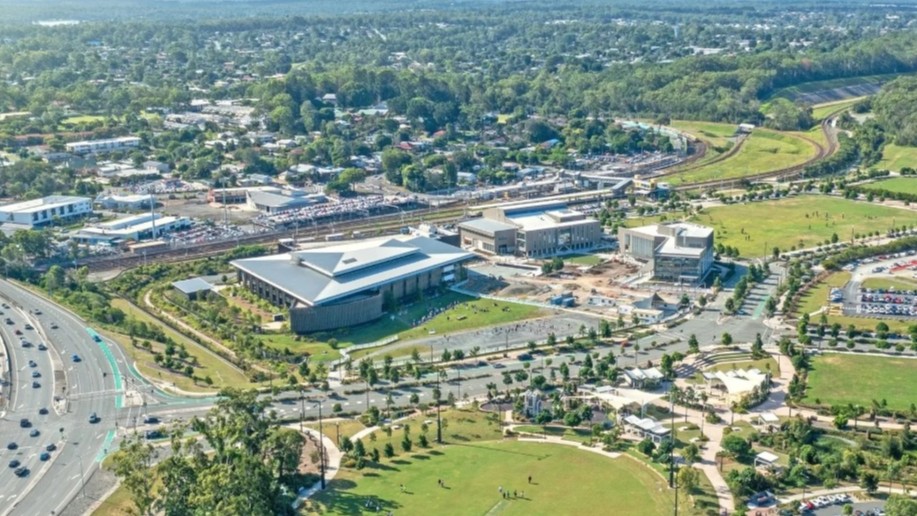

US-based tech firm PsiQuantum has ditched the Brisbane Airport and will instead attempt to build the world’s first utility-scale quantum computer at Moreton Bay Central in Queensland.
PsiQuantum, which was founded by two Australians but is based in California, landed $940 million in funding from the federal and Queensland governments in April 2024, with an aim to finish the quantum computer by 2027.
Such a computer would be able to solve commercially useful problems across chemistry, maths and physics, the company has said.
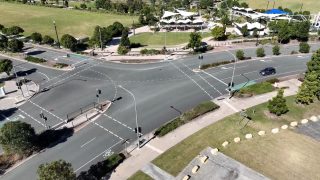
The project was planned to be based at Brisbane Airport, but PsiQuantum announced it would be moving to the council-owned Moreton Bay Central, which is already home to a University of the Sunshine Coast campus.
The site will also host events during the 2032 Olympics Games and will be the future site of a TAFE Centre of Excellence in advanced manufacturing.
The ‘strongest pathway’
PsiQuantum interim CEO Victor Peng, who was appointed earlier this year, said the new site provides the elements needed to achieve the ambitious project.
“PsiQuantum’s mission to build the world’s first utility-scale quantum computer requires speed, agility and strong partnerships,” Peng said in a statement.
“City of Moreton Bay provides the infrastructure, scalability and collaboration environment we need to deliver.
“We look forward to continued partnership with City of Moreton Bay and our partners in the federal and Queensland governments to move this project forward and realise this technology.”
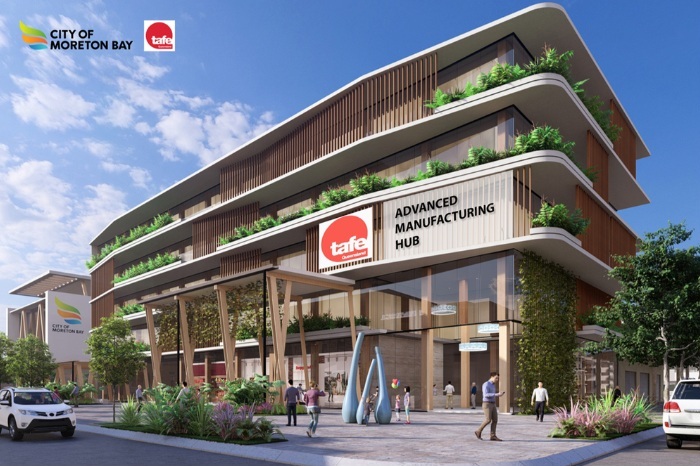
An early concept of the TAFE Centre of Excellence. Image: Supplied
The tech company worked with the local council to select a location able to support the infrastructural and operational requirements of a quantum computer.
The area also has the power and utility infrastructure needed for the project, with new energy infrastructure also commissioned for the upcoming Olympics.
“The Moreton Bay Central site ultimately offers PsiQuantum the strongest pathway to meeting the company’s technical requirements and development plans at speed and scale,” Peng said.
The company said there were no hard feelings with Brisbane Airport.
“Brisbane Airport has been a constructive partner to PsiQuantum, and we thank the team for the positive engagement and support shown throughout our time working together,” PsiQuantum head of operations in Australia Robert Lindwall said.
A four-year journey
It’s been nearly four years since PsiQuantum first proposed the utility-scale quantum computer project to the Australian government.
The federal government released an expression of interest to test the “maturity” of the quantum market while it was in high-level talks with the company and eventually announced the deal in partnership with the Queensland government.
The money is made up of equity and at least $200 million in loans.
The deal has courted controversy since it was unveiled, with concerns surrounding the backing of an American-based company rather than a local one, and whether its stated timeline was feasible.
An internal audit of the process behind the deal found it was “appropriate”, despite minor issues around record-keeping and planning for market testing.
The new location was announced in the same week that PsiQuantum signed a letter of intent with the US government for $US100 million in proposed federal incentives.
The deal, with the US Department of Commerce, was made under the CHIPS and Science Act, and will accelerate the company’s domestic manufacturing ability and the performance of critical components for utility-scale quantum computing, and the American semiconductor industry, PsiQuantum said in a statement.
“Strong technology supply chains are essential for American security and prosperity,” Peng said.
“PsiQuantum’s world-leading capability in photonics will help write the next chapter in the history of computing.
“Thanks to bold action from Washington, our company will continue to invest in manufacturing these cutting-edge components right here in the United States.”
PsiQuantum is also planning to build America’s largest quantum computer, with the Quantum Computing Operations Center to be based at a former steelworks in south Chicago.