



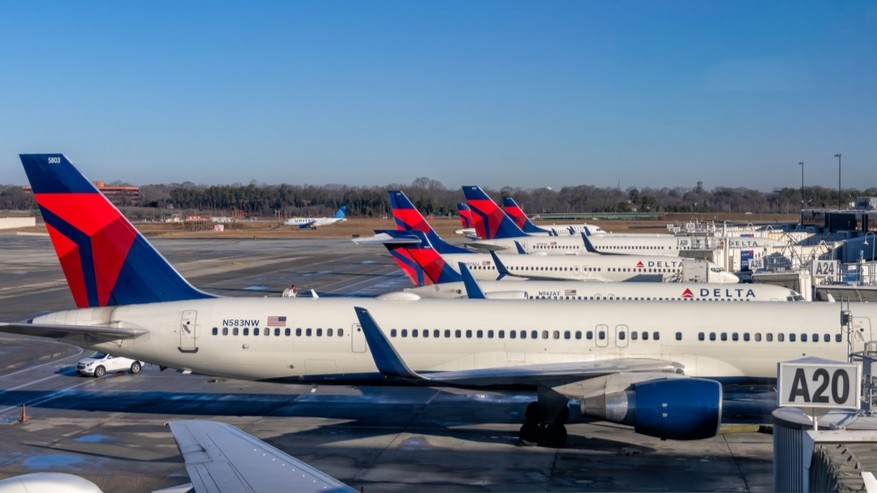

Experts have warned that weaknesses in Australia's critical infrastructure could leave essential services vulnerable to widespread outages, following a major US aviation shutdown triggered by a telecommunications network upgrade.
The US Federal Aviation Administration (FAA) ordered a nationwide ground stop at around 7.30am Saturday AEDT, grounding flights at nearly all of the country's 19,445 airports.
The shutdown forced 3,500 planes to land and resulted in 12,462 flight cancellations, with the FAA describing the decision as an “abundance of caution”.
As airports filled with stranded passengers, FlightAware reported more than 25,000 delayed flights. The FAA also asked European counterparts to pause departures bound for the US.
The shutdown initially raised fears of a repeat of the 11 September 2001 terrorist attacks, when US and Canadian airspace was closed.
But this time, authorities blamed “legacy equipment” that had disrupted network communications.
Investigations had zeroed in on a radar site in Amarillo, Texas and a radio communications site in El Dorado, Arkansas, where FAA contractor L3Harris had been doing maintenance work including the installation of a new router on the FAA Telecommunications Infrastructure (FTI) network.
When the router was switched on in El Dorado, legacy FTI equipment at the Amarillo site flooded it with 1,000 connection attempts every 4 to 5 seconds, which the FAA said, “disrupted the system and created instability with aircraft communication and radar feeds”.
Ultimately, the instability affected 17 of FAA’s 22 Air Route Traffic Control Centers (ARTCCs) – which manage air traffic at high altitudes – and several Terminal Radar Approach Controls (TRACONs), which manage planes below 10,000 ft and between 8km and 80km from an airport.
The network “stabilised” after L3Harris blocked both locations, FAA said, and it ultimately disabled the problematic feature on around 60 similar routers.
It then ended the ground stop after just under five hours – but days later, airlines are still plagued with delays and cancellations.
The cost of a decades-old legacy
FAA has been working to modernise the US National Airspace System (NAS) for years, with legacy copper network being upgraded to fibre and billions poured into the agency to help it modernise air traffic control operations across the country.
Transportation Secretary Sean Duffy repeatedly declined to apologise for the service interruption, arguing in a news interview that “I can’t apologise for what was passed on to us” by successive governments that had institutionalised “a lack of investment” for up to 30 years.
“They gave me a system that needs to be fixed,” Duffy said, adding that “I’m well on my way… but I need more money to do it.”
Just how much money has become a political football: the Trump Administration allocated $US12.5 billion for ongoing system upgrades in its Working Families Tax Cuts Act (WFTCA) – an amount that Duffy recently characterised as “only a down payment”.
In September, FAA upped its request to $US22.4 billion for fiscal 2027 but days before the ground stop, Duffy had increased the request to $US30.1 billion – and this was quickly increased to $US50 billion as the shockwaves from the incident reverberated worldwide.
The NAS “is built on obsolete, outdated technology and that causes avoidable delays and cancellations,” FAA administrator Bryan Bedford told a Congressional committee in September, noting that the volume of commercial flights will grow by over 40 per cent by 2046.
Since the WFTCA allocation, FAA has replaced over 64 per cent of its legacy time division multiplexing (TDM) network and installed new systems as part of its transition to the Brand New Air Traffic Control System (BNATCS), a cloud and AI-based system that will boost stability and speed.
After days of silence, US President Donald Trump took to social media to push Congress for more funding, blaming his predecessor Joe Biden for failing to fix the “RIDICULOUS!” system despite Duffy noting that it had been equally ignored by both parties while in government.
A warning on infrastructure resilience
Software and hardware configuration issues have recently wreaked havoc, including a 2024 Crowdstrike outage that also impacted airlines, last year’s catastrophic Optus outage caused by a botched firewall upgrade, and Telstra’s Network Time Protocol (NTP) server debacle in July.
And Australian workers were among millions affected worldwide as a major Microsoft outage on Friday left key email and productivity tools inaccessible, with costs to businesses estimated in the billions as experts warn that too many companies are falling behind in ensuring IT resilience.
Fully 43 per cent of respondents to a new 11:11 Systems survey of said an hour of downtime can cost them $US250,000 to $US1 million, with most planning to invest in resilience but, the survey noted, lacking “reliable figures on what downtime costs the business”.
The spate of incidents is a wake-up call for Australian critical infrastructure operators that need to face “hard questions” about resilience, Australian Computer Society CEO Dr Prins Ralston said.
“[It was not] a cyber attack [and] that should concern us more,” Ralston said, because “it means ordinary technical failures can still bring essential services to a halt.”
The government should commission a national review of Australia’s sovereign IT risk, he added, citing the importance of “tested backup arrangements, independent checks before major changes go live, and qualified people here in Australia with the authority to act”.
“That responsibility can’t disappear between a contract, a subcontractor and an overseas help desk,” he added.
“The test isn’t whether a supplier promises 99.9 per cent uptime, [but] whether essential services keep running when something goes wrong.”