
Australian quantum computing innovator Diraq has scored a major win, signing a $53 million (US$38 million) letter of intent with the US Department of Commerce that will see its ‘quantum dot’ technology scaled and manufactured in the US.
Even as computing giants consider a range of ways to build quantum computers, many are realising that existing complementary metal-oxide semiconductor (CMOS) manufacturing, long used to make silicon chips, can be adapted to quantum chips.
This is an improvement compared to early quantum computers that used bespoke technology at temperatures near absolute zero to ensure that qubits – the short-lived part of quantum computing that carries data – persisted long enough to be useful.
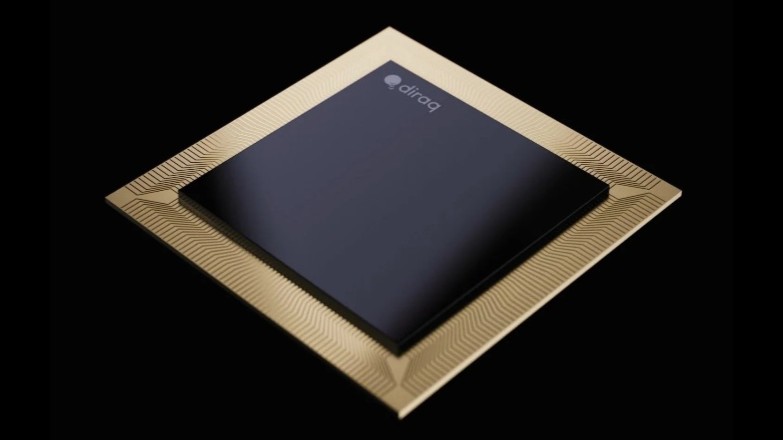
Diraq’s silicon-based quantum processors promise to squeeze millions of qubits on a single chip using existing CMOS manufacturing – which is readily available in a US market that is investing billions to stay ahead in the world’s quantum computing race.
The firm says its technology “charts a course to millions of qubits by 2031, and tens of millions by 2033” and can add quantum computing racks to existing data centres for under $1 per qubit – eliminating the need for specialised quantum computing facilities.
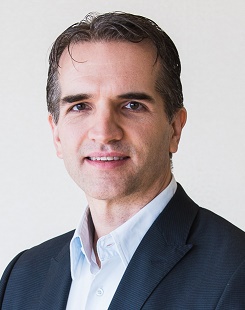
“Silicon-based processors are the most economical and scalable approach to utility-scale quantum computing,” Diraq founder and CEO Andrew Dzurak said.
“By scaling our CMOS qubit technology in the US, we are defining the industrial standard for the next era of supercomputing and cementing the nation’s role as a global architect of fault-tolerant quantum systems.”
You are the company you keep
With offices and labs in Palo Alto and Chicago, and a new site soon to open in Los Angeles, the new funding for Diraq – which was shortlisted for Stage B of DARPA’s Quantum Benchmarking Initiative (QBI) – will prime it for lucrative US contracts.
The new US CHIPS Research and Development Office funding – part of a $2.8 billion (US$2 billion) US government equity investment in nine quantum computing firms – will put Diraq in good company as it works with American manufacturers to scale its tech.
Other funded companies include IBM – given $1.4 billion (US$1 billion) to set up a new quantum chip manufacturer called Anderon – and GlobalFoundries, D-Wave, Rigetti Computing, PsiQuantum, Infleqtion, Atom Computing, and Quantinuum.
Each company was chosen to address “discrete technological problems of genuine consequence,” NIST executive director of semiconductor investment and innovation Bill Frauenhofer said in outlining the nine-pronged investment strategy.
Diraq was chosen specifically to support its efforts to “develop and scale quantum logic units and accelerate critical manufacturing,” NIST said in announcing funding that would also support “novel designs for large-scale and reliable qubit arrays.”
GlobalFoundries – which specialises in manufacturing chips for smart devices, IoT, communications, in-car tech and more – will work closely with Diraq to refine techniques for mass production of the CMOS-based qubit architecture.
That partnership, which is part of broader US efforts to revive domestic semiconductor manufacturing, will “enable quantum systems at scale within a trusted domestic ecosystem,” GlobalFoundries CTO Gregg Bartlett explained.
“As quantum computing enters its industrial phase, the challenge shifts from scientific discovery to engineering and scale, making reliable access to advanced semiconductor infrastructure essential.”
A quantum leap for Australian quantum
As in China and Australia – which was recently credited with having the highest commitment to quantum computing of any OECD investor country – fast evolving quantum technology has become a key focus of government investment in the US.
The letter of intent gives the US Department of Commerce a minority, non-controlling equity stake in all nine companies and effectively positions Diraq’s technology as the core architecture for large-scale quantum computing moving forward.
Securing the US funding took nearly six months of negotiations, Dzurak recently revealed, calling the decision “a huge validation of Australian technology” that has been in development for many years and is notably the only non-US technology on the list.
The exporting of Diraq’s technology will have been made with the involvement of the Department of Defence, which recently imposed export controls on Australian quantum technologies after adding them to its Defence and Strategic goods List.
Australian quantum scientists have been distinguishing themselves for years, with Diraq’s success in qubit scaling joining advances in silicon quantum CPUs, quantum error correction adopted by IBM, award-winning quantum security innovation and more.
PsiQuantum recognised Australia’s quantum strengths years ago by moving to build a quantum computer in Brisbane, although after two years the controversial facility is still yet to break ground while a sister site in Chicago is well underway.
The new deal “is a powerful signal that the US government recognises silicon-based quantum processes as a viable architecture to securing domestic computing leadership,” said Diraq chairman and former NIST director Dr William Jeffrey.
“Quantum technology is a matter of national competitiveness.”