


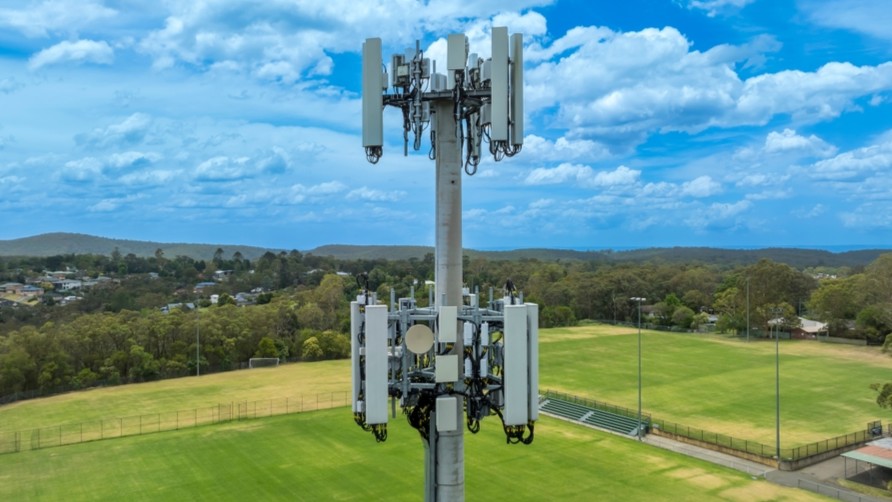

Telstra, Optus and TPG Telecom say they may cut back mobile network investment after the communications regulator confirmed it will charge them a combined $7.32 billion to renew key radiofrequency spectrum licences used by 30 million Australian mobile services.
Radiofrequency spectrum — the airwaves used to run mobile networks — has traditionally been sold through auctions, with licences usually lasting 15 years.
Major spectrum bands sold in past auctions – for 700MHz, 2.5GHz, Regional 1800MHz, 1800MHz/2GHz/2.3GHz/3.4GHz, 850MHz and 738-748MHz/733-738MHz – are due to expire between 2028 and 2032.
Auctions were commonplace as the mobile market was evolving, allowing new and existing telcos to compete for frequency licenses to build their networks.
The Australian Competition and Consumer Commission (ACCC) recently urged the Australian Communications and Media Authority (ACMA) to explore whether new competitors could enter the market.
But after a three-year review, ACMA deputy chair Adam Suckling said Australia had “repeatedly failed to sustain a fourth mobile network operator” and there was no sign of a new competitor emerging.
He said reserving spectrum for a future unknown entrant would be a “high-risk, high-cost” option that could hurt mobile services for millions of Australians.
As a result, ACMA has abandoned plans for new auctions and will instead directly renew licences for existing operators at fixed prices.
The first renewal applications open on 18 June for the 850MHz and 1800MHz bands.
ACMA originally estimated renewing those licenses would cost between $5 billion and $6.2 billion in total, but last December floated a price of $7.34 billion based on an analysis from specialised economics consultancy DotEcon that suggested the earlier price was “too low”.
ACMA has set out the reasons for increasing its prices, arguing the final price reflects current market value based on a “rigorous benchmarking process” of spectrum that ACMA chair Nerida O’Loughlin called “a finite and valuable national resource.”
“After all our analysis and testing,” she said, “we have concluded that $7.32 billion represents the market rate.
“It is therefore the appropriate return, ultimately to Australian taxpayers, for the use of this valuable public resource.”
Telcos beg to differ
The three affected telcos have pushed back hard against ACMA’s proposed pricing since it was first proposed – arguing that being forced to spend so much for spectrum will stop them investing in new networks, mobile towers, and services that benefit customers.
Telstra, for one, has called the spectrum pricing “a $4.1 billion problem for every Australian with a mobile phone”, arguing that ACMA’s pricing is “more than double the fair market value of the spectrum” – with Telstra alone facing a $1.6 billion spectrum bill.
The $4.1 billion figure comes from the $3.3 billion preferred total price of Telstra – which is said to be considering legal action over the final pricing and previously issued a thinly veiled warning that it would increase consumer prices to recoup the renewal costs.
“We can’t support a pricing proposal that’s dramatically above global norms and directly at odds with the Government’s own productivity agenda and focus on reducing cost-of-living pressures… $4.1 billion in additional costs can’t simply be absorbed by the industry.”
Optus also warned that excessive renewal costs could force operators to scale back future investment, hurting competition and consumers.
And TPG commissioned its own modelling, which suggested ACMA’s prices are up to 4 times too high and led it to warn in a submission to the regulator that “the ACMA’s preferred renewal prices will reduce TPG’s ability to invest in infrastructure projects.”
“This will lead to worse consumer outcomes across the Australian telecommunications markets,” the carrier said, warning that higher spectrum prices would force it and its rivals to “significantly scale down network investments.”
“Spectrum has no inherent value,” TPG said, “[but] is only valuable when combined with network infrastructure.”
Weighing the impact on consumers
A second ACMA -commissioned review by Ian Martin Advisory said telcos’ concerns are overstated – concluding that the three incumbents should be able to absorb the renewal costs without raising prices.
Telco consumer group ACCAN agreed, noting in December that the increase “follows concentrated advocacy by ACCAN and contributions from economists and competition experts”.
“In each and every decision,” CEO Carol Bennett said, “ACMA must start from a position that serves the public interest before the interests of Australia’s large corporations… Handing incumbents billions of dollars in discounts without clear consumer benefit was always difficult to justify.”
Yet there are signs the higher renewal prices are already starting to bite, with newly increased mobile prices from Telstra, Optus and TPG kicking in and telcos warning of further price hikes in the wake of ACMA’s final pricing.
Australian Telecommunications Alliance CEO Luke Coleman warned that forcing telcos to overpay for spectrum would leave less money available for improving mobile services.
“High spectrum taxes put all of this at risk,” he said.