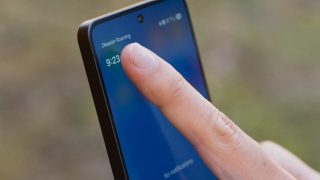

Telstra has allowed multiple navigation, messaging, weather and fitness apps to access the Starlink mobile-to-satellite service it debuted last year, enabling travellers and residents of remote parts of Australia to use full-featured apps in areas where there is no mobile network.
Piggybacking on Starlink’s Direct to Cell service, Telstra is among the world’s first telcos to allow commonly used apps run across mobile-to-satellite connections, with its Select Satellite Apps using Starlink’s low earth orbit (LEO) satellites to connect from anywhere on land or at sea.
Supported apps include Apple Maps, Google Maps, Caltopo and AllTrails navigation apps; Apple iMessage, WhatsApp, Facebook Messenger, Signal and Google Messages; Apple Weather, AccuWeather and Google Weather; Apple Fitness and Google Fitness; X; and the My Telstra app.
“Australia's size and landscape mean there will always be areas beyond the reach of our mobile network,” commercial engineering executive Hannah Chong said in announcing the new feature, and “that's why we're continuing to explore new connectivity options for our customers.”
Select Satellite Apps – which supports iPhone 13 to 17 and Samsung S26 phones – is a step up from Telstra Satellite Messaging (TSM), which debuted last June but was limited to sending text messages only.
More than 2.9 million Telstra customers have so far sent more than 26 million text messages using TSM, with more than 200,000 connections to the service every day and peak usage on weekends and holidays, suggesting it has been popular with holidaymakers leaving Telstra’s network behind.
Telstra also saw TSM usage surge threefold when bushfires around Longwood and Harcourt in Victoria, damaged its mobile network, demonstrating TSM’s value in maintaining communications during natural disasters although, Telstra warns, it “should not be relied on in an emergency”.
Fixing the holes in mobile coverage maps
Telstra is still righting itself after its own emergency, a major outage that affected 8.8 million people, stopped trains and paralysed payment systems nationwide.
Yet its decision to launch Satellite Apps now is more than an act of largesse: weeks ago, it was forced to downgrade network coverage claims after ACMA introduced standards redefining what can be considered ‘coverage’ – cutting 860,000 square kilometres from Telstra’s coverage claims.
By tapping Starlink to turn its network into an extension of terrestrial mobile networks, Telstra seeks to compensate for the loss of that regional coverage, although the carrier does warn that the new service “is not designed for real-time and high-speed applications.”
The launch gives Telstra a leg up on Optus, which announced in 2023 that it would work with Starlink in a move that has delivered fixed Starlink broadband services but has yet to realise mobile-to-satellite services after regulatory hurdles last year forced Optus to push back their launch.
Australia leading the way towards satellite
Extensive open spaces and the prohibitive cost of rural mobile towers have made Australia a natural market for mobile-to-satellite services, but can Starlink really step in where terrestrial mobile services dare not tread? Not quite yet.
“There are a few technical issues,” Gartner senior director analyst Khurram Shahzad told Information Age, noting that Telstra cannot route mobile phone calls from Starlink to its own core network, meaning that while over-the-top (OTT) apps work, normal phone calls do not.
That includes calls to Triple Zero emergency services, which cannot be carried via direct phone calls or, Telstra warned, via WhatsApp, Messenger and its ilk, whether that be connecting via Starlink, home or office Wi-Fi, or Telstra’s mobile network.
Other apps will be added over time as their developers make them satellite-ready – X, for example, presents a text-based interface suitable for the lower-bandwidth mobile-to-satellite services – but for now, Shahzad said, “Telstra is still being quite cautious [with] a very limited service.”
“They are piggybacking on the default LEO satellite model that Starlink has been operating with and not making any infrastructure changes that would be required to support emergency calling or other voice calling capability.”
Competitors are rushing to the party, with NBN Co joining Amazon’s Project Kuiper vision; Vodafone partner AST SpaceMobile recently demonstrating speeds of 100Mbps with LEO satellites; and Chinese LEO operator Spacesail last month demonstrating mobile-to-satellite voice calls.
Gartner believes the number of such direct-to-device (D2D) services in use will more than double by next year, from 670,000 to 1.5 million, as new universal outdoor mobile obligation (UOMO) policies force telcos to tap D2D to improve coverage across 5 million square kilometres.
“Once true broadband becomes available on a standard smartphone,” he explained, “the likes of Telstra will not have to deploy their towers in very rural areas where ROI is low, which has always been the problem.”
“When every mobile operator has to partner with a satellite provider to deliver this service, it becomes a very viable alternative.”