



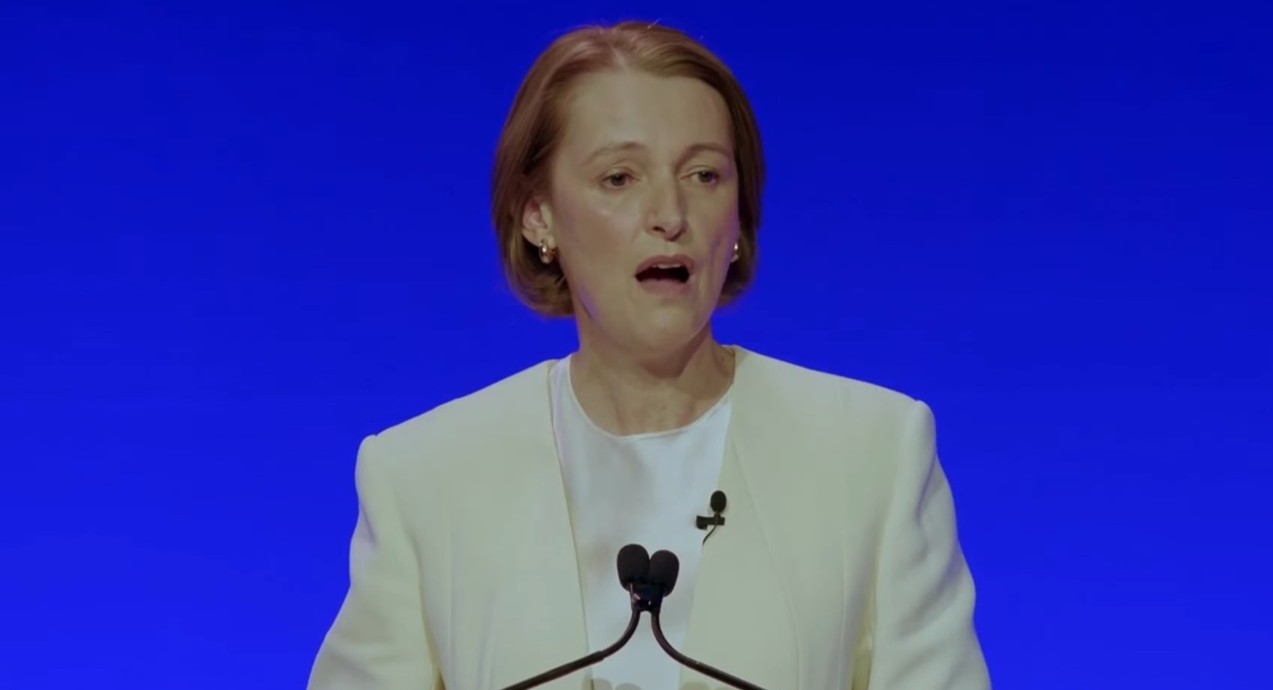

Telstra CEO Vicki Brady received an 11 per cent pay rise and a 4-star performance rating for fiscal 2026, pushing her remuneration to $6.84 million, in what has been labelled a “tone deaf” move despite a crippling network outage, slumping revenues, and controversy over more than 1,200 job cuts.
Brady joined senior executives and board members for an annual results presentation of results that included a revenue decline of 0.8 per cent, to $22.9 billion – even as it placated shareholders by growing net profit after tax by 2.7 per cent, to $2.4 billion in a year that Brady called “strong”.
That such returns were possible was the result of cost-cutting measures – which Brady called “disciplined cost control and capital management” – that included cuts of over 1,200 workers that CWU national assistant secretary James Perkins said showed the company remains “tone deaf”.
“No one begrudges anyone being well paid for doing a tough job,” Perkins said, noting the “particularly galling” timing in the wake of the job cuts and July outage, which cut services to 8.8 million customers after a preventable error in a network time server caused chaos nationwide.
“You have to question the message this sends to Telstra workers and customers,” he said, adding that “workers are constantly being told the company needs to find efficiencies and do more with less, while pay packets at the very top keep growing.”
Brady, along with former Global Networks and Technology executive Shailin Sehgal, did not emerge completely unscathed, with each copping a 20 per cent point cut to their short-term incentive (STI) bonus structure; other senior executives’ STIs were cut 10 per cent.
“Investigations to date indicate the outage was caused by something within our control,” Telstra People and Remuneration Committee chair Holly Kramer said, noting that “board discretion” drove the decision to cut senior executives’ STI multipliers for fiscal 2026.
Yet because the outage occurred during fiscal 2027, Kramer noted “further action” may further affect their 2027 financial year remuneration once the independent outage review – currently being conducted by Technology Audit Partners (TAP) and expected before month’s end – has been delivered and reviewed.
Weighing the outage’s long-term impact
The outage was front and centre during the results presentation, where Brady revealed that the telco has so far processed service credits of just under $1 million to the more than 30,000 customers that have contacted it claiming financial damage from the outage.
“Our processes are working smoothly, and we are getting through that very quickly,” she said, adding that the company had so far “seen no material impact in terms of customers leaving us post the outage, nor customers choosing to join us.”
Telstra has not yet factored the impact of the outage into its forward financial projections, with Brady citing the ongoing TAP audit and a separate ACMA investigation in saying that “it’s just far too early to speculate” about what penalties could ultimately look like.
Optus, in an indicator of the potential consequences, paid $481,000 in consumer compensation after its outage last year and is now facing a $250 million ACMA lawsuit for Triple Zero failures that have been linked to several deaths.
Even as it awaits the penalties for its breach, Telstra saw average revenue per user (ARPU) increase across all categories of its business during fiscal 2026, with Brady calling the last year “a strong year” that “reflected momentum across our business”, but analysts weren’t so sure.
Despite delivering a profit boost and return for shareholders, telecommunications analyst Paul Budde said those figures “disguise a shrinking company”, citing “structural challenges [that are] facing telecommunications companies worldwide.”
Those challenges include the reality that most mobile customer growth is coming at low price points – “hardly evidence of a rapidly expanding market,” Budde said, noting the “more sobering” declines in fixed consumer, small-business, enterprise, international and other unit revenues.
“This is an impressive management result, but it is also a textbook example of earnings growth without business growth,” Budde said, noting that “Telstra generated more profit from fewer services and less revenue…. Infrastructure sits at the bottom of the value chain.”
A veiled threat to regional infrastructure?
The closely watched results presentation came as telecommunications regulators ramp up calls for a complete review of the market’s regulations and structure during a time of significant change, as the NBN fibre rollout nears its end and satellite services disrupt the mobile market.
With Telstra the latest telco to come under fire for Triple Zero service failures, new TIO figures have revealed persistent regional service gaps and the ACCC will shortly release a discussion paper to shape a year-long inquiry exploring ways to shake up the mobile telecoms market.
Yet while the ACCC is considering mandatory domestic roaming – which could have lessened the impact of Telstra’s July outage by letting affected phones switch to other networks for normal calls, not just Triple Zero calls as enabled by existing ‘camp-on’ capabilitiesj– Brady pushed back.
Telstra does “not support mandated domestic roaming”, she said, and would prefer such roaming was conducted on commercial terms through negotiations with other providers.
Telstra had invested $9.5 billion in its mobile network over the past five years – including $3.8 billion in regional areas – and, Brady said, “we’ve had every incentive to do that because that’s part of how we differentiate and compete in the market.”
Yet, she added, forcing telcos to share that infrastructure investment could jeopardise that: “We believe mandated domestic roaming would take away that incentive for infrastructure-based investment and competition, and would likely lead to worse outcomes in regional Australia.”
Whether those “worse outcomes” would include an increasingly growth-focused Telstra reconsidering its regional investment in mobile towers remains to be seen, but the results suggest anything could be on the table.
“Regional Australia have high expectations, as do all our customers,” Brady said, “and that’s why I do think it is timely that the ACCC conduct this inquiry.”
“Connectivity has never been more important for our customers and for Australians.”