
Telstra profits rose 8.1 per cent to $1.2 billion in the second half of 2025, while more than 1,000 jobs were cut in the same period, Australia’s largest telecommunications company confirmed on Thursday.
The firm's latest results come after it also cut 1,323 jobs in the first half of 2025, reducing its workforce by 2,356 roles, or 7.4 per cent, across the calendar year to just over 29,000 staff.
Much of the cuts, the company said, were part of its ongoing “reset” of Telstra Enterprise, which still faces hundreds of further job losses in 2026, Information Age reported last Wednesday.
Telstra Enterprise sells technology, communications, and managed services to businesses and government organisations, including networking, cloud services, and cybersecurity.
Around 200 jobs are also in scope for cuts under Telstra's data and AI joint venture with consultancy firm Accenture, in which some roles will be offshored to India, the telco confirmed last week.
Telstra sees rise in earnings and redundancy costs
Telstra’s underlying earnings rose 4.7 per cent to $4.45 billion, amid rising mobile services revenue and what CEO Vicki Brady described on Thursday's conference call as “strong cost control and disciplined capital management”.
The company’s labour costs dropped 9 per cent to $181 million, partly “due to lower number of roles”, while redundancy expenses surged to $63 million.
Brady said she had seen “really pleasing progress” in the overhaul of Telstra Enterprise, but there remained “a load of complexity we need to get through in that business”.
She added that job cuts were “never taken lightly”, and any decision to remove a role was “a difficult one”.
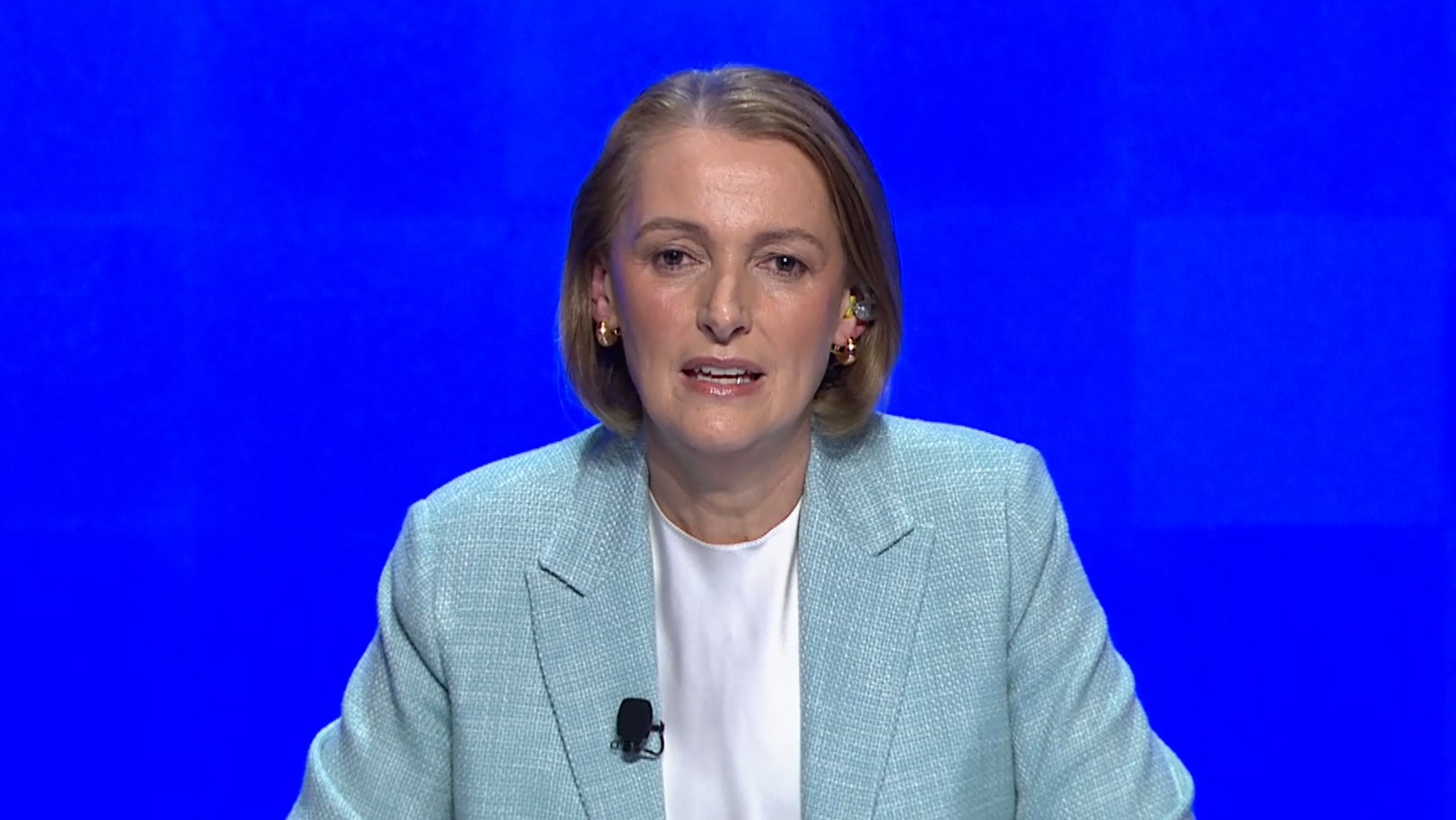
Telstra CEO Vicki Brady says the company is reducing 'complexity' in its Enterprise division. Image: Telstra
Telstra announced its Enterprise overhaul in May 2024, and suggested an initial 2,800 job cuts would be completed by the end of that year.
The company’s partnership with ICT giant Infosys — which some Telstra Enterprise roles are expected to move to, while others will be cut — would help to further “simplify the complexity” in Enterprise, Brady said.
Group executive of Telstra Enterprise, Oliver Camplin-Warner, said there was more work to do to simplify the division.
"We’ve taken a long, hard look at our cost base, and facing some really tough decisions here — but we’ve made those calls and we do have a very different cost base across the business now,” he said.
Telstra staff wary of AI impact
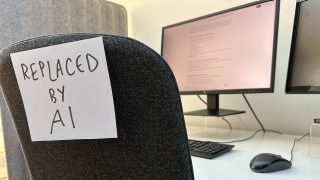
Brady admitted Telstra staff had voiced concerns internally about what the company’s increasing focus on AI and cost efficiency could mean for their jobs.
While she suggested she could not think of any specific role which had been directly replaced by AI, Brady admitted the technology was making Telstra a more efficient business.
The company was still investing in its staff, including “their ability to be able to use and apply AI capabilities”, she argued.
“We fundamentally believe, for all of our team, they will be better positioned in the future the better able they are to apply AI and use it in their jobs,” she said.
Kim Krogh Andersen, Telstra’s group executive for product and technology, said the telco had managed to decrease its technology costs in the past few years by consolidating partners, while still "pushing hard” into AI.
AI had already reduced software engineering defects and had sped up software production and release schedules by around 20 per cent, he said.
“Most of our software engineers are using Github Copilot, to really ensure they produce more code faster,” Andersen told the conference call.
“We also use AI for testing, we use AI for quality assurance, for architecture assurance, but also for change management and other things.”
Telstra now has 380 internal use cases for AI, Andersen added, and the company was also beginning to deploy AI agents which could handle some multi-step task autonomously.
Brady said Telstra could not be complacent when it came to AI, as it was increasingly being utilised in customer interactions and network management.
The executive previously told investors in last May that Telstra would likely have a smaller workforce by 2030, partly due to “a significant unlock” facilitated by AI.
The company announced a planned reduction of around 550 roles in July 2025, but denied those changes were the result of its increasing use of AI technologies.