
Australia’s largest telco Telstra has suffered a major service disruption that has stopped trains, blocked payments and left customers around the country without mobile phone service.
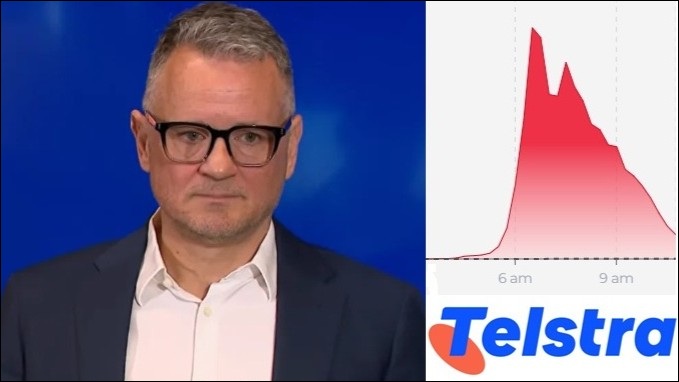
Telstra chief financial officer Michael Ackland fronted media this morning to apologise for the “big disruption” caused by the "network challenge", adding there was “nothing to indicate malicious activity” as the cause.
The outage, began around 4am AEST according to Downdetector as a trickle of reports that turned into a flood as workers began their day around 5:30am caused a cascade of failures that stopped public transport, wireless payments, EV charging, and access to government services.
Taxi drivers, cafe and restaurant owners struggled to maintain services, while signalling failures left trains around Campbelltown, Goulburn, Newcastle and Maitland at a standstill and Victoria’s V/Line trains suspended – with reports of commuters left stranded on trains for up to two hours.
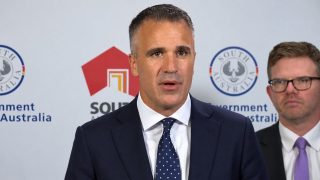
Public transport ticketing in Canberra was also affected, while hundreds of South Australian traffic signals were offline and customers reporting they couldn’t receive authorisation codes when logging into government and other services.
Telstra’s own outage reporting page was timing out, with the telco only offering a message saying “We're looking into an issue affecting some mobile calls and data connections. If you're having trouble connecting at first, try again as it may work on a retry… Thanks for bearing with us.”
Ackland offered little more clear detail in a press conference, saying that “we know what the issue is, and our teams are moving aggressively to resolve it” and are searching “urgently” for the root cause.
Ackland said the company’s technical experts had identified issues with time synchronisation between servers in Telstra’s Melbourne data centres.
“It’s one of the ways that you authenticate what’s going on in the network,” he explained, “and time synchronisation in those nodes wasn’t working as it should…. Our investment in resilience and cybersecurity and redundancy is significant, but it is a big and complex network.”
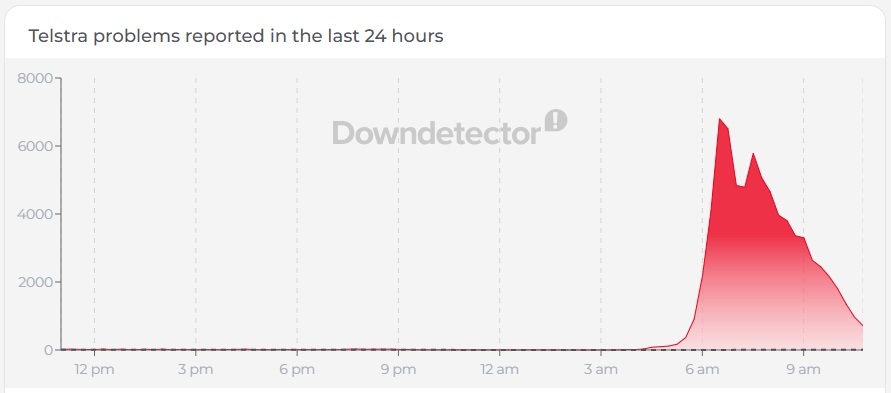
DownDetector started registering the outage at around 4am. Photo: DownDetector
Ackland advised impacted users to connect to Wi-Fi to access over-the-top services like WhatsApp, Facebook, Facetime and Teams – although Telstra was soon reporting that it had restored 90 per cent of affected services.
A test of Triple Zero failover
The outage is the largest nationwide outage since the network of Optus went offline for 14 hours late last year, causing interruptions to Triple Zero services that were linked to several deaths and drove the government to overhaul processes for handling emergency calls from mobiles.
That process saw the introduction of new oversight, including the appointment of a Triple Zero Custodian, and a renewed focus on ensuring that ‘camp on’ mechanisms – which transfer Triple Zero calls to other telcos’ mobile networks to ensure their completion – were working.
Reports suggest this latest Telstra outage did not cause Triple Zero interruptions, with Victorian emergency services and the Telecommunications Industry Ombudsman (TIO) said to have confirmed camping on was working as expected despite NSW Police and WA Police advisories.
In line with recently tightened reporting requirements, Telstra had notified the government of the outage and, Ackland said, had been conducting in-person welfare checks throughout the night and morning for “a small number of reports that we are investigating as part of our standard process”.
The weakest link in a nationwide chain
The broad range of services affected by the mobile service interruption is a reminder of how deeply interconnected those services have become – and how dependent they are on the seamless and uninterrupted availability of networks that become more complex every day.
"When people hear about a Telstra outage, they usually think about being unable to make calls or use mobile data,” Swinburne University of Technology transport expert Professor Hussein Dia said, “but rail operations depend on dedicated operational communications that allow train drivers and network control centres to stay in contact and operate services safely.”
"As transport networks become more digital and connected, they need communications systems that can tolerate faults without bringing an entire network to a standstill,” he continued, adding that “means reducing single points of failure through redundancy and ensuring there are alternative communication pathways if one system is disrupted.”
Such outages are “very disruptive to people’s lives throughout the country,” Prime Minster Anthony Albanese said in a media conference as the Telstra investigation continued to unfold, calling the Telstra outage “deeply concerning…. many people have been severely disrupted.”
The Triple Zero Custodian “is in constant contact with Telstra and with emergency services,” Albanese added, noting that the cause of the outage was still being investigated and that the government “will continue to engage constructively” with Telstra.
“People are entitled to get answers,” he said, “but they also want answers that are accurate.”
A contrite Ackland was similarly concerned: “We know that customers across the whole community rely on our connectivity,” he said, “and this network challenge has caused many issues, and it's been a big disruption to many people's days, and we apologise for that.”