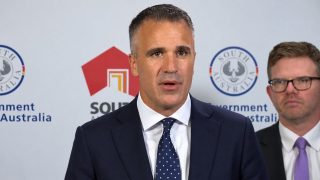

The Australian government is reportedly moving to dump plans for dedicated artificial intelligence legislation such as an AI Act, with the minister for innovation saying lawmakers are carefully creating “an Australian approach” for regulation of the technology.
Prime Minister Anthony Albanese’s caucus has reportedly become split on the issue, and tensions have grown since the Productivity Commission earlier this month called for AI laws to be “a last resort” given the tech's potential economic boost.
Despite having proposed dedicated AI laws and guardrails in its previous term, the new Albanese government has reportedly moved away from such plans — much of which had been developed by former industry and science minister, Ed Husic.
His successor, Tim Ayres, told the 2025 TechLeaders Summit on Monday that the government was “going to take our time to work through” questions on AI regulation “over the coming months”.
“Regulation requires precision and the capacity to meet individual harms … or to deal with bad outcomes that might happen, in a way that is effective and in a way that supports the overall national interest,” he said.
“… We’re watching carefully the developments around the world as governments grapple with the challenges and opportunities of this group of technologies.
“But we’ll develop an Australian approach — we’ll develop an approach that’s in the Australian national interest, given our conditions and our capabilities and our broader economic and strategic interests.”
Ayres and his department have reportedly begun work on lighter rules for AI which largely rely on existing laws in areas such as copyright and privacy.
He told the TechLeaders conference he still saw “an opportunity for Australia to shape the global frameworks around AI in partnership with like-minded countries within and beyond our region”.
Husic, who has continued to call for an AI Act as a backbencher, said in June that he worried Australia would continue to go without “something that is solid and uniform” on AI legislation.
AI backdown labelled 'incredibly dangerous’
The government’s alleged move away from dedicated AI regulation was an “incredibly dangerous” and “reckless” move, Greens Senator David Shoebridge told the TechLeaders summit on Sunday.
He praised Husic's work on AI laws and safeguards but accused current Labor ministers and members of the Liberal-National opposition of not having substantial interest in technology policy.
“I think it’s shameful that [Husic’s] project has been binned,” he said.
"… Ministers come and go, but he fact that they’ve also jumped all of that work, I find incredibly dangerous.”
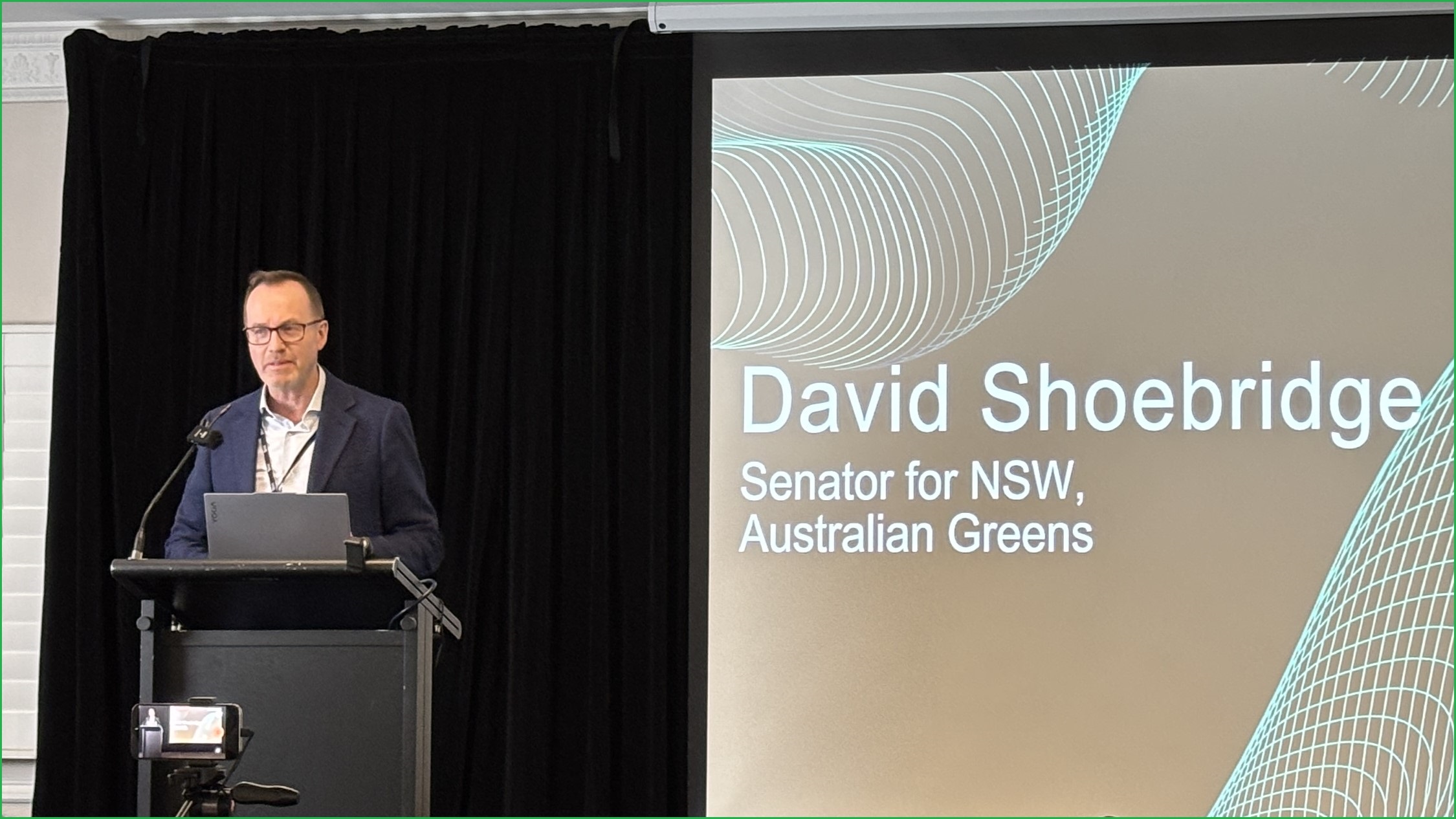
Greens Senator David Shoebridge says the federal government is being 'reckless' by not specifically regulating AI. Photo: Tom Williams / Information Age
Shoebridge called for “a degree of rigour and testing” to be legislated before AI was rolled out further across the economy, particularly in government and financial services.
He also suggested while Australia could follow in the footsteps of the European Union, United Kingdom, and Canada by implementing dedicated AI regulation, the country’s “learned helplessness" amid lobbying by tech companies had prevented it from doing so.
Ayres declined to directly respond to Shoebridge’s comments.
Dave Lemphers, CEO of Australian AI company Maincode, told the conference on Monday that he preferred “a pragmatic approach to regulation” which allowed the market to utilise generative AI technologies and improve understanding of how they worked.
“My belief is that we should be pragmatic in supporting the early movers in Australia so that we can build a capability,” he said.
“And then work closely with those organisations to define what [regulation] looks like, in very practical terms.”
Lemphers said he was not worried about potential regulatory impacts on Maincode’s work building large language models (LLMs), because potential laws were likely to be “so broad that they’re impractical and unapplicable, or so narrow that they don’t really affect us as a commercial AI factory”.
Opposition ‘concerned’ by union demands
Ayres — a former union representative who has been urged by such groups to give workers a greater say in how AI is implemented — also told the TechLeaders summit “Australian businesses, workers and communities want to know that the benefits of AI will accrue fairly to them”.
“If we all work together to adopt early, invest strategically, and give workers, businesses, managers, and researchers the capacity to use AI effectively, we will ensure that the benefits of AI accrue to everyone, not just some,” he said.
Shadow minister James Paterson said on Tuesday that while the Liberal-National coalition saw AI as “overwhelmingly” positive for Australia, it had reservations about about union demands.
“I am concerned about demands from the union movement that they should have a veto power as to whether AI is rolled out in the workplace,” he told ABC News.
“If that’s the case, that will only hold Australia’s economy back, and it’s critically important that [Treasurer] Jim Chalmers resist that pressure from some in the union movement, and in his own government, to do that.”
AI needed “sensible regulation” for its associated risks, Paterson said, but it still offered “an opportunity to significantly increase productivity if it’s employed effectively in the private sector”.
Tom Williams travelled to the 2025 TechLeaders Summit as a guest of organisers Media Connect.