
More than 620,000 migrants to Australia are working in jobs below their skill level, advocates have warned amidst calls to address skills shortages by overhauling what one lifetime public servant calls a “seriously broken” skills recognition system.
With 44 per cent of qualified permanent migrants working below their skill level, Settlement Services Australia (SSI) CEO Violet Roumeliotis told the National Press Club this week, Australia is shooting itself in the foot during a time of significant skills shortages.
“These are people who we invited to Australia because they have the skills that we need,” Roumeliotis said, calling out the doctors, nurses, aged care workers, tradespeople, and engineers that are “not waiting [to work] because they lack skills.”
“They are waiting because of slow, expensive and unfair processes to recognise their credentials [in a] system [that] stops people from fully participating and contributing, due to barriers that have nothing to do with their skills.”
Applicants face high fees and onerous equivalency requirements while applying for skilled migrant visas – only to be approved, arrive in Australia and face a “completely disconnected system” where “those assessments count for almost nothing”.

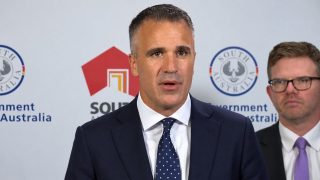
Settlement Services Australia (SSI) CEO Violet Roumeliotis told the National Press Club that Australia is shooting itself in the foot during a time of significant skills shortages. Photo: SSI
As an advocate for the grassroots Activate Australia’s Skills movement, Roumeliotis has engaged with many skilled migrant workers who, she said, “have qualifications, experience and a desire to work.”
“But they hit a system that feels like we don’t want them to contribute with the job and skills that they have.”
Turning support in theory into support for real
Former senior public servant and Macquarie University chancellor Dr Martin Parkinson said the issue reflects a broader failure in policymaking.
“What we are seeing here is yet another example of what has been the most depressing experience of my 40 years in government,” he said.
The current migration debate, he argued, fails to grapple with the real challenges facing the country.
“Rather than carefully exploring an issue, setting out options and explaining why policy is going to take a particular approach, we are offered simplistic solutions that are bound to create perverse outcomes and further erode community trust,” he said.
With productivity at record lows, two-thirds of shortage occupations requiring professional licensing, and roughly half of migrants working below their skill level, Parkinson said the system is clearly not functioning.
“Those four facts cannot coexist without something being seriously broken,” he said.
Australia’s 2.3 million migrants with work rights “help keep our country running,” Parkinson continued, “and they are integral to our ability to run this economy every day”.
Politicians have supported policy changes in theory, with Home Affairs Minister Tony Burke last year calling the issue “a wicked problem… but that if we can unlock this, then everybody wins.”
Independent member Allegra Spender echoed Roumeliotis’s call for change, calling on the government to use the upcoming Budget to establish a single national governance system and link skills recognition processes between migration and employment.
The government should also provide financial support to remove cost barriers to recognition, Spender said, and set up formal Migrant Employment Pathway Hubs to help migrants move into skilled jobs.
“There is no point bringing these people here for their skills if we’re not going to let them work when they arrive,” she said.
“When labour productivity is in the doldrums, we need to be pulling every level to optimise our existing pool of skills and labour – and better skills recognition for migrants who are already here is one of the easier levers available to us.”
Australia unprepared to meet employment demand
Concerns about migrants’ underutilised skills have persisted for years, with a Jobs and Skills Australia (JSA) analysis last year finding overseas university graduates are less likely than VET graduates to work in roles aligned with their studies.
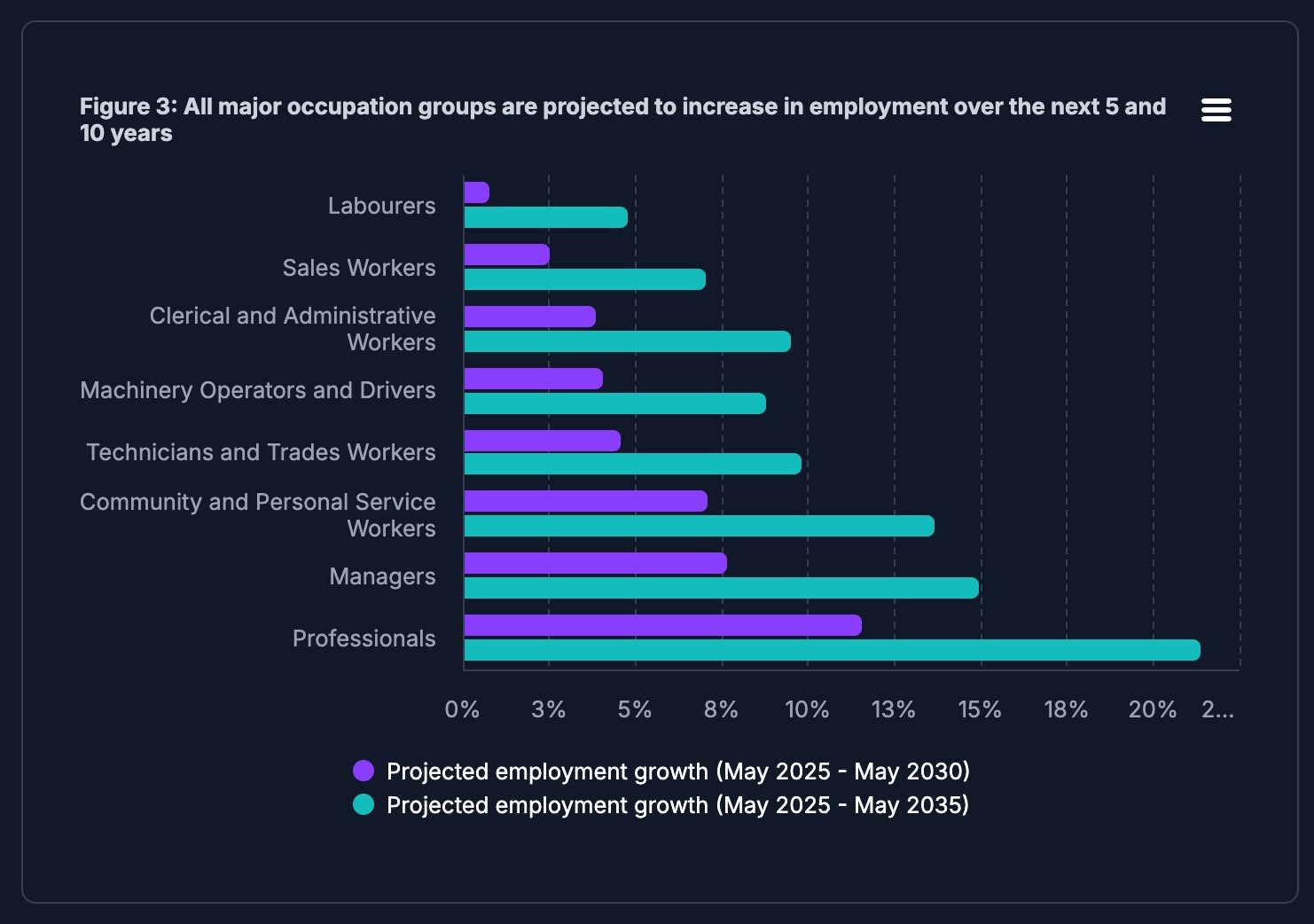
This, even as the Core Skills Occupation List (CSOL) was updated a year ago to prioritise 456 occupations, and Jobs and Skills Australia (JSA) figures projected that all major occupation groups will see employment surge through 2035.
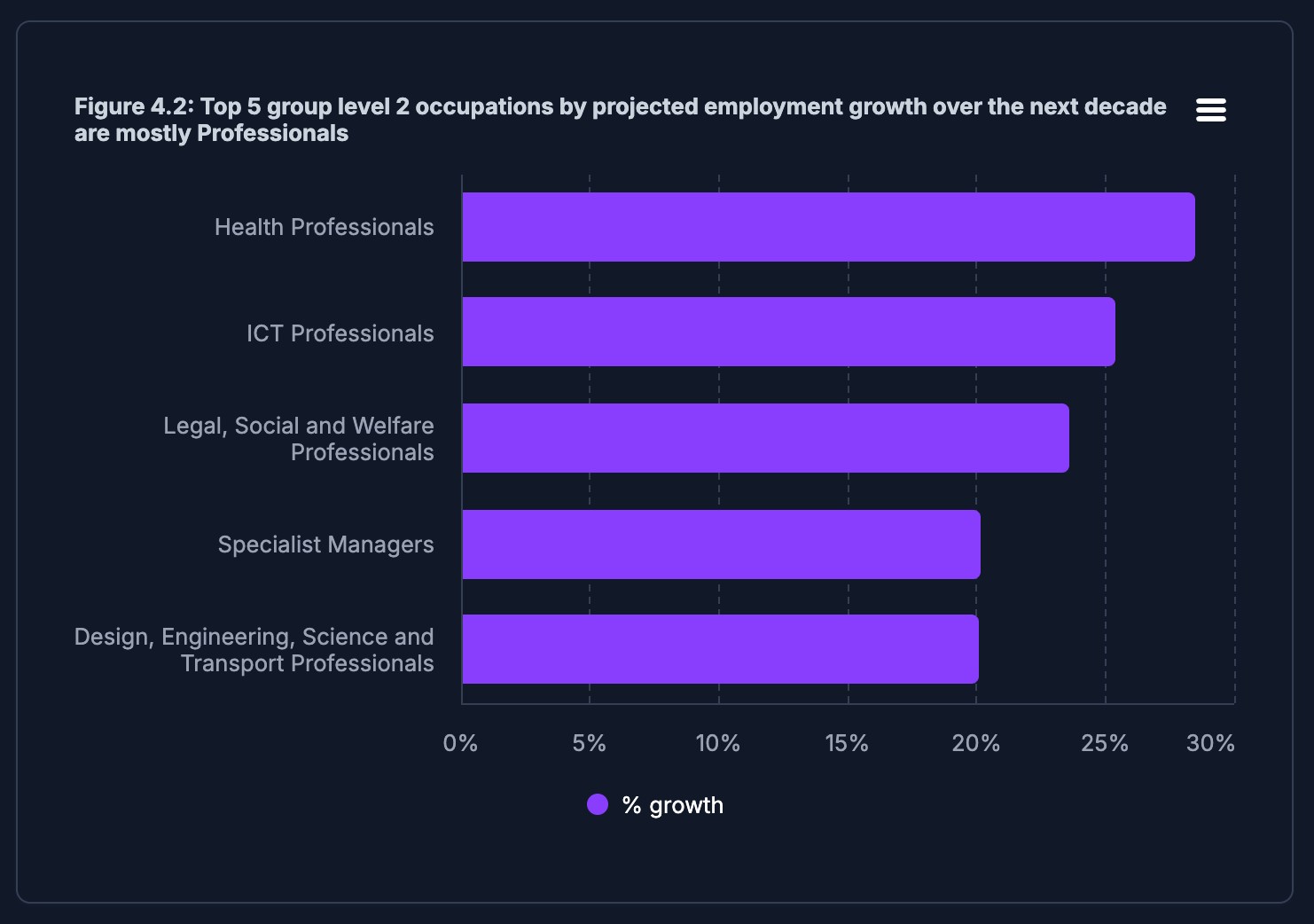
Leading that charge are health and other professionals – expected to grow by 456,900 people to 2030 and 845,300 people to 2035 – as well as community and personal service workers and managers, with ICT managers set to grow by 25.5 per cent by 2030.
Many of those industries recognise the value of migrants’ skills: a 2024 analysis, for example, found the cybersecurity industry “wholly dependent on skilled migrants” to plug its massive skills gap.
Activate Australia’s Skills claims over 100 businesses, unions, industry peak bodies and community organisations support its call to move forward with “shovel ready” policies that, it says, could unlock $9 billion in productivity and economic gains.
Roumeliotis believes government failure to streamline skills recognition is making the task harder than it needs to be – and depriving the economy of around $43,000 per migrant that is not working in their licensed profession.
“We are all paying the price for failing to use the immense talent we already have in this country,” she said, with 47,000 underutilised migrant engineers, 20,000 teachers and 1,300 electricians “at the same time we have a decades-high national shortfall.”
“It’s just ridiculous and extremely inefficient…. It’s a system that is not delivering on what it was designed to do and needlessly holding back that expertise.”
“We do not need another review; we need action.”