%20-%20crop.jpg)

Emeritus Professor and ACS Fellow Jenny Edwards was already living her dream when she joined the University of Technology Sydney (UTS) in 1976, kicking off a distinguished career that, 50 years later, saw her recognised with an AM on this year’s King’s Birthday Honours list.
That distinction – awarded for “significant service to the information technology sector, and to tertiary education” – recognises Jenny’s contributions over a career that led her from programming the bus-sized SILLIAC computer to shaping AI education.
A member of the Australian Computer Society (ACS) since 1972 – her PhD supervisor was ACS co-founder Professor John Bennett – Jenny pivoted from her early interest in maths to programming algorithms in the field then known as Operations Research.
Her newly discovered love of teaching led her to the School of Computing Sciences at the NSW Institute of Technology (NSWIT) – which would become UTS in 1987 – and an international career that included 15 years as a senior visiting research fellow at IBM Research Labs in the US.
While teaching, her work in high performance computing (HPC) engaged her with what she describes as “relatively groundbreaking algorithm work… not all of which I can talk about, but some of which went on to be used in some very interesting projects.”
Yet “the thing I'm probably most proud of is all the different students I've had,” she told Information Age, “and the many and varied careers that they've gone into, and how well so many of them have done.”
“I've always been big more on the people side – and helping people reach their potential – than, in some ways, the technical side.”
“Some of the work that students produce, and the way that they can talk about it, is quite mind-blowing.”
Preserving quality in ICT education
Jenny’s contributions “exemplify the values we champion,” UTS vice-chancellor and president Professor Andrew Parfitt said in acknowledging the long-term contributions that led to the Order of Australia awards for Jenny and eight other UTS academics.

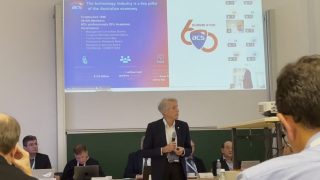
Jenny Edwards has been recognised for her signisficant service to the information technology sector and to tertiary education. Photo: Supplied
Jenny’s student advocacy has taken many forms over the years, not only through teaching and mentorship – and her years as UTS Head of Computer Studies – but through her support of ACS and its work in managing technical accreditations.
Although she “technically” retired in 2018, she continues working in student support and education, continuing her ACS activities and reviewing proposals for new computer science courses with the Tertiary Education Quality and Standards Agency (TEQSA).
Like any educator involved in course design and accreditation, Jenny has been keenly aware of the infiltration of generative AI (genAI) into tertiary learning, although she isn’t quite convinced it has to be as destructive for conventional learning as many say.
“It’s easy to devise an assessment that’s quite hard to do by AI, that really does require the individual to think for themselves and to demonstrate that thinking,” she said, “but as AI gets more complicated and sophisticated, it is making assessment a bit difficult.”
The key, she believes, is context: “We still want students to be involved in learning how to solve the sorts of problems you would encounter in the real world.”
When half the battle is getting them there
Helping students enter that ‘real world’ is ever trickier, with many students graduating only to find their skills are already outdated or don’t meet employer needs in a market where many already fear AI is killing job prospects.
Students have a role to play here and “need to be realistic”, Jenny said, when navigating the murky waters of today’s job market.
“They need to pay a lot of attention to what's going on in the industry and try to structure their knowledge and their skills into things that perhaps aren't as easily replaced by AI,” she explained.
“They must also make sure they have good communication skills, and that they can sell themselves to employers.”
“Computing is about solving problems for people, so it's really important that you can talk to people, you can understand what their problem is and explain to them your solution approach or the actual solution, and see if it's what they want.”
Yet soft skills may be lost on blinkered employers that are all too often focused on hiring a specific technical capability rather than an employee who can become a long-term business asset – and then “whinge” about how hard it is to find skilled graduates.
“Many jobs ask for experience, and it can be quite difficult for students to get that experience,” Jenny said, “so some companies probably have to be a little bit more flexible in their hiring because they make things more difficult than they need to be.”
“They have to realise that if you get a bright student, they probably can learn a lot of these skills relatively quickly if they’ve had the proper basics.”
“What’s really important is that universities teach students to learn how to learn.”