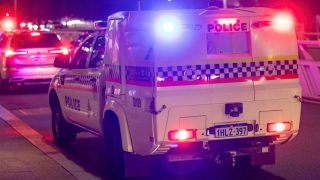

Police scrambled to conduct dozens of welfare checks over the weekend, after around 40 callers to Triple Zero were unable to connect during a 90-minute outage of Optus’s mobile network that interrupted mobile voice services across a wide swathe of the country.
The major outage, which affected customers across Victoria, South Australia, Tasmania and the NT, started at around 1:30pm Friday lasted for about 76 minutes, and was attributed by Optus to an ‘equipment or system fault or failure’.
The company has yet to elaborate on this.
Some 190,000 customers were unable to connect calls after two attempts, Optus confirmed, including 46 cases where callers were unable to connect to Triple Zero.
Optus reported those the failures to police – with Victoria Police conducting 41 welfare checks, Tasmania Police three, and South Australian Police investigating a further two calls – but no callers required further assistance.
It was the third major mobile outage in a year – a major Optus outage last September was linked to several deaths, and Telstra suffered a catastrophic outage in July – with Victorian Health Minister Ingrid Stitt calling the latest incident “incredibly disappointing and unacceptable.”
Optus says it’s changing – but is it enough?
The latest outage comes as the industry awaits the findings of the Senate committee into the Triple Zero failures during last year’s Optus service outage, with its final report originally scheduled for Monday but subsequently pushed back to Friday – its sixth delay to date.
Earlier this year, Optus promised it would move to address the suggestions of the Schott review, which made 21 recommendations including bringing the company’s operations centre onshore and running regular incident management exercises to improve staff response to incidents.
Schott also advised Optus to “learn and hasten change where possible” as it overhauled incident response procedures, noting that the company lacked “an effective first line of risk management” and that its internal risk management team “must gain the seniority and capability that it needs.”
Optus, which has been undergoing a long-term transformation project, “is already a substantially different company,” CEO Stephen Rue said in Senate testimony earlier this year while conceding that the previous major outage “expos[ed] critical gaps demanding immediate attention.”
“We have more to do as we strengthen our culture,” Rue said, noting that “all of this work doesn’t mean outages won’t happen again” and that “Optus has experienced other outages since September, but the way we respond is different.”
Indeed, the company’s National Outage Register shows that localised service outages are nearly a daily occurrence, with 6 other ‘significant local outages’ registered this month alone and 24 incidents recorded in the past 90 days.
After the latest incident, the company argued its teams responded quickly to latest incident, noting that it had “identified the issue within minutes through its network monitoring systems and immediately mobilised technical teams to restore services.”
Repercussions still piling up
Whether this latest outage draws financial penalties is yet to be seen, but Optus already faces challenges – with the outage coming just weeks after ACMA moved to take Optus Mobile to Federal Court, alleging 1,005 breaches of its Triple Zero obligations that could cost it $500 million.
“Australians rightly expect that when they call Triple Zero, their call will connect,” ACMA chair Nerida O’Loughlin said at the time, noting that “the circumstances of this outage meant that did not reliably occur, leaving people unable to connect to potentially life-saving services.”
“Giving access to the emergency call service is not optional,” she added, “[but] a fundamental legal obligation and the most important public safety responsibility telecommunications providers have.”
The newly created Triple Zero Custodian is working with ACMA to investigate the latest incident which Communications Minister Anika Wells told ABC Insiders, “happily… had no adverse outcomes for Australians.”
“Unfortunately,” she said, “no piece of infrastructure is 100 per cent resilient…. what we need to do is make sure these systems are as resilient as we can possibly make them.”
The impending Senate report will undoubtedly be a watershed moment for the troubled telco, whose parent company SingTel – seemingly tiring of the liabilities such incidents are creating – recently moved to dilute its holding in the company after 25 years.
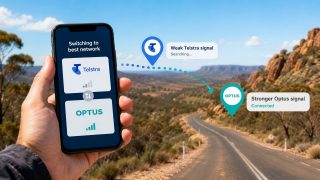
And while network ‘camp-on’ provisions are designed to transfer callers to a different network in the event of a service outage, many callers may not understand this process takes 40 to 60 seconds – a point about which Schott the broader public needs to be better educated.
Significant telco service legislation, which will create a new Universal Outdoor Mobile Obligation (UOMO), passed the House of Representatives last week, while authorities are validating temporary disaster roaming capabilities before their go-live on 1 October after years of planning.
Yet broader roaming is also on the table, with the ACCC last month opening a year-long inquiry whose scope will include the possibility of widespread domestic roaming for all calls during an outage, a proposition to which Telstra and CEO Vicki Brady are strongly opposed.