
Australia’s Triple Zero service should be taken out of Telstra’s hands and delivered by a new national public service provider, a Senate inquiry has recommended, following a string of catastrophic service failures that exposed serious weaknesses in Australia’s emergency communications system.
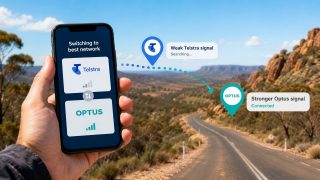
The inquiry has also called for mandatory domestic mobile roaming, allowing customers to connect to another network when their own is unavailable.
The nearly 300-page final report of the Triple Zero service outage inquiry, was delivered after nearly a year of hearings and 32 stakeholder submissions.
It examined the causes and repercussions of eight different service failures between 2018 and July this year.
Those failures, the “deeply concerned” committee notes, “have had real and tragic human impacts”, with the September 2025 Optus outage, in particular, linked to several deaths.
The failures compromised a service the committee described as “a fundamental public safety right”.
The inquiry made 11 recommendations including “extensive” modernisation of the Telecommunications Act 1997 to improve oversight of Triple Zero services.
It also called for a review of “fragmented” processes used for conducting welfare checks when calls fail to connect.
The government should also impose a “comprehensive reliability framework” mandating telco reliability and performance standards , with “substantial civil penalties” for breaches and a “comprehensive” automatic compensation scheme for those affected by outages.
Given the Australian Communications and Media Authority’s (ACMA) overlong reporting timeframes, weak information gathering powers and poor transparency of investigations that “are matters of significant public interest”, the inquiry questioned its role as regulator of Triple Zero services and advised an independent inquiry.
A public service for Triple Zero
The most significant recommendation is the creation of a statutory body to take over the Emergency Call Person (ECP) function currently performed by Telstra.
Telstra, and its predecessor Telecom Australia, has held the ECP role since 1961.
The new public body would take on existing staff while overhauling the systems used to deliver Triple Zero.
Those new systems should, among other things, enable mobile telecommunications customers to send text messages to Triple Zero – a long absent capability that, in the context of new satellite services that enable texting from anywhere, is more relevant than ever.
“Triple Zero is not an ordinary telecommunications service,” the report notes, but “a last resort for people experiencing medical emergencies, accidents and other life-threatening events.”
“When Triple Zero fails, the consequences can be immediate, traumatic and, in some cases, fatal.”
Time for a root-to-branch overhaul
The report’s release – delayed several times as further outages continued to expose weaknesses in the system – marks a major moment in the debate over how Triple Zero should be delivered.
Committee chair Senator Sarah Hanson-Young described it as “the end of the era of self-regulation”.
“Telstra, Optus and TPG have all let down their customers and the Australian public,” she said, slamming the “litany of outages [that] have seen millions of Australians affected.”
“Our telecommunications laws are out of date [and] successive governments have failed to ensure that regulation keeps pace with technology,” Hanson-Young continued, urging the government to put the nationalisation of Triple Zero at the top of its to-do list.
“We can no longer allow it to be left to private companies to ensure the functioning of Triple Zero,” she said, adding that “putting this emergency service back into public hands will ensure more accountability and more investment in protecting Australians.”
Hanson-Young also accused ACMA of having “utterly failed in their role to regulate the telcos”, citing its “repeated failure to conduct basic due diligence or act with the level of concern or urgency that regulating an emergency service like Triple Zero requires”.
Shadow Minister for Communications and Digital Safety Sarah Henderson was equally scathing, slamming the delays in completing the review and echoing the report’s calls for a “major independent review into the future of Australia’s telecommunications sector.”
That future, she said, must include “a clear pathway to direct text and next-generation emergency communications” that have broad public support and are being shaped here and worldwide to suit today’s data-focused communications networks and mobile devices.
“Australia needs a coherent, long-term telecommunications strategy covering investment, resilience, regional coverage, spectrum and emerging technology,” Henderson said, “not another piecemeal response after the next serious failure.”
Will domestic roaming be mandated?
Telcos were quick to push back against the findings, with Australian Telecommunications Alliance (ATA) CEO Luke Coleman noting that telcos “have not been waiting for the Senate report to improve the reliability of networks and the integrity of Triple Zero.”
“Australian telcos, technology vendors, and device makers are leading the world,” he added, “to address gaps in global technology specifications to improve emergency call reliability, not just in Australia but around the world.”
Coleman pointed to industry work on temporary disaster roaming, which from 1 October will allow mobile customers to roam onto another available network during localised outages.
But the inquiry wants roaming to go further.
Domestic mobile roaming, which would connect mobile customers to a different network during outages, has been contentious amongst telcos – with Telstra, in particular, opposed and warning its network could be overloaded during Optus and Vodafone outages.
Despite her fervour for change, Henderson sided with industry – noting that TDR “must have legislative certainty” – but distancing herself from the inquiry’s call for mandatory domestic roaming as she handballed the issue to the newly announced ACCC Mobile Services Inquiry.
Yet such roaming, which is already in place in countries like Canada and New Zealand, is now front of mind with the report’s release – with Hanson-Young arguing that “Australians rightfully expect their phone to work no matter where they are in the country.”
“The Federal Government,” she said, “must mandate domestic roaming so that all Australians, especially those in rural and regional areas, are always able to contact Triple Zero, get to work or call their mum.”