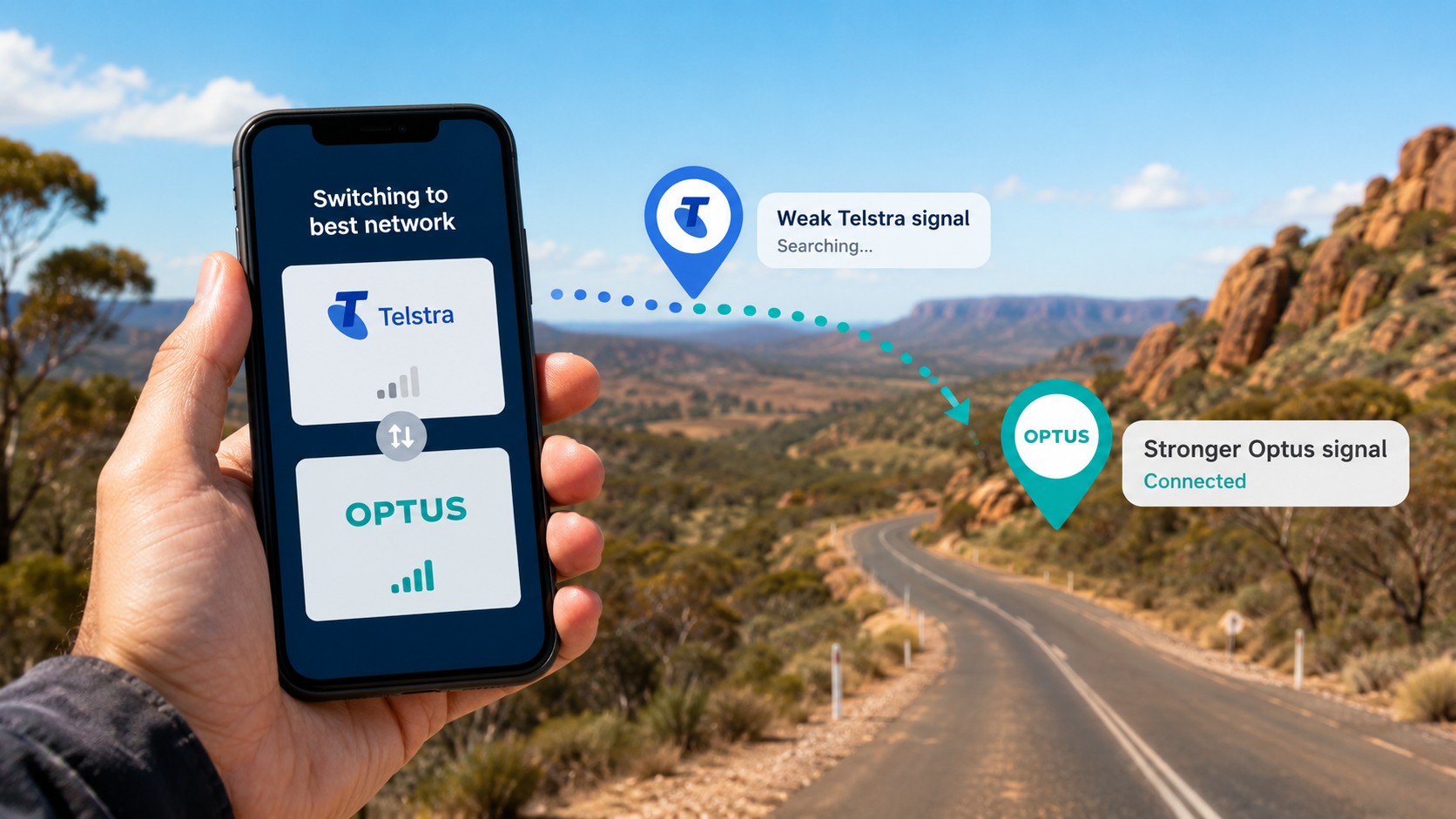

“Now is the right time” to consider major changes to Australia’s mobile market, ACCC commissioner Anna Brakey has said in announcing a 12-month inquiry into reforms including domestic roaming and shared radio access networks (RAN).
The inquiry, which will be informed by a soon to be released discussion paper, will see public feedback through a series of forums in regional and remote regions where years of successive debate and policymaking have still failed to deliver reliable mobile services.
A key question is whether the ACCC should declare new wholesale mobile services, forcing network operators to provide competitors with access to their infrastructure to improve coverage and competition.
One proposal is mandatory domestic roaming that would allow customers to automatically switch to another carrier’s network during natural disasters and other events causing service interruptions. Similar systems have operated in place in New Zealand since 2001 and Canada since 2015.
The inquiry will also examine whether operators should be required to share their radio access networks (RANs), including towers and spectrum.
Such a move would expand on multi-operator core network (MOCN) agreements like the Optus-TPG partnership announced in 2024.
“We continue to see significant interest in access to mobile networks,” Brakey said, adding that “the ACCC recognises the importance of mobile coverage, provider choice and network reliability, particularly for people living, working and travelling in regional areas.”
The inquiry will consider issues including changing mobile coverage and consumer needs; current and potential mobile services competition; how regulation could affect investment in mobile networks; and whether consumers have “meaningful choice” in choosing their mobile provider.
“The inquiry will allow us to examine current market conditions and new technologies through a public, evidence-based and consultative process before deciding whether regulation is needed,” Brakey said.
A solution for Triple Zero woes?
The inquiry gives fresh momentum to domestic roaming, which has gained support following major outages at Optus and Telstra that interrupted payment services, stopped trains, and left millions of customers unable to access calls and data services.
Newly mandated ‘camp on’ capabilities transfer Triple Zero calls to other mobile networks – a practice that helped hundreds of callers successfully reach Triple Zero during Telstra’s recent mass outage – but domestic roaming would normalise the practice during everyday usage.
Advocacy group the Australian Communications Consumer Action Network (ACCAN) recently published a position paper on mandatory domestic roaming that, it said, “would address ongoing coverage inequities and ensure more equitable access to terrestrial mobile coverage.”
Consumers “could shop around for the plan that most suits their needs,” ACCAN said, “rather than being limited by the perceived or actual coverage restrictions of certain providers.”
The Telstra outage “again highlighted an urgent need for mandatory domestic roaming in Australia,” RMIT University Associate Professor Mark Gregory said, noting that it “is cost efficient and leads to improved access and performance, particularly in regional and remote Australia.”
Satellite and other market disruptors
ACCC will also evaluate the long-term role of low earth orbit (LEO) satellite services like SpaceX’s Starlink – which has partnered with both Telstra and Optus to deliver continuous coverage nationwide – and Amazon’s Project Kuiper, favoured by NBN Co.
Research firm Gartner anticipates the number of Australians using LEO services will double by next year, when mobile telcos are forced to choose satellite partners as new universal outdoor mobile obligation (UOMO) rules kick in.
Minister for Communications Anika Wells welcomed the “timely” ACCC inquiry, saying it would complement the rollout of UOMO.
“UOMO will be transformative in ensuring that Australians are connected when and wherever they need it most,” she said.
The inquiry will also consider the disruptive effects of market changes such as ACMA’s ongoing work to reallocate 2GHz radiofrequency spectrum for mobile satellite services (MSS), ahead of an auction expected later this year.
Adding even more uncertainty to the mix, Optus owner Singtel is exploring the partial sale of the telco it has owned outright for the past 25 years – a change that is likely to further disrupt the dynamics of Australia’s tensely balanced mobile services market.