



Apple revealed a new MacBook Pro on Thursday, marking the technology giant's first Mac computer with a touchscreen – a move it previously said it would never make.
The new MacBook Pro with PROLED XDR Display is a premium device aimed at professional users, and will launch on 6 November in Australia starting at $4,599 for the 14-inch version and $5,499 for the 16-inch version, Apple announced.
The device's OLED screen features a 120Hz variable refresh rate and the interactive camera cutout Apple calls the Dynamic Island, as seen on the company's latest iPhones.
The new MacBook Pro also features a glowing Apple logo on the laptop's outer shell, which some users have missed from earlier MacBooks.
Releasing in black and silver colourways, the new MacBook Pros are thinner and lighter than their predecessors and will be available with Apple's M5 Pro and M5 Max chips, the company said.
The device's announcement has divided opinions online, with several early testers and analysts both impressed by the advanced display but also unsure whether a touchscreen laptop is a useful form factor.
Many other laptop makers have put touchscreens in their devices for years, largely at their mid- to high-end price points.
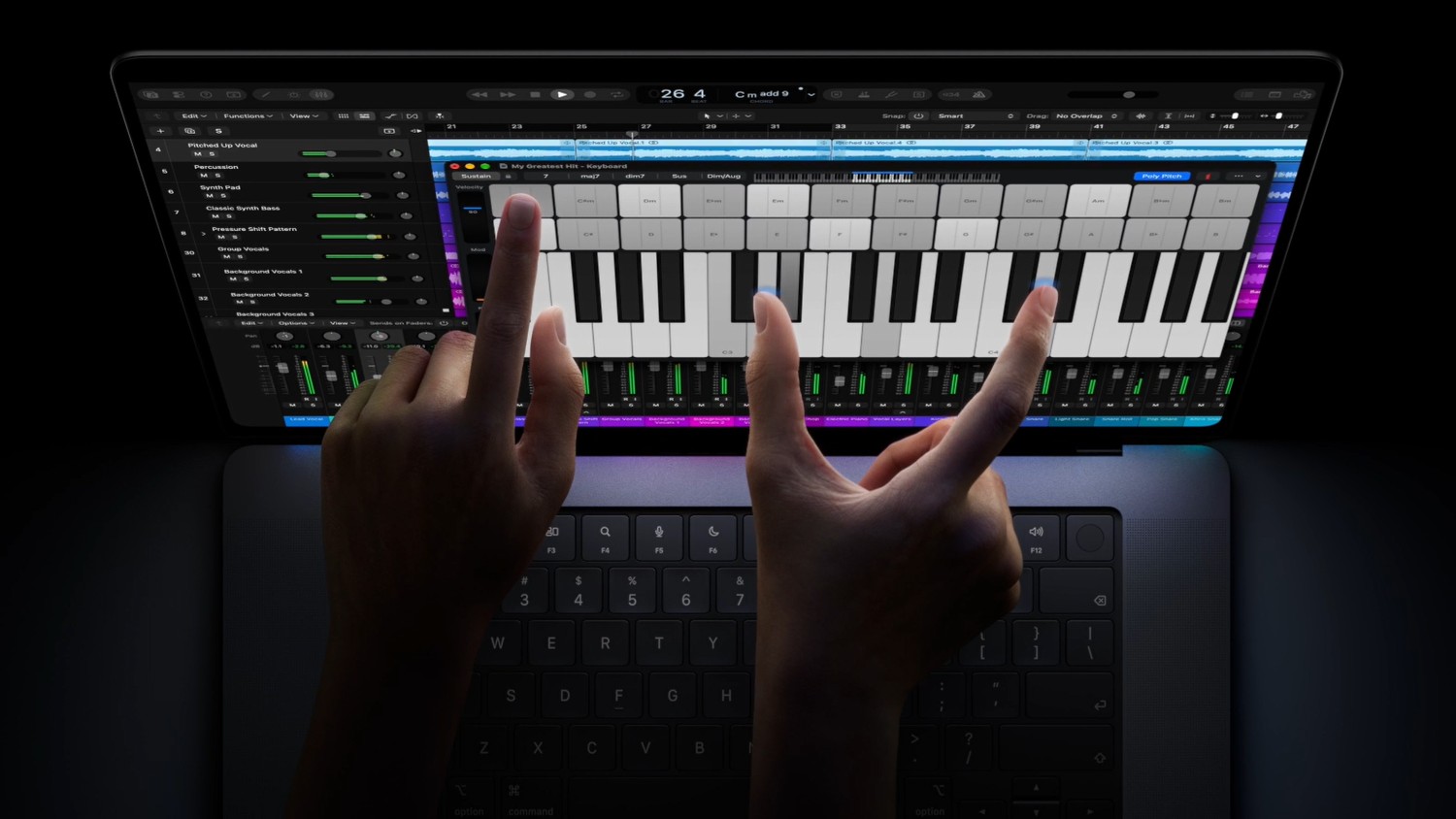
The MacBook Pro's touchscreen functionality, which can be turned off, creates "a whole new dimension for pros to interact with their content, from manipulating 3D models to playing musical instruments onscreen", Apple said.
Such suggestions have faced ridicule from some social media commenters, many of whom have raised concerns about leaving fingerprints on the display, the ergonomics of touching a laptop screen, and whether Apple is solving any real user concerns.
"Why solve a problem that their own product (iPad Pro) has beautifully solved already?" one commenter wrote.
"A touchscreen laptop is still stupid no matter how you slice it," said another.
"This would make sense if it had a 360 degree hinge ... otherwise this is just pointless," wrote another.
'Steve rolling in his grave'
Apple's late co-founder Steve Jobs famously described touchscreen laptops as “ergonomically terrible” back in 2010.
"Touch surfaces don't want to be vertical," he said during a keynote presentation.
"It gives great demo, but after a short period of time you start to fatigue, and after an extended period of time your arm wants to fall off."
Jobs also famously said "nobody wants a stylus" when he unveiled the first iPhone in 2007.
Technology analyst Benedict Evans seemed bemused by Apple's announcement of touchscreen MacBook Pros, as well as the company's new foldable iPhone Duo becoming compatible with its USB-C Apple Pencil stylus.
Writing on LinkedIn, Evans said, "Apple is now selling a phone with a stylus and a touchscreen Mac. Steve [Jobs] is rolling in his grave."
The new MacBook Pro does not support Apple Pencil input, and the company has not confirmed if this functionality will be added at a later date.
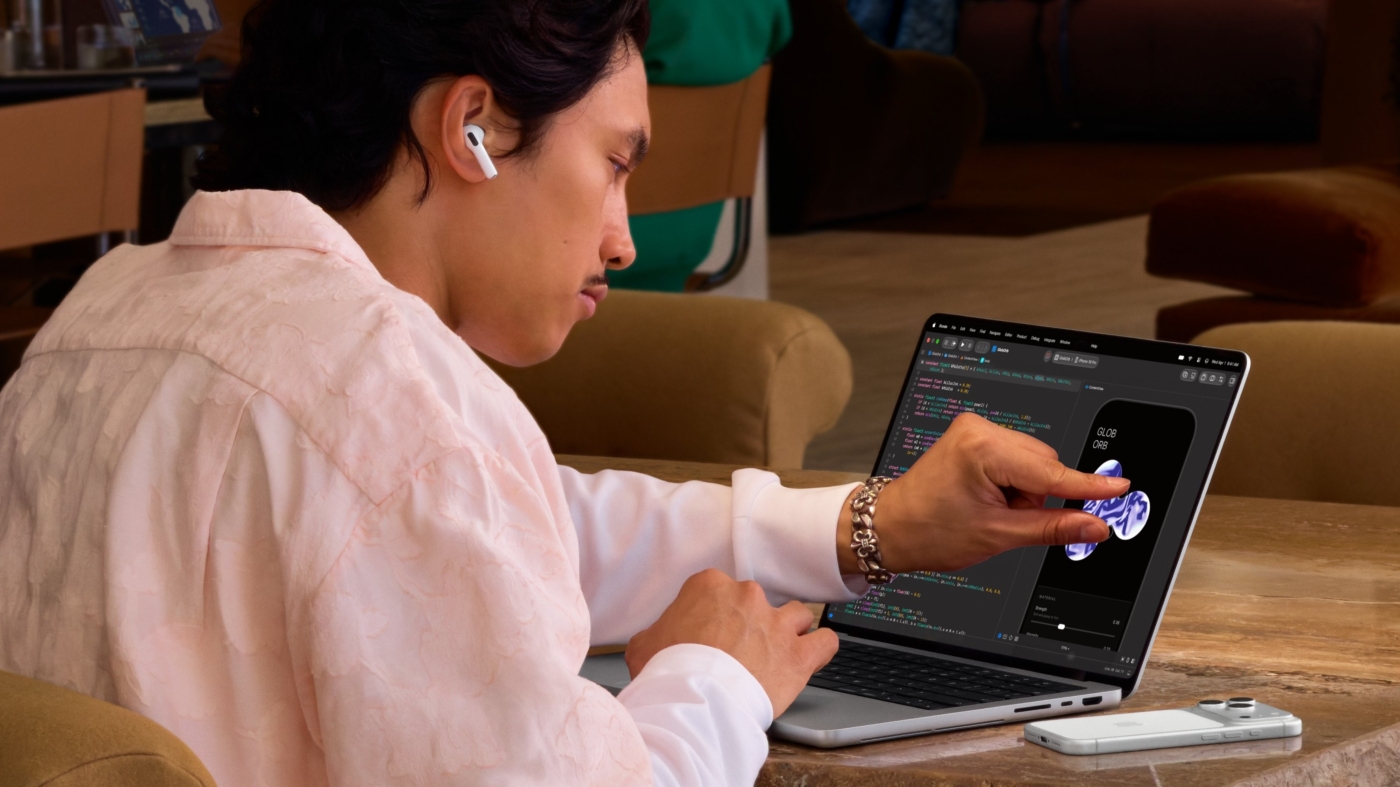
The touchscreen feature of Apple's new MacBook Pro can be disabled by users. Image: Apple / Supplied
Former Apple CEO Tim Cook dismissed Microsoft's focus on touch inputs and hybrid laptops for Windows 8 in 2012, telling an earnings call at the time, "You can converge a toaster and a refrigerator, but those aren't going to be pleasing to the user."
Speaking to Wired about the new MacBook Pros, Apple's marketing chief Greg Joswiak reportedly said touch capabilities were overdue for professional Mac users, including younger ones who have grown up using multitouch displays on their phones and tablets.
“There’s a generation of young creators and young people using our MacBook Pros that expect to touch," he reportedly said.
Apple's chief hardware officer, Johny Srouji, allegedly said "many things have changed" to enable touchscreen Macs which "met our bar", including improvements in display technologies and Apple's custom chips.
The company's new CEO John Ternus said Apple is "glowing with excitement over the new MacBook Pro".
"You’ve gotta touch it to believe it," he said in a social media post.
Apple also announced a 14-inch MacBook Pro with its new M6 chip last week, which features an LCD display without touch capabilities and will retail from $3,199.
Apple's most expensive Mac now costs up to $46k
In a separate release last week, Apple began selling a 512GB RAM upgrade for its desktop computer the Mac Studio, as the company and the broader industry face more expensive memory chips and greater demand for RAM to run artificial intelligence workloads.
The new Mac Studio, which is aimed at professionals and technologists, was originally released in September with the option to pay $6,000 to upgrade its more powerful M5 Ultra variant from a standard 96GB of RAM to a maximum 256GB.
Upgrading to the new 512GB option released last week costs a whopping $23,250 more than the base configuration.
In total, if fully upgraded with 512GB of RAM, the maximum 16TB of storage, and the most powerful version of Apple's M5 Ultra chip, a top-of-the-line Mac Studio will now set you back $45,949 in Australia.
Apple's previous M3 Ultra Mac Studio also had a 512GB memory option, but the company removed that upgrade from sale in early 2026.