


,%20john%20ternus%20(right)%20hello%20apple%20instagram.jpg)

Apple’s new chief executive John Ternus says the technology giant has “incredible products” in the works as he takes over the top job from its longtime CEO, Tim Cook.
Ternus, Apple’s 51-year-old former vice-president of hardware engineering, assumed the position of CEO on Tuesday, 1 September, after the company announced in April that Cook would step down following 15 years in the role.
As CEO, Ternus’s annual base salary will increase to $US3 million (around $4.2 million), but in fiscal year 2027 he will also receive a stock grant with a target value of $US55 million (around $77 million) tied to Apple’s market performance, according to a regulatory filing.
Cook, who at 65 years old remains executive chair of the company’s board of directors, will see his annual salary drop to $US2 million (around $2.8 million), but will also receive a stock grant with a target value of $US45 million (around $62.8 million) in fiscal 2027.
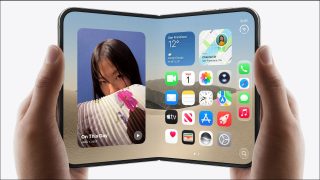
Ternus expected to unveil first foldable iPhone
Ternus’s first product announcement event as Apple CEO, scheduled to take place on 10 September (AEST), is expected to see him unveil the company’s first foldable iPhone.
This would see the company join a product category that is already led by the likes of Samsung, Google, Motorola, and many Chinese brands.
“We have a huge launch next week that’s going to be phenomenal. Thanks for everything you’ve all done to make it possible,” Ternus told staff on his first day as CEO on Tuesday, according to US media.
He reportedly thanked Cook and said he was “honored to be stepping into this role”.
“... And I am so excited about everything we have in store,” he reportedly wrote in a memo.
If Apple launches its first foldable iPhone in 2026, Australian analyst firm Telsyte expects it could cost around 30-to-40 per cent more than the company’s premium iPhone Pro Max model, which could give it a starting price of around $3,000.
This is partly due to rising costs of memory chips, which has already seen the likes of Samsung and Google raise the starting prices of their flagship smartphones – and seen Apple raise prices for its Macs, iPads, and some other devices.
Telsyte principal analyst Foad Fadaghi said that “despite the potential lofty prices” a foldable iPhone “could finally propel the [foldable] category into the mainstream”.
Telsyte’s latest study of the Australian smartphone market found foldables currently account for only around 5 per cent of annual smartphone sales.
“Consumer appetite for an Apple foldable is high, with one third of iPhone users [saying they] would consider a foldable iPhone, rising to nearly half (46 per cent) among users of the iPhone 15, 16, and 17 Pro series,” the company found.
“One in six (17 per cent) of those Pro series users would pay $3,000 or more, placing early demand squarely in the segment that already spends the most.”
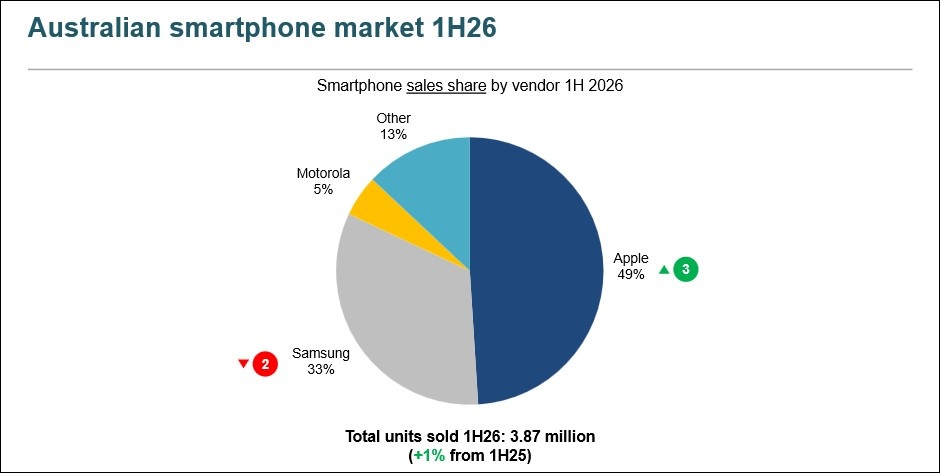
Image: Telsyte Australian Smartphone & Wearable Devices Market Study 2026 / Supplied
Smart displays, smart glasses, and more AI
Beyond this month’s product announcements, Ternus reportedly told Apple staff he is “just as excited” about the company’s future devices.
He supposedly told colleagues he is looking forward to “the incredible products already in the works and the ones we haven’t even imagined yet that we’ll dream up and create together”.
Apple is reportedly developing a home hub smart display to compete with the likes of Google's Nest Hub and Amazon's Echo Show, as well as a rumoured home hub with an iPad-like display which moves on a swiveling mechanical arm and has facial recognition.
Other products rumoured to be in development include a home security camera, a new version of Apple’s Vision Pro augmented reality headset, and the company’s first-ever smart glasses.
Ternus is also expected to help Apple integrate more generative artificial intelligence software into its products – including a long-awaited AI overhaul of its personal assistant Siri – in an effort to catch up to the likes of Google and Samsung and fend off a challenge from OpenAI.
This push is expected to include AI-focused AirPods headphones with built-in cameras for object recognition, which Apple accidentally leaked in August.
Technology analyst at Emarketer, Jacob Bourne, said Ternus “has big shoes to fill after Tim Cook’s departure” as Apple ventures deeper into AI.
“Cook took Apple’s existing iPhone and Mac successes and scaled the company’s reach and market impact tremendously,” he said.
“Now Ternus will have to turn that scale into an advantage in the era of AI-enabled products.
“Success will ultimately mean differentiating Apple from its competitors on AI while also taking the lead in delivering the technology to consumers in a way that feels intuitive, trustworthy, and sticky.”
Cook reflects on ‘the privilege of a lifetime’
On his final day as Apple CEO on Monday, Cook reportedly told staff that leading the company for 15 years had been “the privilege of a lifetime”.
“Together, we have created something far greater than any one of us could have imagined or accomplished alone,” he reportedly wrote.
“And that’s the secret to our success. We bring out the best in each other. We lift each other up.”

Apple staff hold an event thanking Tim Cook on his final day as CEO. Image: Deirdre O'Brien, Apple / Instagram
Cook referenced Apple’s late co-founder and former CEO Steve Jobs, who he took over from in 2011.
“We have made it possible to leave our ‘dent in the universe,’ as Steve once described it, because of who we are and what we believe, because of what we value and how we see the world,” he reportedly told colleagues.
“How fortunate we are. How fortunate I am.”
Cook allegedly added that he will miss leading Apple as CEO but remains “completely at peace” with his decision to step down, describing Ternus as “brilliant and wonderful and capable”.
Ahead of Ternus taking over from Cook, Bloomberg reported fellow Apple executive Phil Schiller had stepped down from his role leading the company’s App Store and product events, but remains at the firm as an Apple Fellow.