
Apple has agreed to pay owners of certain iPhone models a total of $US250 million ($345 million) to settle a class action lawsuit that accused the tech giant of misleading consumers about an advertised AI upgrade for its digital assistant Siri.
The settlement applies to people who purchased iPhone 15 Pro, iPhone 15 Pro Max, iPhone 16, iPhone 16e, iPhone 16 Plus, iPhone 16 Pro, and iPhone 16 Pro Max devices in the United States between 10 June 2024 and 29 March 2025.
Around 37 million devices are expected to be eligible for payouts, according to the lawsuit documents.
Qualifying claims are expected to receive $US25 ($35) per device, but this “may decrease or increase up to $US95 [$132] per device, depending on claim volume and other factors” according to Clarkson Law Firm, which filed the lawsuit in 2025.
Apple, which has denied any wrongdoing, said in a statement to US media that it had reached a “reached a settlement to resolve claims related to the availability of two additional features” it was yet to add to Apple Intelligence.
"We resolved this matter to stay focused on doing what we do best, delivering the most innovative products and services to our users,” the company said.
Clarkson Law Firm founder and managing partner Ryan Clarkson said consumers “should feel confident and protected when deciding where to spend their hard-earned dollars”.
The settlement still requires approval by a judge, with a hearing set for 17 June.
'The promised Siri never came’
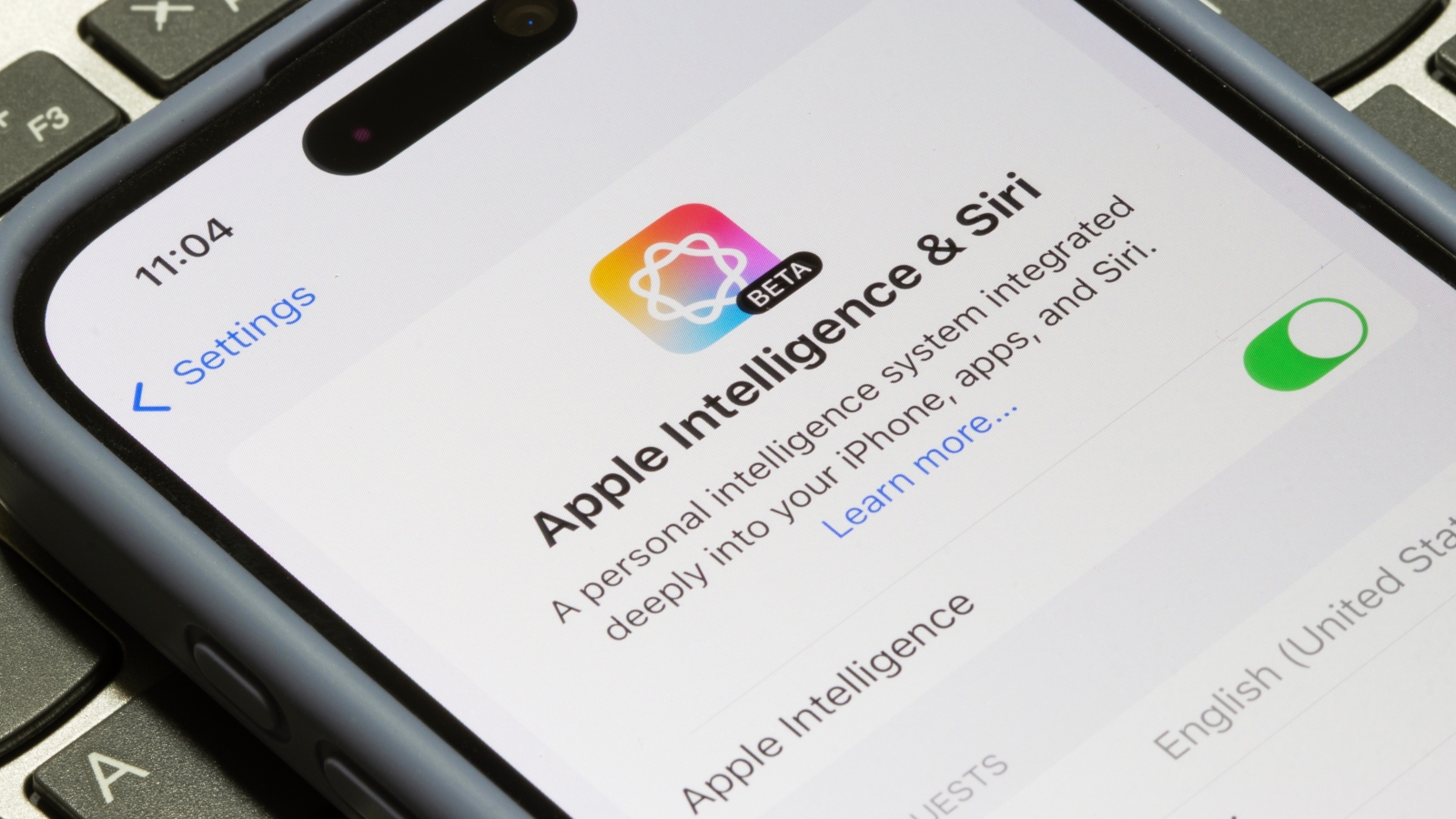
Apple first announced beta releases for several AI features during its Worldwide Developers Conference (WWDC) in June 2024 as part of what it dubbed Apple Intelligence, including AI image and emoji generation, writing tools, and an integration with OpenAI’s ChatGPT.
But it also announced “a new era” for Siri in which the digital assistant would be “equipped with awareness of [users’] personal context” such as their messages and calendar events, as well as “the ability to take action in and across apps”.
The more personalised Siri would also understand what was being displayed on a device’s screen, Apple said.
In previewing the announced capabilities, Apple showed an iPhone user asking Siri to provide information about their mother’s flight and lunch plans, which it retrieved from their messages and emails.
The new features were also heavily marketed around the world in advertisements for the iPhone 16 lineup featuring English actor Bella Ramsey.
Apple later removed the ads and updated its promotional material.
The company still marketed the iPhone 16 line as being “built for Apple Intelligence”, but the software suite’s new features saw a phased rollout, and the upgraded Siri was not released.
Apple reportedly stopped listing Apple Intelligence features as “available now” on its website in early 2025, around the same time US watchdog the National Advertising Division (NAD) recommended the company “modify or discontinue advertising claims regarding the availability of certain features associated with the launch of its AI-powered Apple Intelligence tool”.
The class action lawsuit filed by Clarkson Law Firm argued there was “an expectation that Enhanced Siri was available and would be delivered with the iPhone 16 or software update for the iPhone 15 Pro”.
“Again, however, the promised Siri never came,” it said.
“… Apple purchasers continued to rely on Apple’s promises regarding Apple Intelligence’s functionality, which enticed consumers to purchase new iPhones on the expectation that they would receive heavily-advertised features such as Enhanced Siri that, in truth, did not exist.”
Australian law applies ‘to any claimed features’
Australia’s competition regulator the ACCC (Australian Competition and Consumer Commission) declined to comment on the US lawsuit when contacted by Information Age, but it said businesses are “prohibited from engaging in misleading or deceptive conduct, or making false or misleading representations about goods or services” under the Australian Consumer Law.
“This includes any representations that goods have particular performance characteristics, accessories, uses or benefits,” a spokesperson said.
“The rules around misleading conduct apply to all types of products or services supplied by a business, including artificial intelligence.
“They also apply equally to any claimed features advertised by the business, such as AI capabilities.
“Any business that makes claims about the performance or characteristics of its product should also be able to substantiate or justify any claim.”
The ACCC sued Samsung in 2019 over a three-year advertising campaign which was found to have misled consumers about the water resistance features of its smartphones.
The major competitor to Apple was fined $14 million for the misleading ads in 2022.
When is Apple’s upgraded Siri coming?
While initially expected to arrive in 2025, Apple’s full AI revamp of Siri was indefinitely delayed amid some reportedly “ugly” meetings inside the company.
In January 2026 Apple said “a more personalised Siri” would arrive this year, and would be powered by Google’s Gemini AI models.
While Siri can already outsource questions it cannot handle to ChatGPT, Apple is also reportedly planning to allow users to use other chatbots within Siri.
Customers will be able to swap between several third-party AI models for generating text and images, according to Bloomberg.
Apple is expected to preview some of the upgrades at its next WWDC conference in June, before its new operating systems iOS 27, iPadOS 27, and macOS 27 are likely released in September.
These will be the first new software suites to be released under Apple’s next CEO, John Ternus.