



The Trump administration has labelled the Australian government’s proposed new levy on Big Tech “foreign extortion”, while a group representing technology firms has called for “targeted trade remedies” in retaliation.
Prime Minister Anthony Albanese this week unveiled draft legislation for a News Bargaining Incentive, which will impose a levy on a handful of large social media firms unless they enter revenue-sharing deals with local news companies for the use of their content.
The levy will be set at 2.25 per cent of a company’s local revenues, but this will be offset if they have entered deals with Australian news organisations.
It will apply to social media platforms and search engines with annual Australian revenue over $250 million, and 5 million Australian users for social media platforms or 10 million for search engines.
Currently this means the levy will apply to just Facebook and Instagram’s parent company Meta, Google’s parent company Alphabet, and TikTok.
All charges collected by the federal government will be distributed to media companies in Australia.
The Incentive will replace the Morrison government’s News Media Bargaining Code, which forced designated social media firms to enter arbitration to work out revenue-sharing deals. No company was designated under that code.
Labor’s reforms aim to prevent companies simply removing news content from their platforms to avoid any obligations, the federal government said.
This was a tactic that Facebook briefly employed when the initial Bargaining Code was being debated in parliament in 2021.
Calls for reforms to the Bargaining Code have been growing since Meta abandoned its deals with Australian news companies in early 2024, representing a $70 million annual loss to the media industry.
The new plan is expected to raise $250 million annually to go towards Australian journalism, the federal government said.
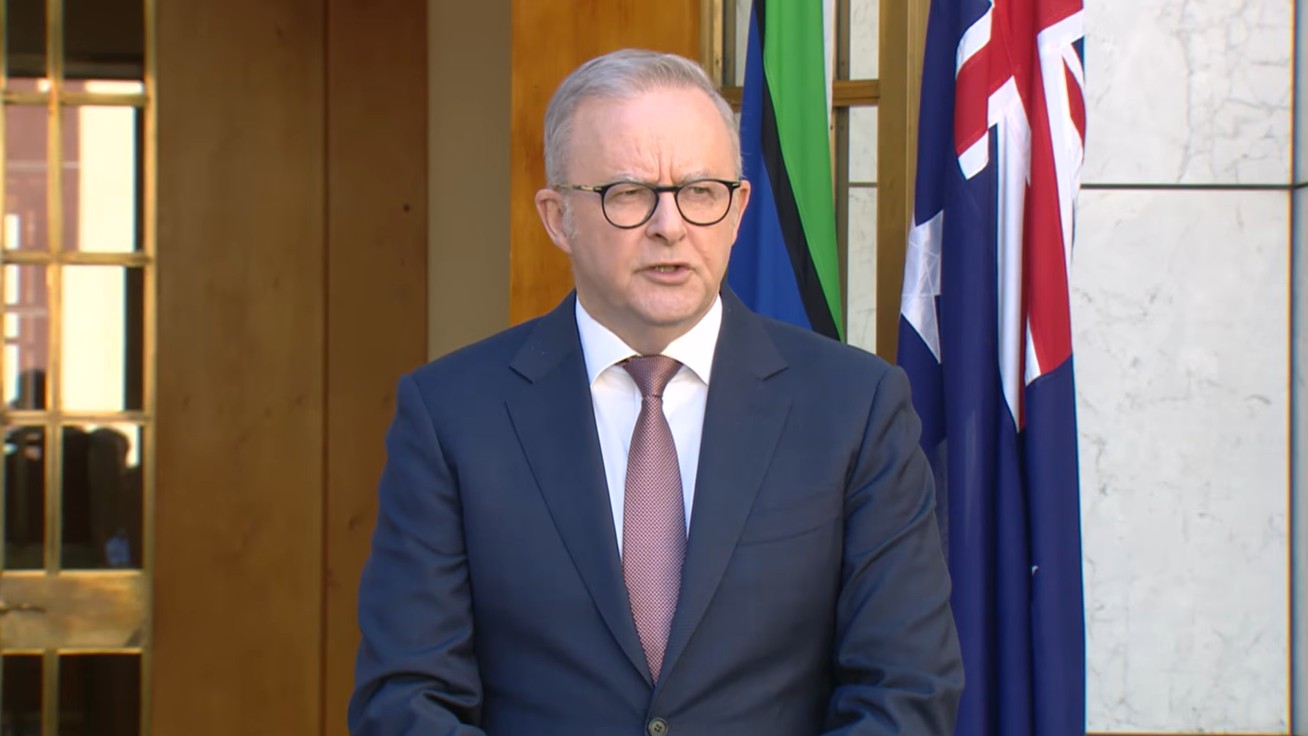
Prime Minister Anthony Albanese unveiled draft legislation for a News Bargaining Incentive this week. Image: Australian Parliament / YouTube
Backlash from Trump administration, Google, and Meta
The Albanese government first announced the new scheme 18 months ago, but there has been little progress since, with concerns over potential retaliation from US President Donald Trump’s administration.
A spokesperson for the US government hit out at the Incentive this week after the Australian government signalled its intent to move forward with it.
“President Trump is committed to defending America’s leading technology sector from digital services taxes and other forms of foreign extortion,” a Trump administration spokesperson told Australian media on Wednesday.
“The Trump administration will continue to address these issues with our trading partners.”
The Computer and Communications Industry Association (CCIA), which represents companies such as Meta and Google, labelled the plan “discriminatory”, and urged the US government to “publicly and forcefully challenge the draft measure, including through targeted trade remedies”.
“The Incentive is discriminatory in both design and effect, singling out predominantly US firms while distorting digital markets and undermining open internet principles,” the organisation said in a statement.
Google and Meta have also separately lashed out at the scheme.
Google pointed to its existing deals with 90 news businesses and 226 outlets, and said the Incentive was not needed.
“We reject the need for this tax,” a company spokesperson said.
“It ignores the fact that Google already has commercial agreements with the news industry, misunderstands how the ad market changed and mandates payments from some companies while arbitrarily excluding platforms like Microsoft, Snapchat and OpenAI – despite the major shift in how people consume news.”
A spokesperson for Meta said the plan was “nothing more than a digital services tax”.
The government has confirmed that AI platforms will not be included in the scheme after this was identified as a “key policy issue”, and issues surrounding the impact of these technologies on the media industry will be managed through other processes.
A ‘critical step’
Albanese said the Incentive was about backing Australian journalists and news.
“Journalists are the lifeblood of Australia’s media sector, playing a vital role in keeping communities informed about the news that matters to them,” he said in a statement.
“Local news matters to local communities and these stories can’t be told without Australian journalists.”
The government will consult on the draft legislation until 18 May, and plans to introduce the bill to parliament in the winter sitting period.
Australia’s largest media companies welcomed the reforms in a joint statement, saying it was a “critical step toward securing the future of Australian news”.
“If digital platforms fail to pay for the use of news content from which they profit then journalism becomes unsustainable,” the media organisations said.