



The 2026 federal budget, handed down by Prime Minister Anthony Albanese’s Labor government on Tuesday night, features more for the technology sector and its workers than last year’s budget – but some of it will still be contentious.
There are new tax breaks for innovative companies, tax deductions for workers, and more funding for national science agency CSIRO, but there’s also an overhaul of the migration points test, the rolling back of electric vehicle tax discounts, and some concern from startups over changes to capital gains tax.
To learn more about the biggest tech announcements in the 2026 federal budget, click the sections below or simply read on:
- Selecting ‘higher-skilled’ migrants
- ‘AI Accelerator’ grants and faster regulatory approvals
- EV tax discount to be rolled back
- Expanding Digital ID and the Consumer Data Right
- Startups face changes to capital gains tax, R&D incentives
- Tax deductions for workers
- More money for CSIRO – but it won’t stop job cuts
- Boosts for cybersecurity, defence, and space
Selecting ‘higher-skilled’ migrants
The points test used to select permanent migrants will be changed “to select better educated, higher-skilled, and younger migrants”, the government revealed.
Treasurer Jim Chalmers said the reforms would make clear that skilled migration is in Australia’s national economic interest, but it remains unclear exactly which skills will be prioritised.
Most of the permanent migration program’s 185,000 places will be set aside for migrants already in Australia.
But around 55,000 places for those coming from overseas “will predominately be allocated to high-skilled migrants that help address Australia’s long-term skill needs”, the government said.
It argued this would place downward pressure on the nation’s net overseas migration figures.
The government said it would also invest $85.2 million over four years to speed up skills assessments and occupational licensing for migrant tradespeople such as electricians and plumbers.
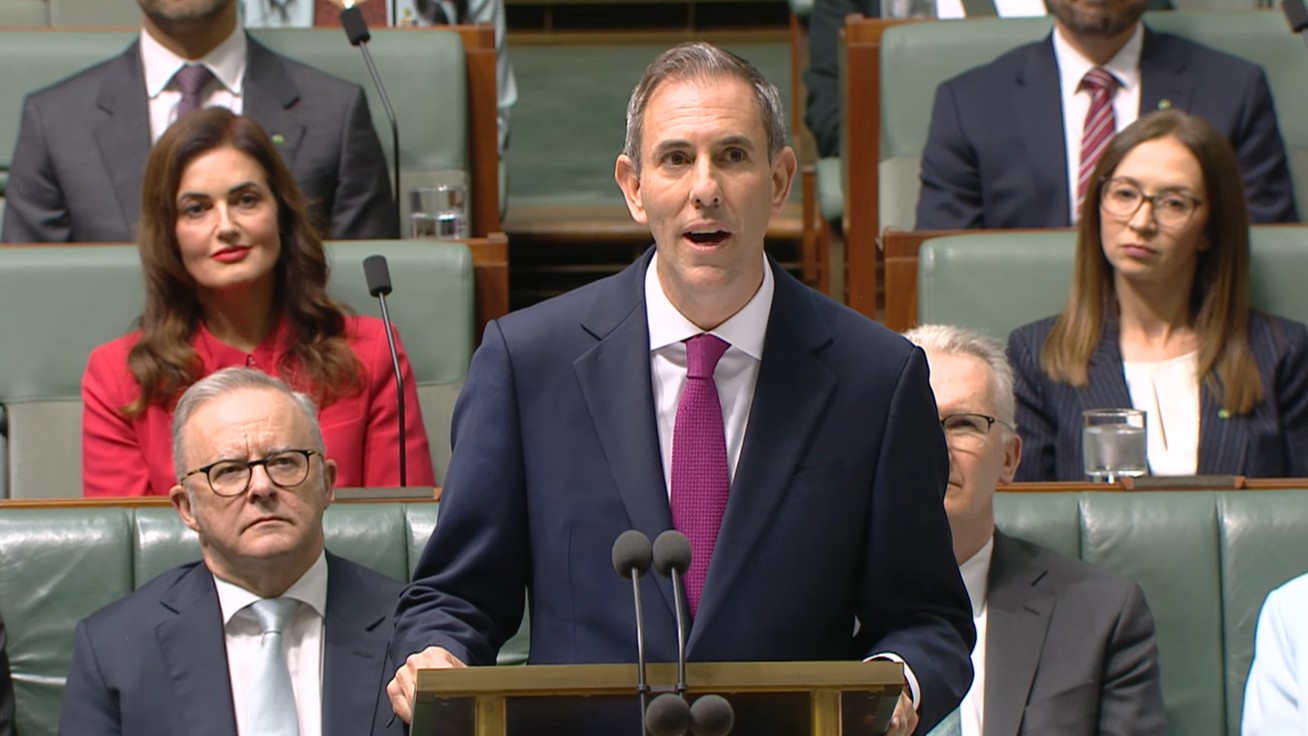
Treasurer Jim Chalmers delivering his budget speech inside Parliament House on Tuesday night. Image: Parliament House / YouTube
‘AI Accelerator’ grants and faster regulatory approvals
The government said it will provide up to $70 million for ‘AI Accelerator’ grants “to boost AI development” in Australia.
It is also spending tens of millions of dollars to expand the use of AI within government departments and agencies, including using the technology to speed up environmental approvals for housing and energy projects, as well as approvals for certain medicines.
AI will also be used to make Australia’s National Construction Code “easier to use”, as the government continues its push to build more homes.
EV tax discount to be rolled back
A week before its budget announcements, the federal government confirmed it would seek out savings by winding back a popular tax discount for electric vehicles (EVs) purchased under novated leases.
Under the changes, electric vehicles will no longer be completely exempt from Fringe Benefits Tax (FBT), with some to be taxed from next year.
The exemption will initially still apply to EVs costing less than $75,000, but those above that price will be taxed at 75 per cent of the usual FBT rate from April 2027.
From April 2029, all EVs will be taxed at 75 per cent of the usual FBT rate.
EVs classed as luxury vehicles – currently those priced above $91,387 – will still have to pay the full FBT rate.
Winding back this tax discount is expected to save the budget $1.7 billion over four years, according to the government.
Expanding Digital ID and the Consumer Data Right
Agencies responsible for Australia’s Digital ID system will share in more than $654 million over four years as the government seeks to expand the identification tool across more digital services, with over $166 million allocated each year after that.
More than $357 million of the money over the next four years will be provided to the Australian Taxation Office (ATO) to run the myID mobile app, while adding “additional security controls and functionality”.
An additional $62 million over two years will go toward expanding the Consumer Data Right, a system currently used in banking and energy which allows consumers to quickly share their data between service providers.
The government wants to explore allowing taxpayers to more easily and safely share certain tax data across government and the private sector, while minimising data held by the government.
Labor says it is “adopting a ‘tell us once’ approach so Australians spend less time providing the same information across different areas of government”.
The ATO will receive $357 million over the next four years to run and improve the myID mobile app. Image: ATO
Startups face changes to capital gains tax, R&D incentives
The federal budget introduces some significant reforms to Australia’s innovation ecosystem, including through proposed changes to the capital gains tax (CGT) and tax incentives for research and development (R&D).
Breaking an election promise, the government confirmed it will end the CGT discount which halves the tax owed on any profit from selling shares (as well as investment properties and other assets) if they are held for more than a year.
Instead, from July 2027 capital gains tax will be owed on any profits made beyond inflation, and a 30 per cent minimum tax rate will apply.
The government has signalled that it will work with the technology sector on how the CGT changes should be applied to startups, given many new companies offer equity as incentives to potential staff and investors, who would likely see their tax bills rise under the proposed changes.
Elsewhere, the government says it will expand venture capital tax incentives from July 2027 “to encourage more investment in new and innovative firms”.
From July 2026, it will also permanently reintroduce two-year loss carry back for companies with up to $1 billion in turnover, allowing up to 85,000 businessesday but we have to use a loss to get a refund against tax paid in the previous two income years.
Loss refundability for startups would also be introduced from July 2028 to “provide a tax refund for startups before they are profitable”, the government said.
Changes are also coming for Australia’s R&D environment, after an independent review called for “bold” government action to improve falling domestic investment in innovation.
In response to that review, the government has pledged to improve the targeting of the R&D Tax Incentive from July 2028, which it argued would “unlock $400 million in additional research and development by young firms per year”.
This will include increasing the minimum expenditure threshold to $50,000, and the maximum expenditure cap to $200 million.
Fast-growing firms aged under 10 years would also retain access to the refundable tax offset for longer, the government said, due to an increase in the turnover threshold for the highest offset rate from $20 million to $50 million.
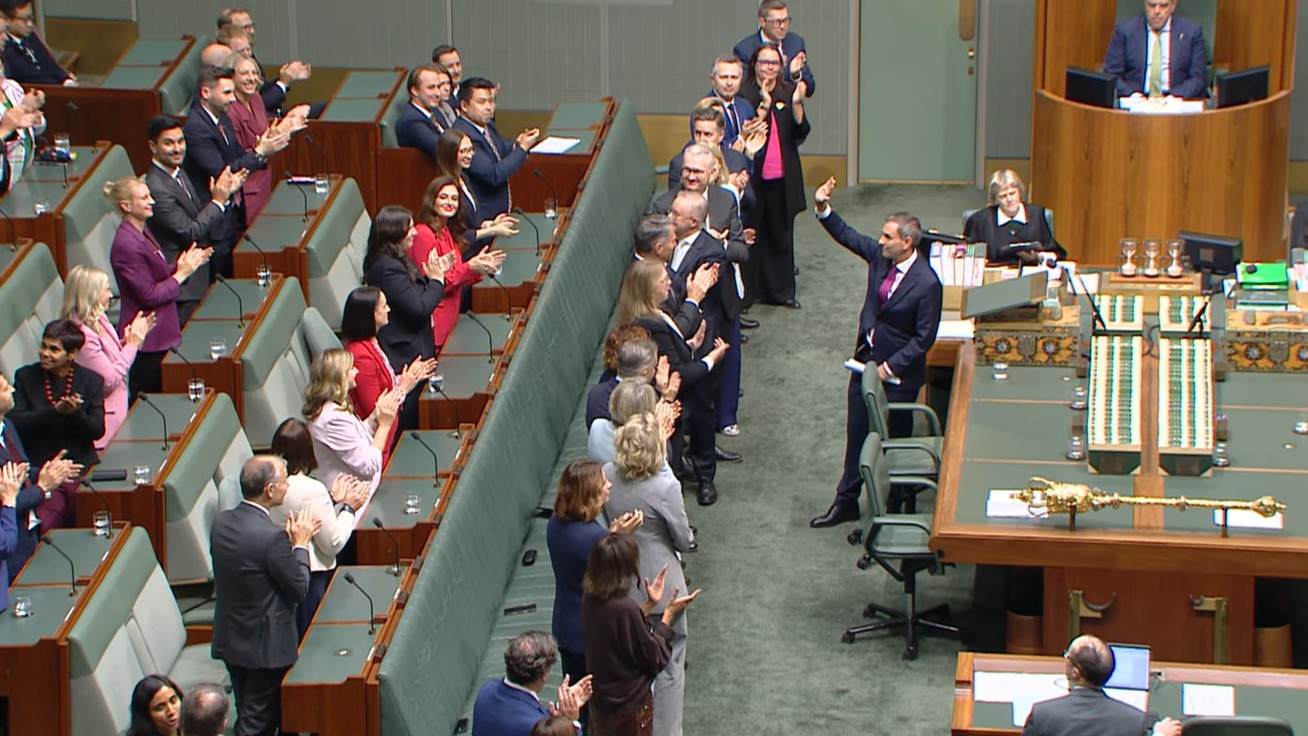
Jim Chalmers says his fifth budget as Treasurer 'backs innovation and investment'. Image: Parliament House / YouTube
Tax deductions for workers
While not specific to the tech industry, the budget’s Working Australians Tax Offset (WATO) will see 13 million people receive an ongoing $250 yearly tax offset, starting in 2027-28.
The measure is a key cost-of-living move in the budget, and will only be available to those who earn income from a salary or wage, and not from investments.
But from the 2026-27 income year, Australians who earn a salary or wage can claim an instant tax deduction for up to $1,000 of work expenses, even if they don’t have receipts.
There are also lower personal income tax rates for individuals from 1 July 2026, which were legislated in the 2025-26 budget.
More money for CSIRO – but it won’t stop job cuts
The government has pledged an extra $387.4 million for CSIRO, on top of its existing annual funding of around $1 billion and the more than $200 million announced for the national science agency last year.
But CSIRO says its plans to cut up to 350 jobs are “already well underway” and “will proceed as planned” despite the budget boost, as it tries to find savings and improve its long-term stability.
“The funding increase will support investment in safe and fit-for-purpose sites, as well as the research equipment, infrastructure, cyber protection, and technology that will best enable CSIRO’s talented researchers to make discoveries and turn them into real-world impact,” the agency said.
CSIRO says its ongoing job cuts 'will proceed as planned', despite an extra $387.4 million in federal funding. Image: CSIRO
Boosts for cybersecurity, defence, and space
Funding for cybersecurity improvements have been announced across several government agencies, including more than $160 million for Services Australia over four years, $89 million for Home Affairs, and $33 million for the Aged Care Quality and Safety Commission’s ICT systems.
Finance is also getting $26.1 million over two years to maintain the government’s financial IT systems, while the Australian Securities and Investments Commission (ASIC) and Australian Prudential Regulatory Authority’s (APRA) will receive $18.5 million over four years to improve security systems as Australia’s financial industry faces increasing cybersecurity pressure in the age of AI.
The Australian Defence Force will receive an additional $14 billion funding boost in the next four years, and an extra $53 billion over the next decade – much of which will be tied to major projects such as nuclear submarines, but there is also spending for new missiles, counter-drone technologies, and solid rocket motor production.
Speaking of rockets – the Australian Space Agency is getting $21.7 million in funding to continue its work building a local space industry, and the government has pledged to continue funding the Square Kilometre Array radio astronomy project being built in Western Australia.