
Recriminations are flying as the effects of Telstra’s major network outage continue to be felt across the country – with Victorian trains still cancelled, 639 Triple Zero calls that failed to connect, and Telstra still investigating a “secondary issue” affecting service restoration.
“We’re really sorry,” the carrier said on Wednesday evening as it initially reported resolving the major outage, adding that “it’s not lost on us how difficult and frustrating today would’ve been for every person and business that rely on us to stay connected.”
Yet by later that night, the ‘secondary issue’ had arisen – with Telstra reporting in the morning that technical teams “have been working through the night on the secondary Triple Zero calling error, reducing the number of times it’s happening by 90 per cent”.
The “residual issue”, Communications Minister Anika Wells told ABC Radio in the morning, “was still impacting calls for some users” with calls going straight through to voicemail and some Triple Zero calls unable to be connected.
“Telstra needs to account for how and why that has occurred,” Wells said, “because Australians are right to expect that as a baseline service from their telco.”
At a Telstra press conference on Thursday afternoon, chief financial officer Michael Ackland revealed the telco had conducted 639 welfare calls.
Ackland confirmed to reporters that the defective software update at the centre of the outage caused parts of Telstra’s network to momentarily set their time and date settings back to November 2006.
“That’s true at one point, yes,” Ackland said in response to questions about the impact on servers which are responsible for tracking and synchronising time across Telstra's network.
He denied it was a Y2K-style issue and instead described it as “a glitch in the software that reset the GPS timer”.
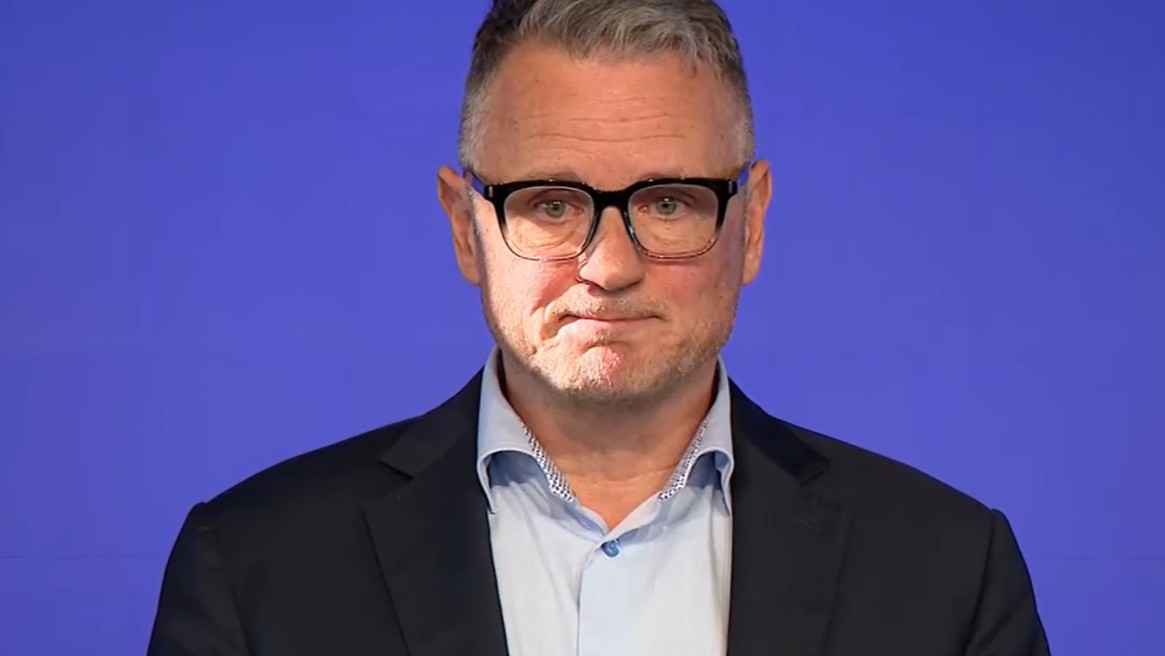
Telstra CFO Michael Ackland fronts up to the media on day two of the Telstra debacle. Image: YouTube
“It’s not so much that it clicked over and was unable to deal with the format of the time – which was the concern during Y2K – it was a software glitch that caused the time to click back,” Ackland said.
He said synchronising time across the network is “important” because “otherwise you could have messages or instructions that are from a different time period then being authenticated on the network”.
Ackland added that Telstra CEO Vicki Brady, who has been on holiday overseas with her family, is returning to Australia and “will be back on deck” on Friday.
Telstra has advised customers to retry calls that don’t connect, warning them to be wary of scammers taking advantage of the outage – such as calls asking for personal details or offering discounts – and advising them to hang up “if something doesn’t feel right.”
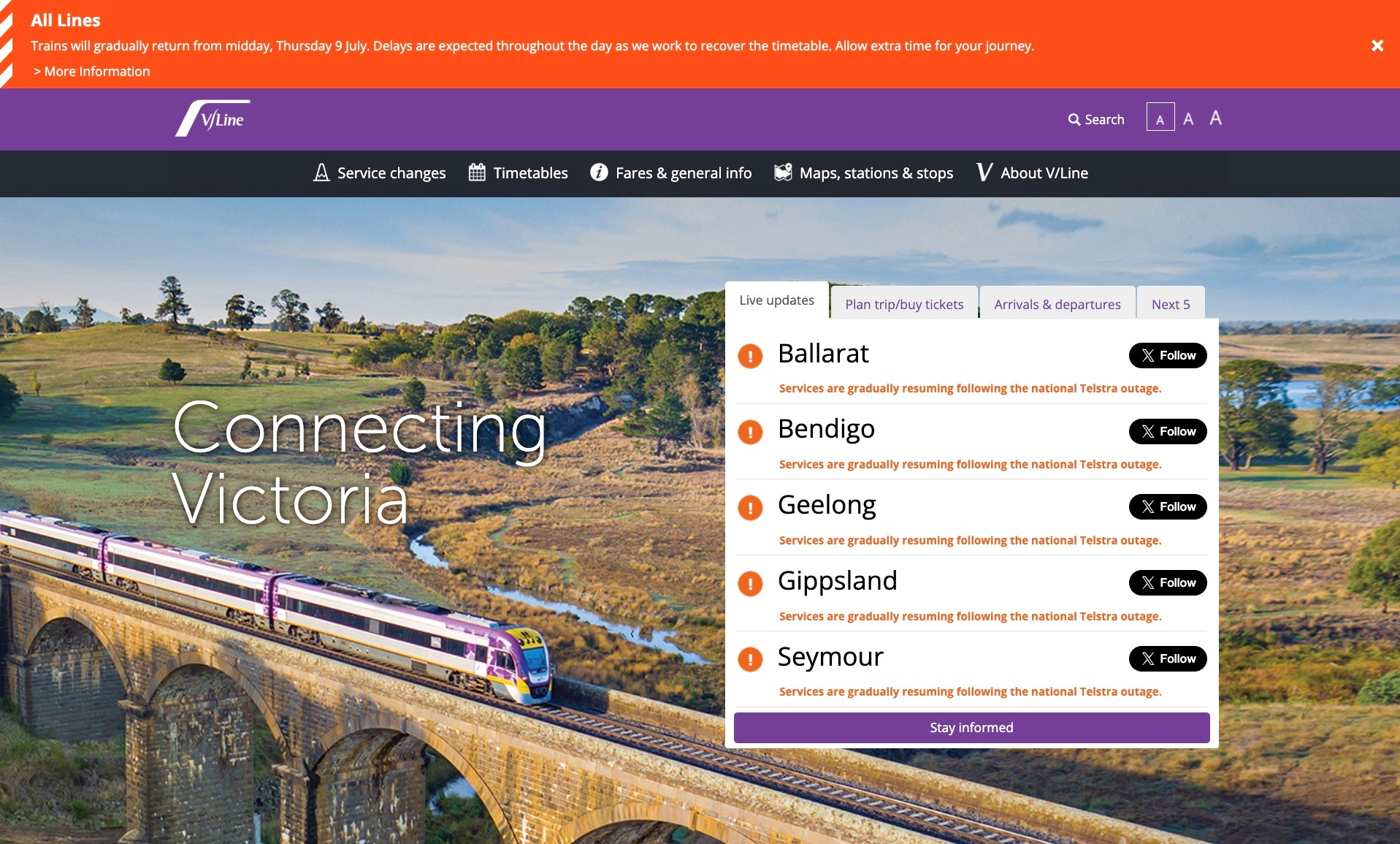
Victorian trains were still experiencing issues on Thursday morning. Photo: Supplied
Triple Zero still not meeting expectations
The outage has opened old wounds, months after Telstra pushed back against ACCAN claims that 10 per cent of mobile users couldn’t reach Triple Zero and nearly a year after a major Optus network outage was linked to multiple deaths when callers couldn’t connect.
Telstra’s latest outage “was widespread and has caused significant disruptions across the country,” Communications Minister Anika Wells initially said, noting “the core Triple Zero system remains operational” and “camp-on arrangements are working” despite some dropouts.
Ongoing problems from the outage led Shadow Minister for Communications and Digital Safety Sarah Henderson – who conceded she acted wrongly in personally making two unnecessary Triple Zero calls to test the system during the outage – to call for “urgent action”.
“It is alarming and distressing that some people could not make an emergency call in their time of need,” Henderson said, calling Wells’s announcement that regulator ACMA would conduct a formal inquiry into the outage as “totally inadequate”.
“Australians are still waiting for the outcome of ACMA’s inquiry into the Optus Triple Zero outage last September,” she said, “but all we have heard is silence.”
Mutually assured disruption
For all the reflexive criticism of Telstra and the government, “focusing solely on what went wrong inside Telstra risks missing the much bigger story,” telecoms analyst Paul Budde noted, calling the outage “another reminder that Australia’s telecoms infrastructure has fundamentally changed.”
“We are no longer dealing with the traditional telephone network,” he said, noting “today’s carriers operate vast, software-defined computer networks that happen to provide communications services and these incidents are not isolated [but] represent a new pattern.”
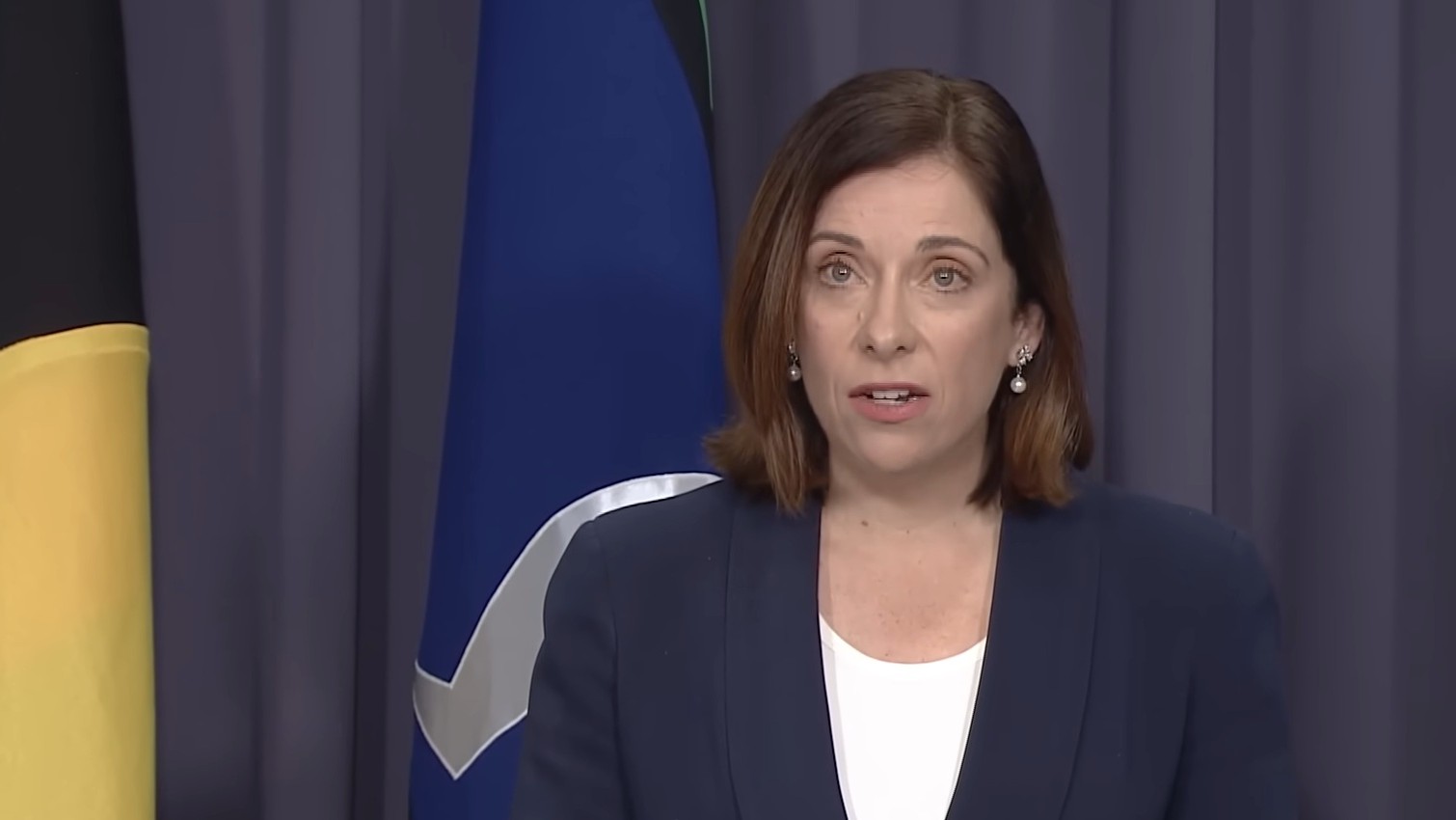
Communications Minister Anika Wells said ACMA would conduct a formal inquiry into the outage which the opposition described as "totally inadequate". Photo: Supplied
“As communications become more software-driven, highly virtualised and centrally managed, failures can propagate much further and much faster than in the past” – with Budde offering Finland as an example of how to fundamentally rethink telecoms policy.
Meanwhile, disruption from the major outage stretched into its second day as NSW and Victoria commuters woke to find trains stopped – with V/Line and NSW Hunter region transport authorities advising passengers to find alternative ways to travel.
Freight services on the Australian Rail Track Corporation (ARTC) network were also paused and would, Minister for Emergency Management Kristy McBain noted, “take some time for the network to safely return to normal operations” once services were reliably restored.
Bevan Slattery, founder of mission-critical businesses like data centre operator NextDC, said the telco isn’t the only one at fault – with users also responsible for business resilience.
“Mobile has involved into an insanely complex and critical platform that is now so politically charged in this country that people are forgetting it is a 99.95% [best effort] service,” he explained.
“The fact that the failure of a single mobile network, designed to run 99.95% of the time, brought down entire rail networks is an issue with the network architecture for the rail operator, not Telstra.
“If you own critical infrastructure or a critical resource in which connectivity is mandatory for the operation of your business, it is incumbent… to have the necessary network resiliency built into YOUR business or suffer the consequences when a 99.95% network hits the 0.05% of downtime.
“Everyone expects pricing to be going down, not up, reliability to continue to be improving to the point of never failing and… also the latest in technology / 5G across the nation.
“You can pick any two.”