
Australian creatives should be properly compensated when their copyrighted works are used to train artificial intelligence models, prominent musicians, writers, and industry groups told a Senate committee hearing on Tuesday.
Artists fronted the inquiry as Australia’s Productivity Commission consults on whether a new “fair dealing” exception should be introduced to allow local companies to use Australians’ copyrighted material without their permission to train AI models.
Creatives have slammed the idea and labelled it a threat to their livelihoods and the future of their industries, and have instead called for new licensing deals with technology companies.
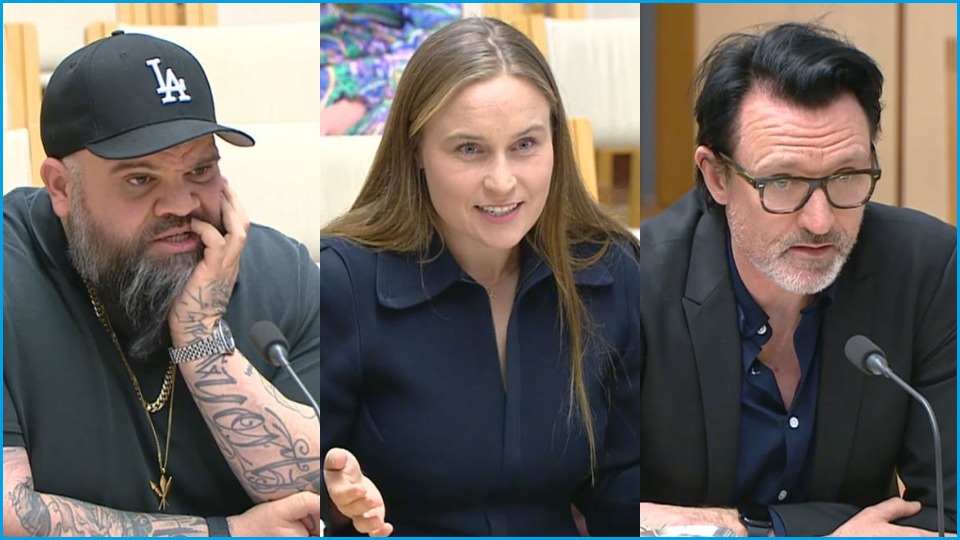
Musician Holly Rankin, who performs under the name Jack River, told the committee that adding a text and data mining exception to Australia’s Copyright Act would be “a fundamental dismantling of our copyright system, legalising the theft of Australian culture at scale”.
“The truth is simple — technology companies are able to pay for licences, they just don’t want to,” Rankin said.
The federal government recently indicated it did not have plans to change Australia’s existing copyright laws, but companies in the United States have already used that country's contested 'fair use' rules to utilise copyrighted content from around the world in AI training.
Rankin criticised such firms for often requiring copyright holders to actively opt out of having their work used for AI training, and argued some companies had already ignored copyright holders’ requests.
“In an opt-out system, you’re pitting individuals — single Australians — against global, billion-dollar companies,” she said.
Tech company hypocrisy ‘hard to fathom’
Musician and Something For Kate frontman Paul Dempsey described a text and data mining exception as “wholesale theft”.
“We can have exciting AI investment and a booming tech sector without pillaging our culture and selling out our artists,” he told the committee.
Technology companies such as Google and ChatGPT maker OpenAI have pushed for data mining exceptions to allow them to freely use copyrighted content to train their AI models.
Dempsey argued the hypocrisy from some tech companies was “hard to fathom”, given they did not allow other organisations to steal their own intellectual property.

Several technology companies have pushed for data mining exceptions to train their AI models for free using copyrighted material. Image: Shutterstock
Indigenous rapper Adam Briggs told the committee he was concerned an AI data mining exception would also undermine “cultural protocols” around First Nations intellectual property.
“Keepers of stories, who can tell the stories — and when,” he said.
“What kind of parameters do [tech companies] have in place to make sure that cultural safety is paramount when it comes to Indigenous intellectual property?”
AI expert and author Professor Toby Walsh from the University of New South Wales told the committee AI systems were also “taking money away” from content creators and online publishers, and cited drops in website traffic amid the rise of Google’s AI Overviews.
Greens Senator and chair of the committee, Sarah Hanson-Young, said OpenAI had been invited to appear at Tuesday’s hearing but did not respond to the committee’s request.
The Tech Council of Australia, which represents member companies such as Google, OpenAI, and Microsoft, allegedly told the committee it did not have any representatives available to appear.
Productivity Commission under fire over consultations
Both creatives and politicians who took part in the hearing argued the Productivity Commission had not consulted enough with creative industries when it compiled its interim report on ‘Harnessing data and digital technology’, which it released in August.
While the commission has argued it did not voice a position on a data mining exception in that report, its chair, Danielle Wood, has publicly suggested changes to Australian copyright laws could help local AI companies compete globally.
Representatives from the Productivity Commission admitted under questioning on Tuesday that the agency had not consulted with major organisations in Australia’s creative economy, including organisations which collect royalties for their members.
“The creative industries is glaringly missing,” Hanson-Young said.
Dempsey agreed the agency had not consulted with musicians.
“To my knowledge, the collecting companies and industry bodies haven’t heard from them,” he said.
The Productivity Commission did consult with the likes of Amazon, Google, Microsoft, Meta, and OpenAI for its interim report.
Stephen King, a commissioner at the agency, told the committee that the Productivity Commission had received “over 400 submissions in relation to copyright” since the publication of its interim report.
“There clearly is an issue in this area,” he said.
“We have been consulting widely, particularly since our interim report."
The agency also admitted under questioning that it had not carried out economic modelling of the impact a text and data mining exception could have on Australia’s creative economy.
The commission’s final report is expected to be handed to the government on 13 December.