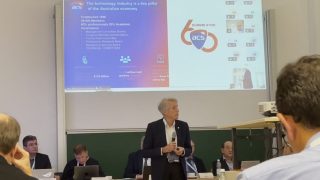





For years, technology employers relied on universities to produce the next generation of skilled workers.
Now, as technology changes faster than courses can keep up and shortages emerge in highly specialised fields, companies are increasingly building the skills they need themselves.
The shift is particularly pronounced in technology, where artificial intelligence is rapidly changing the capabilities employers require while some older but still critical technologies are struggling to attract new talent.
The result is a revival of an old idea: the corporate university.
Companies are creating structured training programs, partnering more closely with universities and hiring people from increasingly diverse educational backgrounds – then teaching them the technology they need on the job.
Rocket Software provides a striking example.
The global enterprise technology company found itself facing a shortage of mainframe engineers, despite mainframes continuing to underpin some of the world's most critical systems.
Rocket engineer Karla Bester says part of the problem can be traced back to a prediction made more than three decades ago that mainframes were on their way out.
“This started when technology journalist Stewart Alsop said that mainframes would not last past the 1990s. It became one of the most famous wrong calls in computing history,” said Bester.
Alsop famously wrote in InfoWorld in 1991: “I predict that the last mainframe will be unplugged on 15 March 1996.”
The prediction was spectacularly wrong.

Karla Bester of Rocket Software says the shortage of mainframe engineers can be partly blamed on a prediction by Stewart Alsop. Photo: Supplied
“Today the mainframe runs 70 per cent of the world’s transactions by value, and processes more than 90 per cent of the world’s credit card transaction,” Bester adds.
Mainframes remain important to organisations handling enormous transaction volumes and requiring high levels of security and continuous availability, including financial institutions, government agencies, telecommunications companies and airlines.
But finding people with the skills to work on them is becoming increasingly difficult.
“The issue we found was that there is only one university in Victoria that offers mainframe courses, the Federation University at its Ballarat campus.
“There are not enough students who have mainframe degrees.”
Training the missing talent
Rocket's response was to build its own talent pipeline.
The company created a global NextGen Academy, designed to develop future technology employees through hands-on learning, mentorship and innovation.
“We have been running this for a few years now at a number of Rocket Software locations around the world, and each academy curriculum is tailored for each location.”
In February 2026, Rocket launched its inaugural Australian NextGen Academy from its Perth office.
A conference room was converted into a classroom, where ten NextGenners spent six months learning from industry experts, completing practical exercises and being mentored by an experienced engineer.
“They were taught by industry experts, with hands-on learning, practical exercises and were also mentored by our distinguished engineer.”
All ten graduates were subsequently offered and accepted permanent roles with the company.
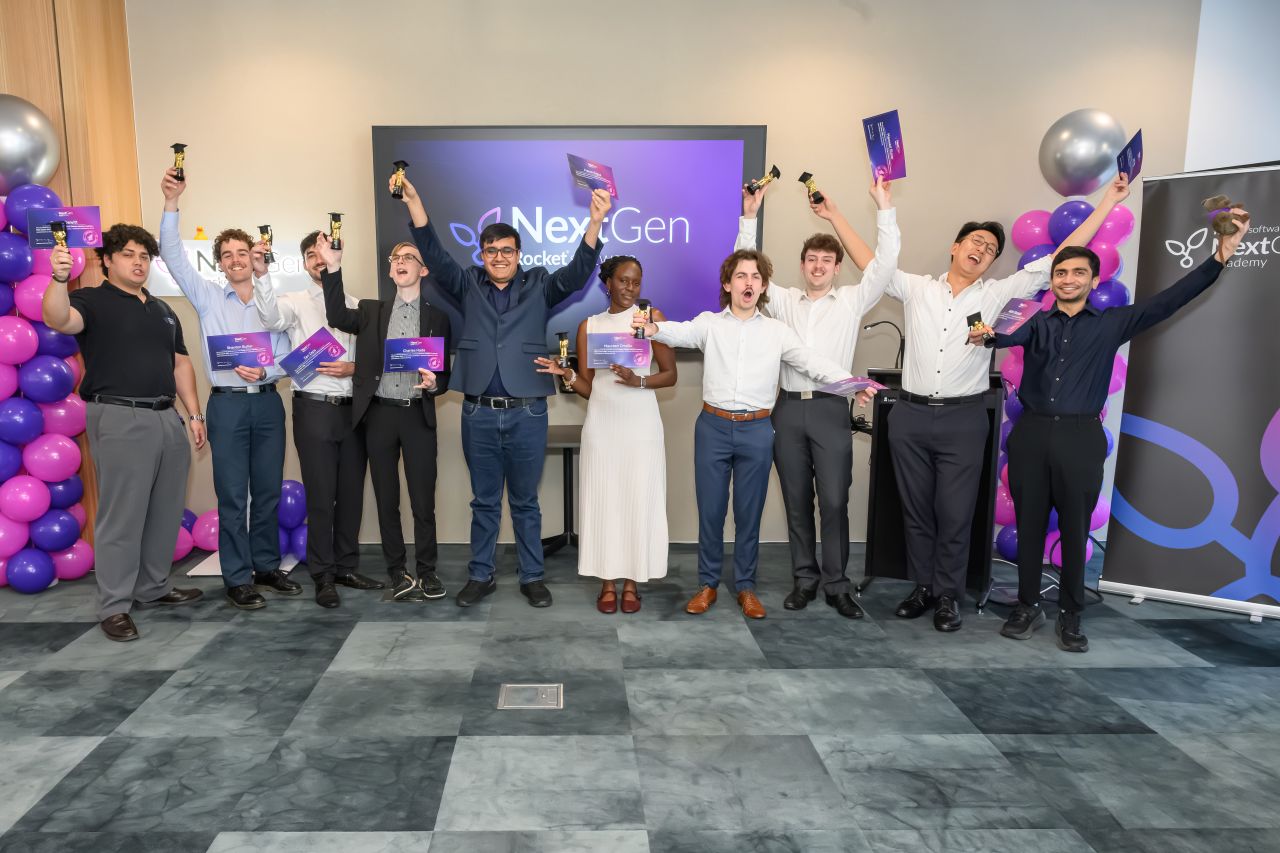
The first graduating cohort of mainframe engineers trained by Rocket Software. Photo: Supplied
The mainframe shortage is an extreme example of a problem increasingly confronting technology employers: the skills they need do not always exist in sufficient numbers in the traditional education pipeline.
And it is not just highly specialised technical skills that employers are trying to develop.
The workplace becomes the classroom
The Australian Association of Graduate Employers (AAGE) found that four in five employers now offer a formal graduate development program.
Its 2026 Employer Survey also found that 41 per cent provide at least 11 days of technical and professional training during a graduate's first year.
Two in three employers offer programs such as internships, clerkships or vacation programs as part of their early-career offering.
AAGE CEO Shanan Green says employers are increasingly using these programs to develop capabilities that are difficult to acquire through academic study alone.
Those capabilities include communication, teamwork, commercial awareness, adaptability and resilience.
“It also reflects rapidly changing technology and AI and employers’ growing use of graduate programs in strategic workforce planning and leadership pipeline development,” she said.

Shanan Green of the Australian Association of Graduate Employers says four in five employers now offer a formal graduate development program. Photo: Supplied
The same research found that communication, teamwork and interpersonal skills remained among the most important attributes employers assessed during recruitment.
Problem solving, adaptability, aptitude for learning and professional skills were also highly valued.
“Employers do not expect graduates to come to the workplace fully formed and job-ready in every workplace context,” said Green.
A separate 2025 AAGE Graduate Supervisor Survey found that 72 per cent of employers considered incoming graduates adequately prepared by their university, with gaps still needing to be addressed in the workplace.
That is creating a more complicated relationship between universities and employers.
Universities provide the foundations, while companies increasingly provide the practical application – and, in some cases, the specialised technology training itself.
The return of the corporate university
Helen Poitevin, workplace analyst at research firm Gartner, has witnessed what she describes as a global resurgence in the corporate university.
The concept is not new. Large companies have long created internal learning programs to train employees in their own systems, processes and cultures.
But Poitevin says the model is becoming increasingly important as technology changes at a pace that traditional education struggles to match.
Two factors are driving the trend, particularly in technology: growing demand for technology workers and the speed at which AI is changing the skills required.
“It is a trend playing out inside companies themselves - deeper partnerships between industry and academia, particularly in areas of AI engineering, chief among them where expertise is scarce and difficult to build from a standing start.”
Poitevin says she is seeing the same pressure among clients across western Europe and North America.
“The solution is rebuilding, internally, the kind of structured skill-building required today, that in the past used to happen almost by accident on the job.”

Helen Poitevin of Gartner says there has been a global resurgence in the corporate university. Photo: Supplied
There are already well-established examples.
McDonald’s Hamburger University trains franchise operators and managers, while Apple University teaches employees how Apple approaches problem-solving and preserves its culture.
Pixar University provides creative skills training for artists and technicians.
What is changing is the technology focus – and the speed at which companies need to develop new capabilities.
Hiring for potential, not just qualifications
The shift is also changing what employers look for when they recruit.
Suncorp chief executive of people, legal and corporate services Belinda Speirs says the company does not expect graduates to arrive with industry-specific knowledge.
“Many of our graduates had never previously considered a career in insurance. The program creates opportunities for people to apply their skills in different ways while building meaningful long-term careers.”
Graduates have moved into underwriting and risk engineering from backgrounds including law, arts, engineering, environmental science and biomedical science.

Belinda Speirs of Suncorp says many graduates had never considered a career in insurance. Photo: Supplied
The underlying principle is increasingly relevant beyond insurance: a degree does not necessarily need to provide the precise technical knowledge required for a particular job if an employer is prepared to build those skills internally.
“We don’t expect graduates to be job ready when they leave university, but we do look for people who are curious, adaptable and ready to put their learning into practice.”
That emphasis on adaptability is becoming particularly important as AI changes the nature of technology work.
The skills AI is creating
Kate Lindwall, chief people and culture officer at tax advisory Grant Thornton, says employers and universities have an opportunity to connect education more closely with real-world practice.
“Students will often learn about principles and concepts at university, but it isn't until they graduate when they are putting those principles into practice.
“Bridging this gap will ensure students are not only knowledgeable in their understanding of the text, but competent in its delivery.”

Kate Lindwall of Grant Thornton says employers and unversities have an opportunity to connect education more closely with real-world practice. Photo: Supplied
For Grant Thornton, one capability receiving greater attention is digital acumen.
Graduates are given opportunities to upskill and use digital tools to solve problems and improve productivity, while maintaining cyber security and data security.
“Our recruitment process is mapped to our core capability framework, ensuring that the graduates we hire meet the skills required for our workplace.”
The approach reflects a broader change in the way technology skills are developed.
The traditional model – study first, then acquire practical skills at work – is being replaced by something more fluid.
Universities are still responsible for building foundational knowledge, but employers are increasingly responsible for turning that knowledge into specific workplace capabilities.
And as AI accelerates the pace of change, that division may become even less clear.