
An Australian man has been sentenced to two years in prison after he was found guilty of creating and distributing sexualised deepfake images of women and girls.
Brisbane man Antonio Rotondo was found guilty of 17 offences, including distributing intimate images, distributing child exploitation material and stalking.
Some of the deepfakes created were of high school students in Brisbane and participants in Brisbane Fashion Week.
Rotondo received a two-year sentence this week, which he has already served while on remand.
However, he has remains in custody on other charges.
‘No empathy or remorse’
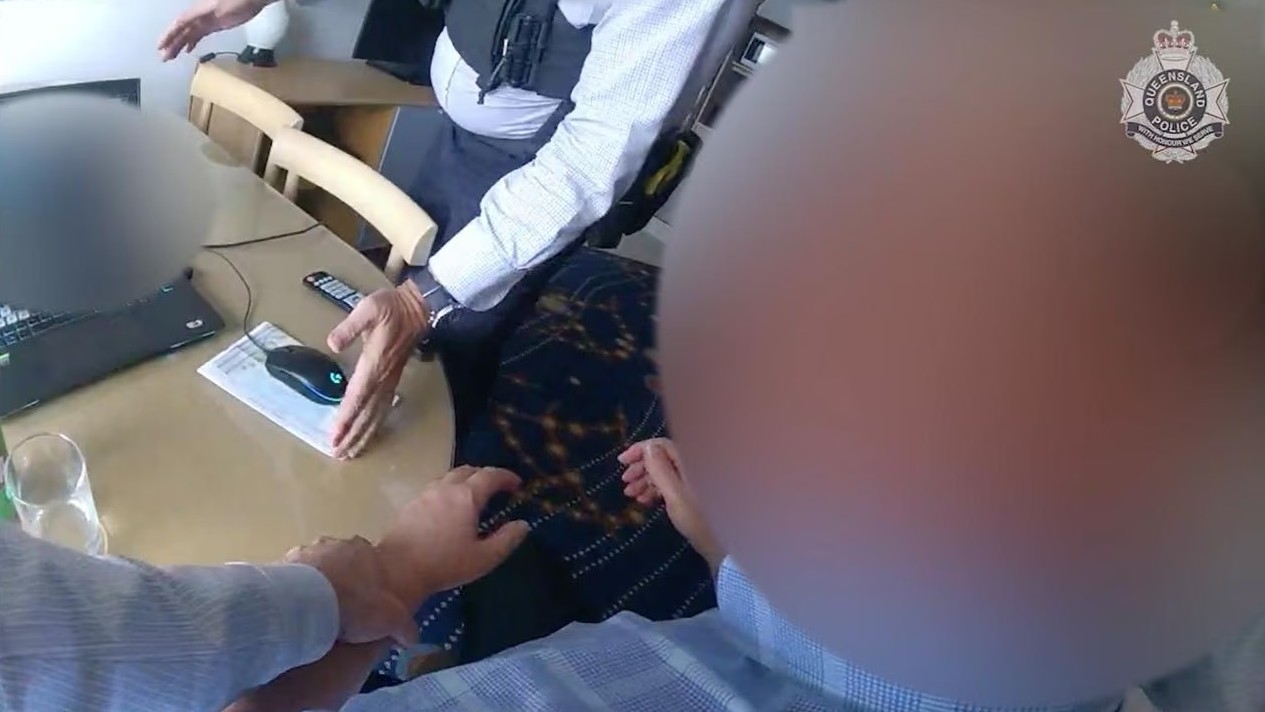
The now-56-year-old was arrested on the Gold Coast in October 2023 and charged with using online software to digitally alter photographs of women and girls he found on the internet to depict them either entirely or partly naked.
He then sent the images of current and former students at a Brisbane private school to the school administration email and other recipients.
Some of these deepfakes were also uploaded by Rotondo to websites that he operated.
The offending occurred while Rotondo lived in the Philippines and he was arrested after travelling to the Gold Coast.
He pleaded not guilty to the 11 counts of stalking, five counts of distributing intimate images and one count of distributing child exploitation material.
In a police interview played during the trial, Rotondo told police that making the deepfakes was “fun” and like having “X-ray vision glasses”.
“From a practical point of view you cannot stop deepfakes,” Rotondo said during the police interview.
“Everyone should live in fear of deepfakes. Every woman on Earth should live in fear of a camera, live in fear of Facebook.
“There will be nude images of everyone on the internet or mobile devices.”
After Rotondo was found guilty by the jury, Judge John Allen said it was “demonstrably clear” that he had “absolutely no insight” into how serious his offending was.
“You have no empathy for the victims of your offending, and you have no remorse whatsoever,” the Judge said during sentencing.
The offending has had a “profound and long-lasting” impact on the victims, the Judge said.
Impact on the victims
Victim impact statements were provided to the court as part of sentencing.
One of the impacted women said she was concerned with how widespread deepfakes were becoming.
“I’m scared of a future where deepfake pornography is normalised for myself, for my daughters and for girls and women more broadly,” she said.
“I do not want women to respond to this technology by disappearing. Women and girls should not have to share less, dress differently, avoid photographs or withdraw from public life in order to protect themselves.”
Another woman said that discovering the images was “profoundly violating” and “so degrading”.
Yet another said she felt "embarrassed and betrayed” but “did not blame the technology” because “it’s the people who use it”.
“We don’t deserve this,” another victim impact statement said.
In late 2023, Rotondo admitted that he had violated a court order to stop publishing the deepfake images and was found in contempt of court. He was fined $25,000.
Late last year, the Federal Court ordered Rotondo to pay $343,500 in penalties for creating and distributing the deepfakes after civil action was taken by the eSafety Commissioner.
The Crown Prosecutor on the case said the number of incidents of sexualised deepfakes was increasing significantly.
“It could be said what was a trickle is slowly becoming a flood,” they said.
“What is frightening, which is what Mr Rotondo said himself to police, is how easy it is to do…how many programs there are…how easy it is to on-send them. It is a fear that many in the community have.”
In late 2024 the federal government passed legislation that criminalised the sharing of non-consensual AI-generated sexually explicit deepfakes, and introduced an aggravated offence for those who created the content.
Late last year the Australian Federal Police announced it was teaming up with experts at Monash University to sabotage the AI technology being used to create these deepfakes.
This “new disruption tool” could “turn the tech tables” on the cybercriminals using the technology to make sexualised deepfakes, police said.