
A technology worker in China has reportedly been awarded extra compensation after two courts found he was unlawfully dismissed when he was replaced in his role by artificial intelligence.
The senior employee with the surname Zhou joined an “AI-related tech company”, which has not been named, in November 2022 as a quality assurance supervisor, according to Chinese state media.
His role was said to involve monitoring AI large language models (LLMs) to ensure safe and accurate outputs, and came with a monthly salary of 25,000 yuan (about $5,000).
When the job was taken over by a separate LLM, the company reportedly offered Zhou a demotion with a lower salary of 15,000 yuan (about $3,000) per month.
After Zhou declined that offer, the company allegedly terminated his contract and offered him more than 310,000 yuan in compensation (about $60,000) while citing “organisational restructuring and reduced staffing needs”.
After Zhou sought greater compensation through arbitration, a panel ruled his dismissal was unlawful and called for him to receive a larger payment.
Zhou’s former employer took legal action over the arbitration outcome in August 2025, before a district-level court reportedly found his dismissal was unlawful.
The employer then appealed to the Hangzhou Intermediate People's Court in eastern China, which reportedly upheld the lower court’s decision in April 2026 and ordered Zhou be paid 260,000 yuan (about $54,000) in further compensation.
Dismissal didn’t constitute ‘major change’
The lower court in Zhou’s case found his former employer could not prove that his role was not able to continue as normal.
It reportedly decided AI replacement did not constitute a “major change” in the company’s circumstances, such as a relocation or a merger – which can sometimes be used to lay off workers under Chinese law.
The court also found the termination of Zhou’s contract to be unlawful because the alternative role he was offered was unreasonable, given its 40 per cent pay cut.
After upholding the lower court’s decision, the Hangzhou Intermediate People's Court reportedly said in a statement, "The termination grounds cited by the company did not fall under negative circumstances such as business downsizing or operational difficulties, nor did they meet the legal condition that made it 'impossible to continue the employment contract’."
Chinese state media described the ruling as sending “a reassuring message to labour rights protection efforts in the age of automation”.

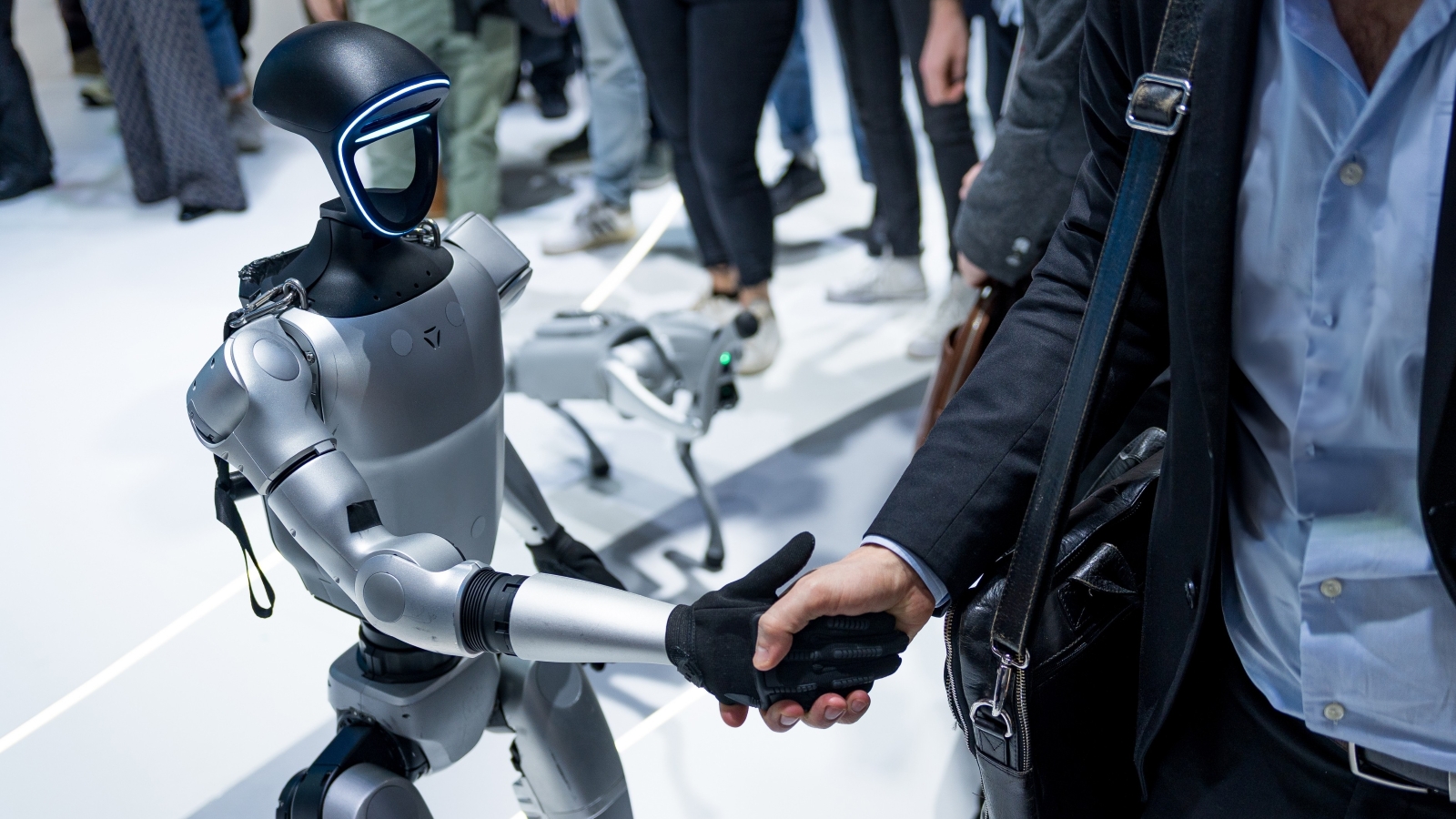
China is attempting to balance AI advancements with labour rights for workers, according to state media. Image: Shutterstock
In a similar case in Beijing in 2025, an arbitration panel reportedly found a company which had unlawfully replaced a map data collector with an AI system had done so voluntarily, and to remain competitive.
“By citing AI replacement as grounds for dismissal, the company had effectively shifted the risks of technological iteration onto its employees,” state media said of that case.
“The arbitration panel therefore ruled the dismissal unlawful.”
What rights do Australian workers have?
Australian labour lawyer and former Dean of the University of Sydney Law School, Joellen Riley, said employers in Australia are generally “free to dismiss” workers when new technology is introduced, if they hold consultations with unions and pay out redundancy entitlements.
“If the employer can demonstrate that their decision to introduce new tech reduced the requirement for certain positions, and if they can show that the choice of people losing their jobs was driven by introduction of the new tech – and did not disguise any discriminatory treatment or victimisation of particular staff – then the employer is free to dismiss the worker,” she told Information Age.
While a fired worker can bring an unfair dismissal claim within 21 days of their termination, a so-called ‘genuine redundancy’ in which an employer no longer requires someone in a particular role “is by definition not an unfair dismissal”, Riley added.
Several Australian technology companies have recently cited increasing use of AI while laying off workers, including the likes of Telstra, Atlassian, Afterpay, WiseTech, and Canva.
Requirements for companies to consult with unions about their plans and to make redundancy payments “don’t prevent technological change”, Riley said.
“Australian law has always, it seems to me, respected an employer's right to run their business with whatever technology they determined to be most efficient.
“I guess it remains to be seen whether the introduction of AI proves to be a more disruptive innovation than earlier industrial or digital revolutions.”